Lockouts · St. Williams
Lost Keys — Same-Visit Rekey in St. Williams
You were shovelling the driveway after dark and the ring must have slid out of your coat pocket somewhere under a metre of snow.
In plain words
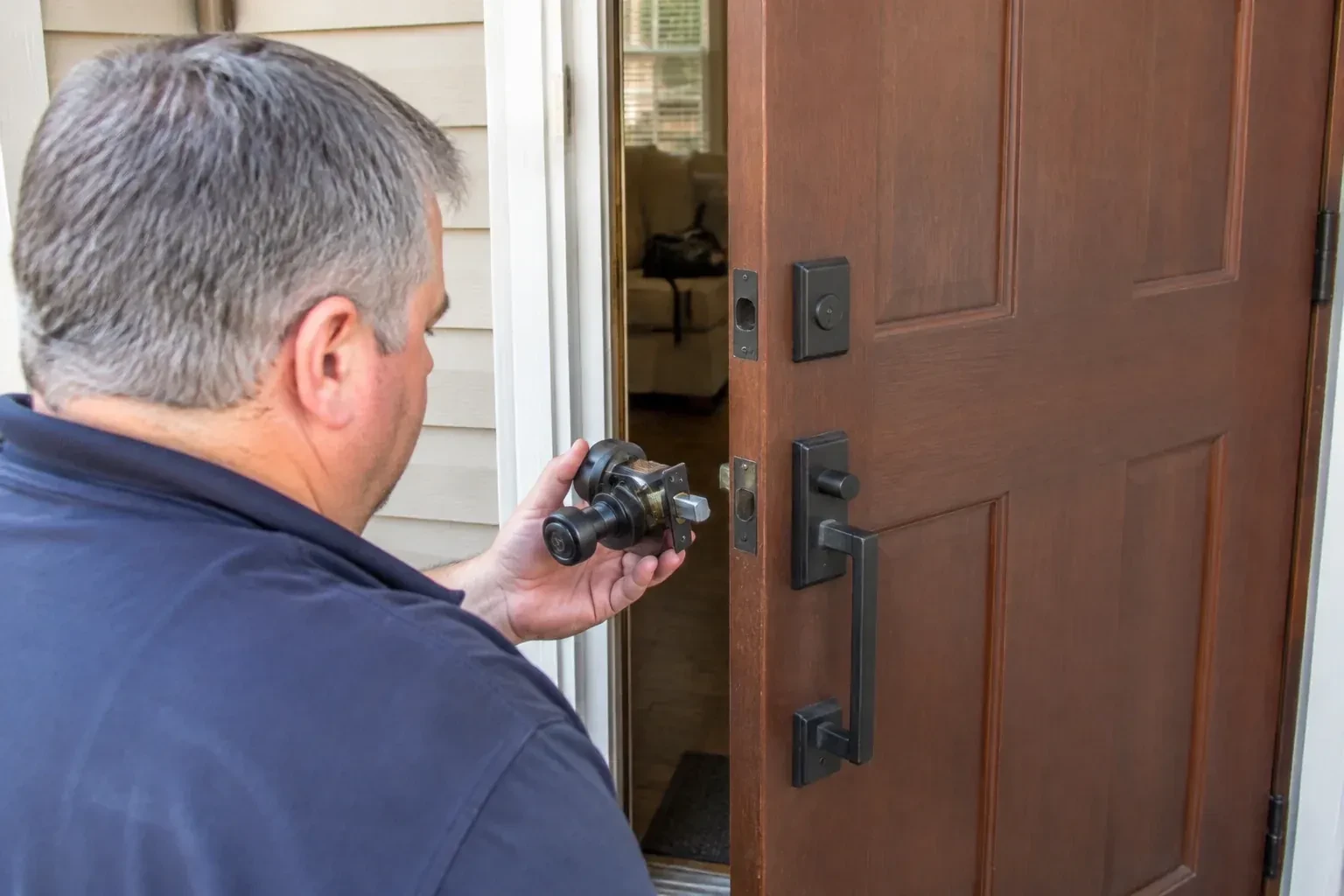
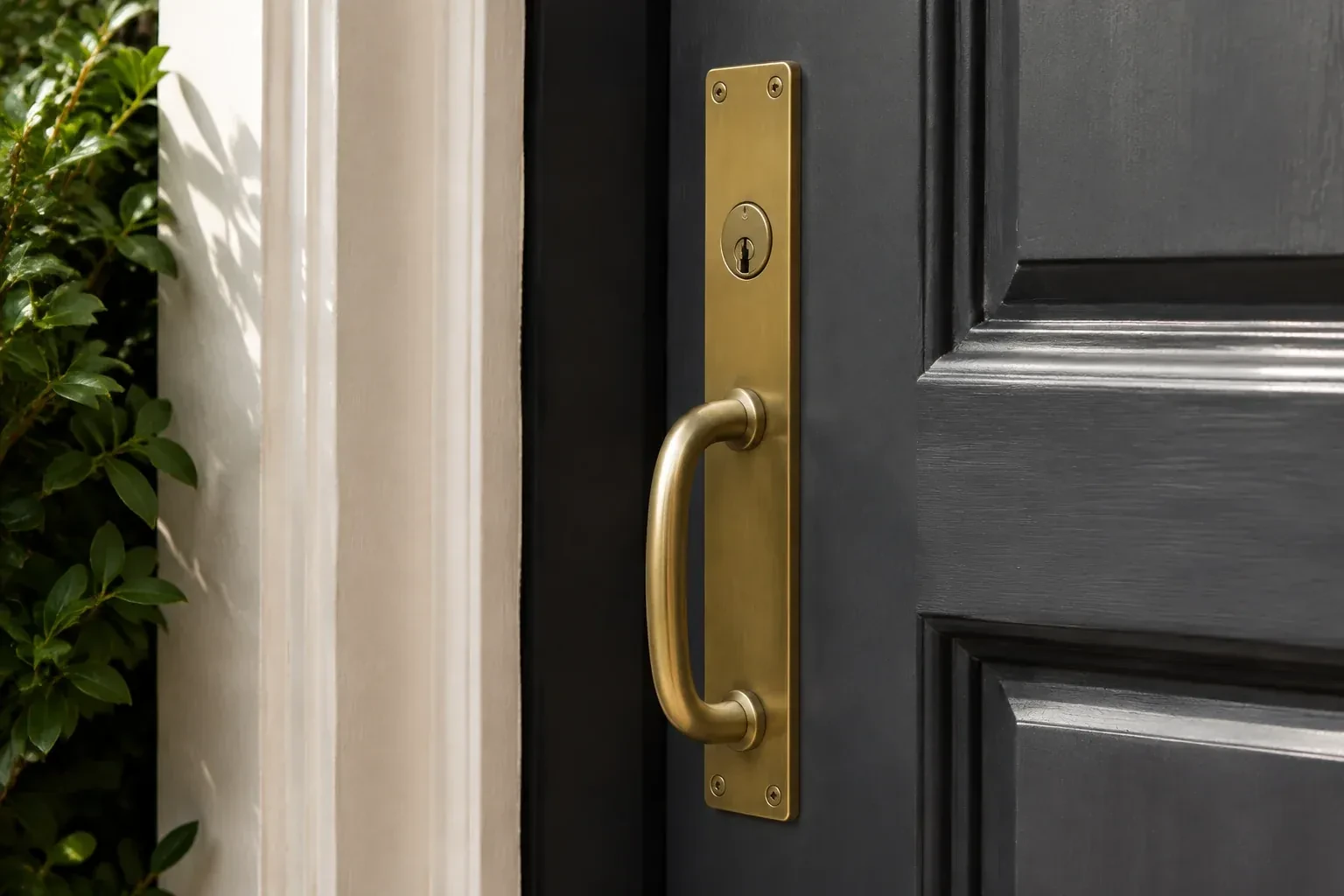
Rekeying and replacing a lock arrive at the same place by different roads. Replacement puts new hardware on the door: a new deadbolt or handle, and a finish that may not match its neighbours. Rekeying leaves all of that alone and changes what is inside the cylinder, commonly the pin stack on a conventional lock or a reset on a homeowner-rekeyable one, so a different key runs it. For hardware in good condition, that is the sensible choice: the door looks and feels as it did while the old key is retired. A worn cylinder can be replaced and keyed to match the rest in the same visit.
How the visit goesYou let a part-time employee go on Friday. The shop key is on a ring in their apartment, or their car, or a friend's kitchen, and on Monday morning the register and the stock room open with it.
Lost Keys — Same-Visit Rekey
How the visit goes
What was on the ring
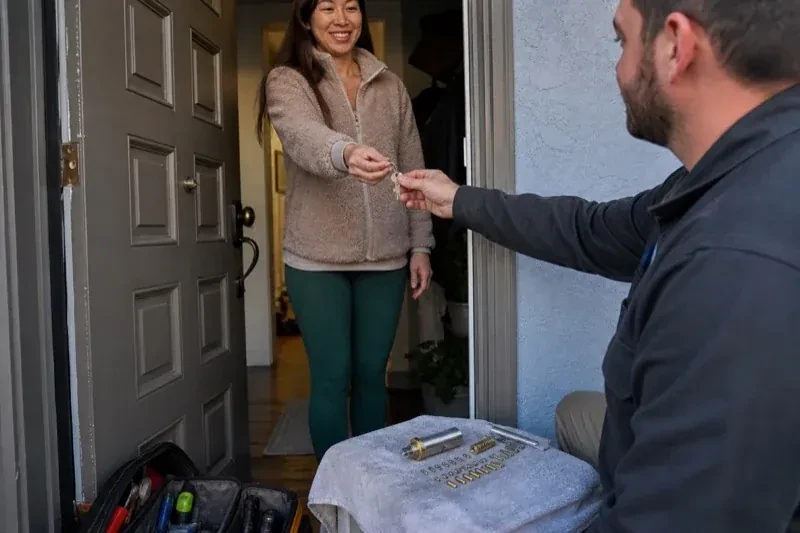
The next few minutes are spent on the ring itself, because a key ring is a bundle of different problems. House keys point to cylinders that will be repinned. A garage remote points to an opener whose memory should be cleared. A building fob or parking card points to a property manager. A car key with a chip points to the automotive side of the trade. A tag with an address, a licence lost in the same bag, or a work lanyard in the same pocket changes how soon the household side should be settled. Listing it all before any tool comes out means nothing on the ring is forgotten when the van pulls away.
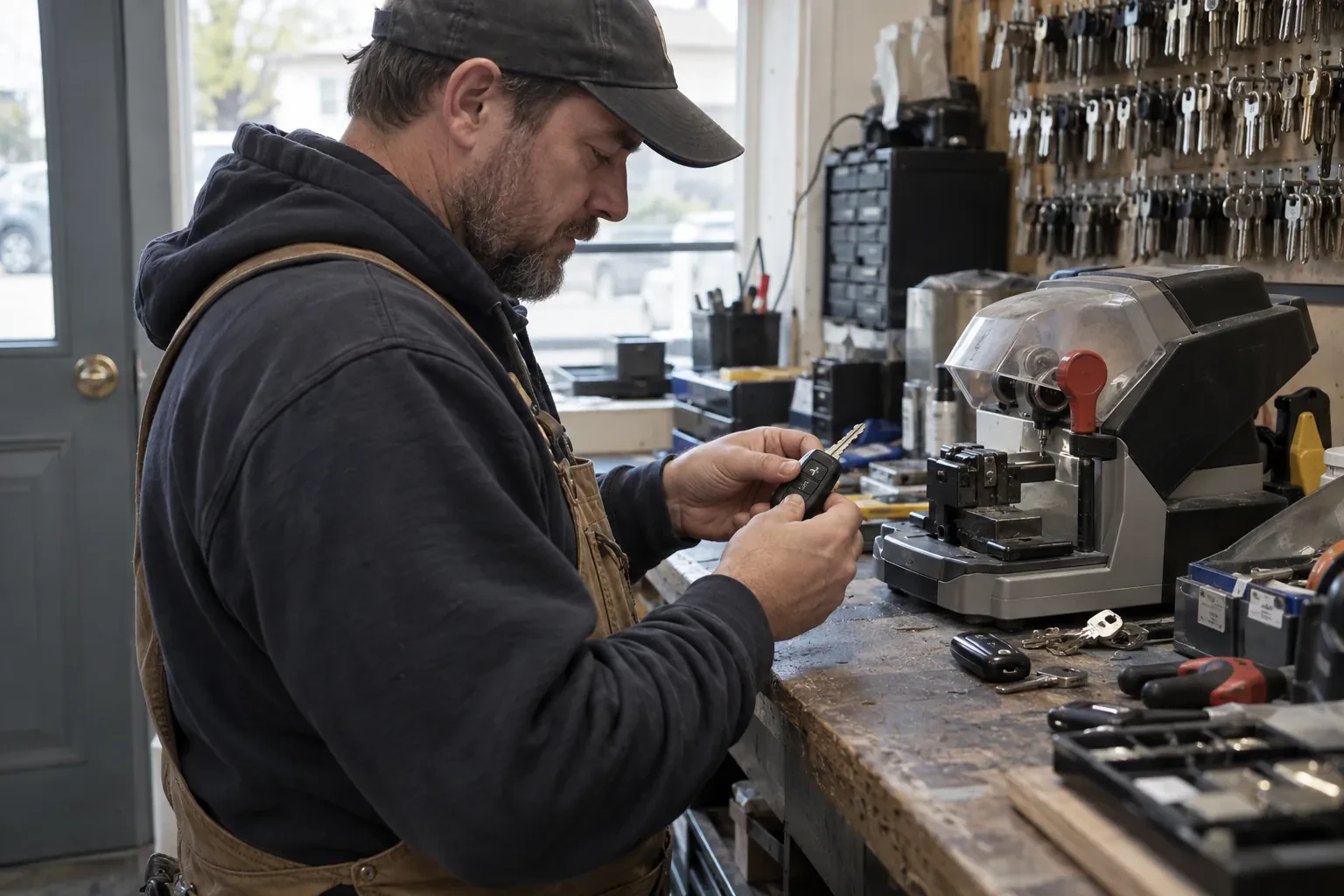
Cutting the new keys on site
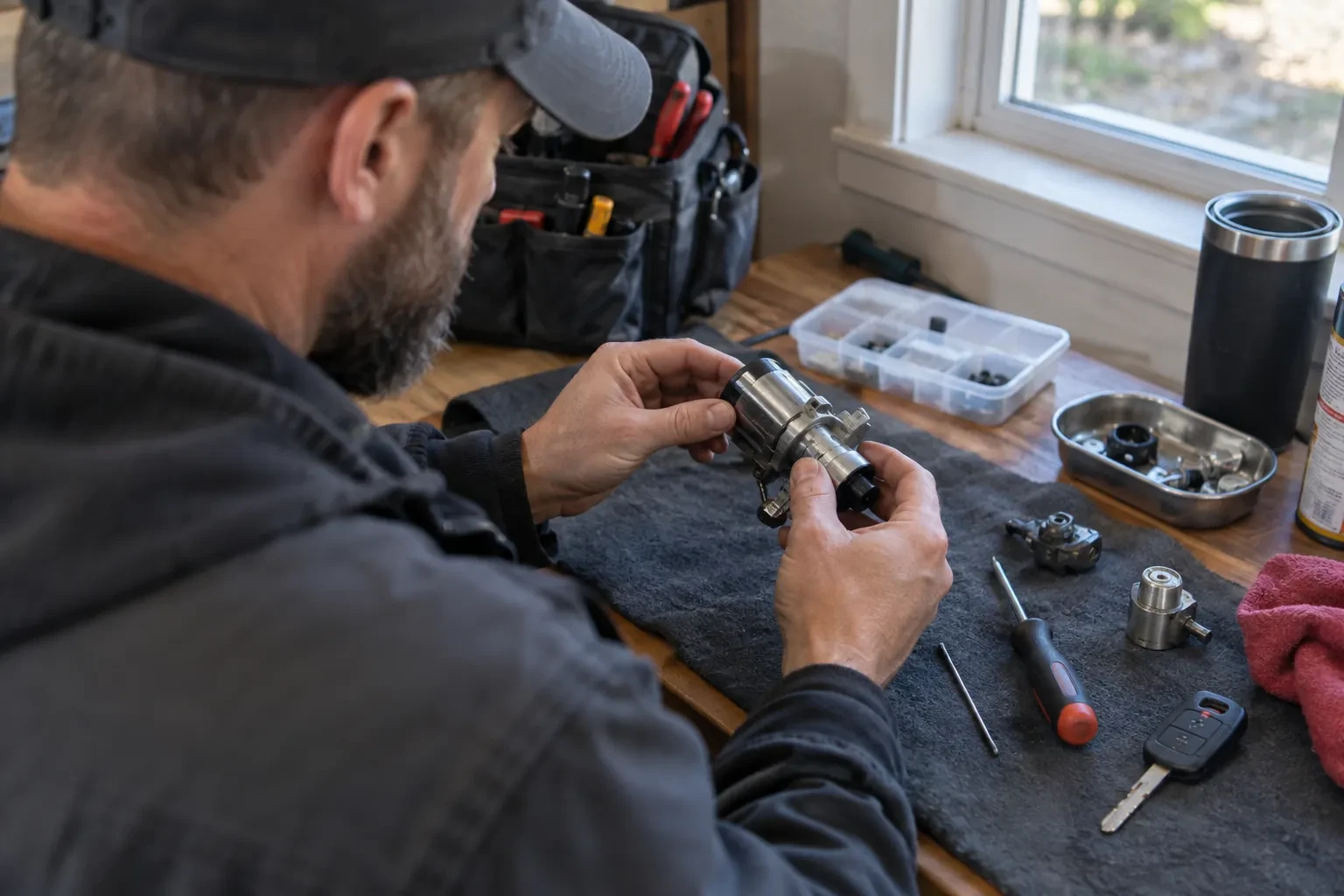
Common keys are cut on the van rather than ordered in, though some restricted systems need the blank from an authorised distributor first. The first key is cut on a code machine, a crisp, original-depth key rather than a copy of a copy, and tried in the first repinned cylinder before another is touched, so any adjustment happens once. The rest are cut to the same code, deburred, and tested in turn. Keys cut this way run smoothly from the start and stay accurate through years of copying, because every later duplicate can be made from the code rather than from a worn blade.
The code written down for next time
The new combination is recorded as a short code, either on a card the locksmith gives you or on the key tag, and a copy stays in the locksmith's job notes if you wish. That code is what makes future copies accurate: a key cut to code has fresh, original depths, while a copy of a worn key inherits every rounded edge. It also means a lost key years from now is met with a different code, never a repeat. Keep the card with the house papers, and when a new key is needed, ask for it to be cut from the code rather than traced from a tired one.
Lost Keys — Same-Visit Rekey
In the van
Dry graphite or PTFE lubricant
Replacement cylinders
Plug follower set
Rekeying pin kit
Pin tweezers and shims
Lost Keys — Same-Visit Rekey
What affects the quote
Time and day of the call
A weekday afternoon and a late evening or holiday call cost the same amount for a lost-key rekey. When a stolen wallet makes the visit urgent, the locksmith still confirms the exact figure on site, once the cylinders and keys needed have been looked at.
Homeowner-rekeyable cylinders without a working key
Resetting a homeowner-rekeyable cylinder when its key is gone uses that system's own reset fixture, where the installed lock supports one, and a few extra minutes per cylinder, which shows as a small line on the quote.
Condition of the cylinders
A clean, healthy cylinder is repinned as is. One clogged with salt and grit is cleaned first, and a worn or damaged one is replaced rather than repinned, each priced as its own item.
What to have ready
- Is the property a condo or apartment with shared entrance doors?
- Which doors did the missing key open: front, back, side, garage, shed, gate?
- Do you know roughly how many copies of the old key exist?
Lost Keys — Same-Visit Rekey: questions
QuestionsWhat is a restricted keyway, and is it worth having?
A restricted keyway uses a controlled key profile whose blanks are supplied only through an authorised channel; the credential required, a letter, a registered account, a dealer agreement or a key card, depends on the system. Rekeying such a cylinder is routine work with the right pin kit. For a household that has just lost a key and wants the next one to be truly countable, it is a sensible upgrade for the main doors, and it can be fitted during the same visit.
Should I rekey after a renovation or when a cleaner stops coming?
It is good practice whenever a key has been out of your hands for a while and you are not certain it came back. Contractors, cleaners, sitters and short-term guests all have honest reasons to hold a key, and most return it, but a rekey at the end of the arrangement is what turns 'probably' into certainty. Some households make it a habit at the close of every project.
Can a rekey be done in winter, and will the locks freeze afterwards?
Winter is a normal time for this work. Cylinders come off the door and are pinned in the van, out of the wind, and go back on with a dry graphite or PTFE lubricant that sheds moisture rather than holding it the way oil does. A cleaned, dry-lubricated cylinder is less likely to freeze than the gritty one it replaced. Keeping a storm door closed over the main lock helps through freeze-thaw weeks.
Related services
- Business Lockout ServiceA cook stepped into the alley with the recycling and the rear door swung shut behind him.
- Broken Key ExtractionOvernight the deadbolt froze, and this morning the key would only turn partway.
- Break-In Damage Lock RepairSomeone smashed the little window beside the door, reached in and turned the thumb-turn.