Lockouts · Delhi
Lost Keys — Same-Visit Rekey in Delhi
You were shovelling the driveway after dark and the ring must have slid out of your coat pocket somewhere under a metre of snow.
In plain words
A key ring rarely holds only house keys, so a same-visit rekey looks at everything that was on it. The mechanical house keys are handled by repinning the cylinders. A garage door remote is erased from the opener's memory and the remaining remotes are paired again. A building fob or access card is deactivated by the property manager, and the locksmith can help you make that call. A car key with a chip is a separate service through the automotive side of the trade, since the vehicle's immobiliser has to forget it. Sorting the ring item by item means nothing that opened your life last week still does.
How the visit goesThe keys fell out of a gym bag somewhere between the arena and the parking lot. The ring has a tag from the building with the unit number on it. Whoever finds it has an address and a key that fits.
Lost Keys — Same-Visit Rekey
How the visit goes
Which cylinders the key actually opened
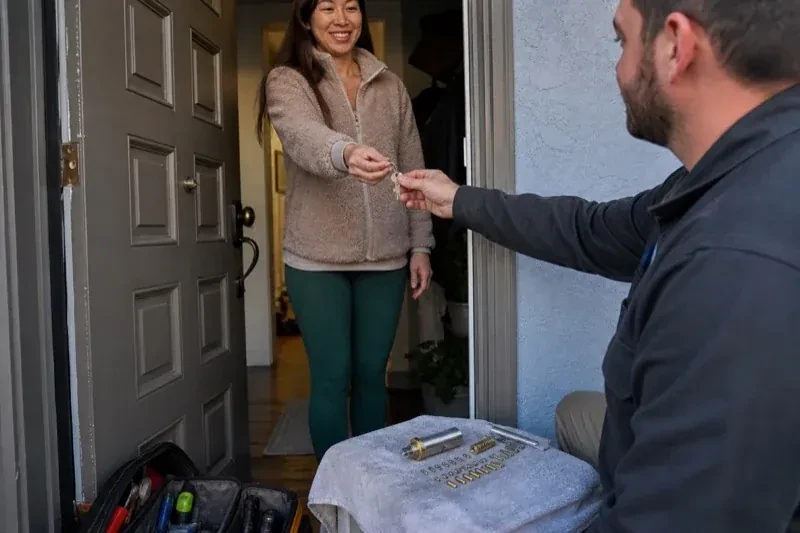
The locksmith walks the property with you and tries to think like the key. Front door deadbolt and handle, the back door, a side door, the door between the garage and the house, the shed, a gate padlock, a basement walkout, the door to a storage room or workshop. Each cylinder the missing key fitted goes on a list. Anything it fitted that is not yours to change goes on a second list: a shared lobby door, a parking gate, a community mailbox compartment, a workplace. The first list becomes the scope of the visit; the second becomes a set of calls you can make with the locksmith's help while the work goes on.
Testing every key in every lock before leaving
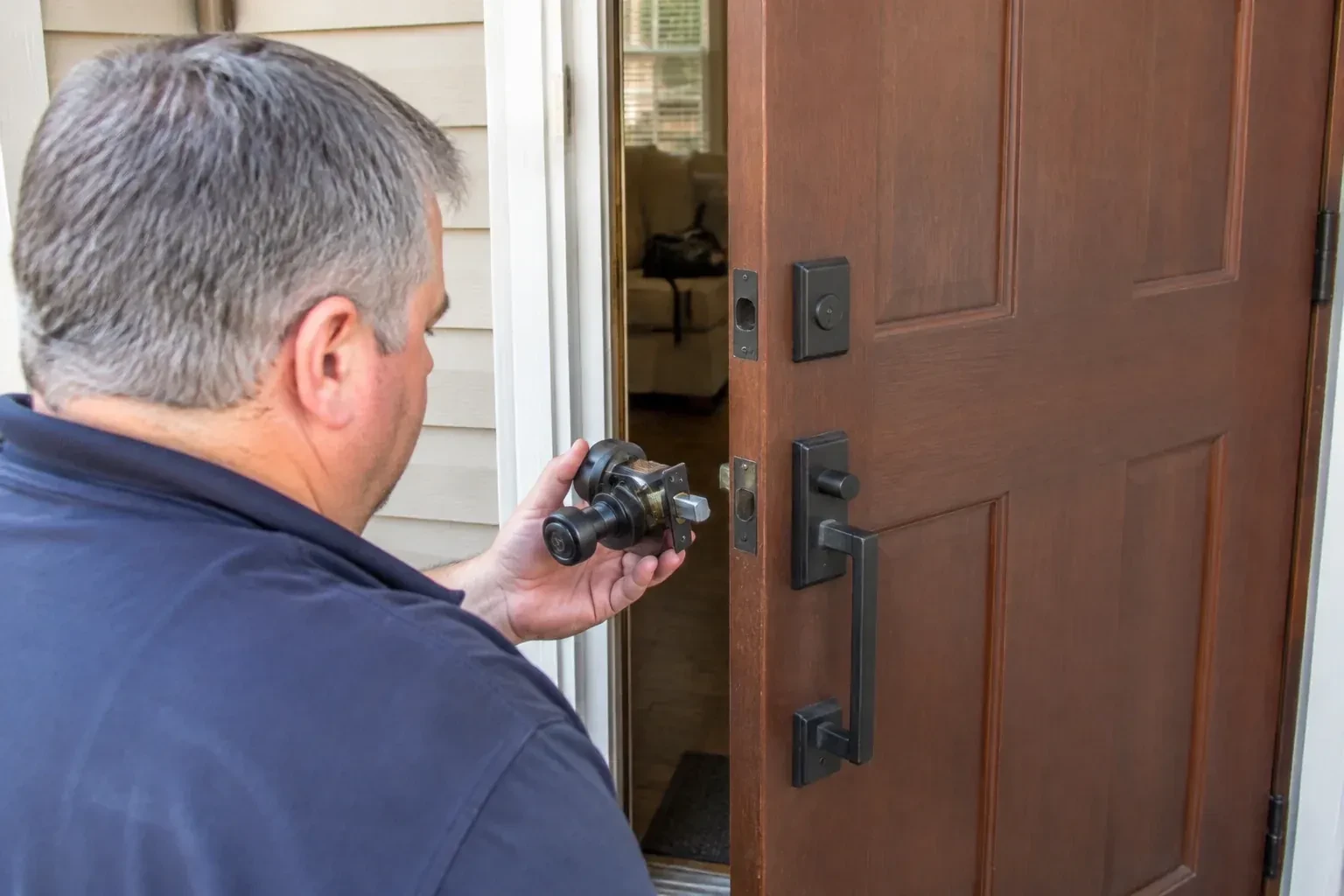
The last part of the work is deliberate repetition. Each new key is tried in each cylinder it should open, with the door open and again with it closed and bolted, so a pin that feels fine on the bench is proven on the door. The old key is tried too and shown turning nothing. Cylinders that were dry or gritty get the lubricant their maker specifies, a puff of graphite, PTFE or a specified liquid product, and a few cycles to spread it. Screws are checked snug, covers seated, and the pile of old keys and any swapped cylinders is handed to you or taken away as you prefer. Only then is the key count confirmed and written down.
Cylinders that turn more sweetly than before
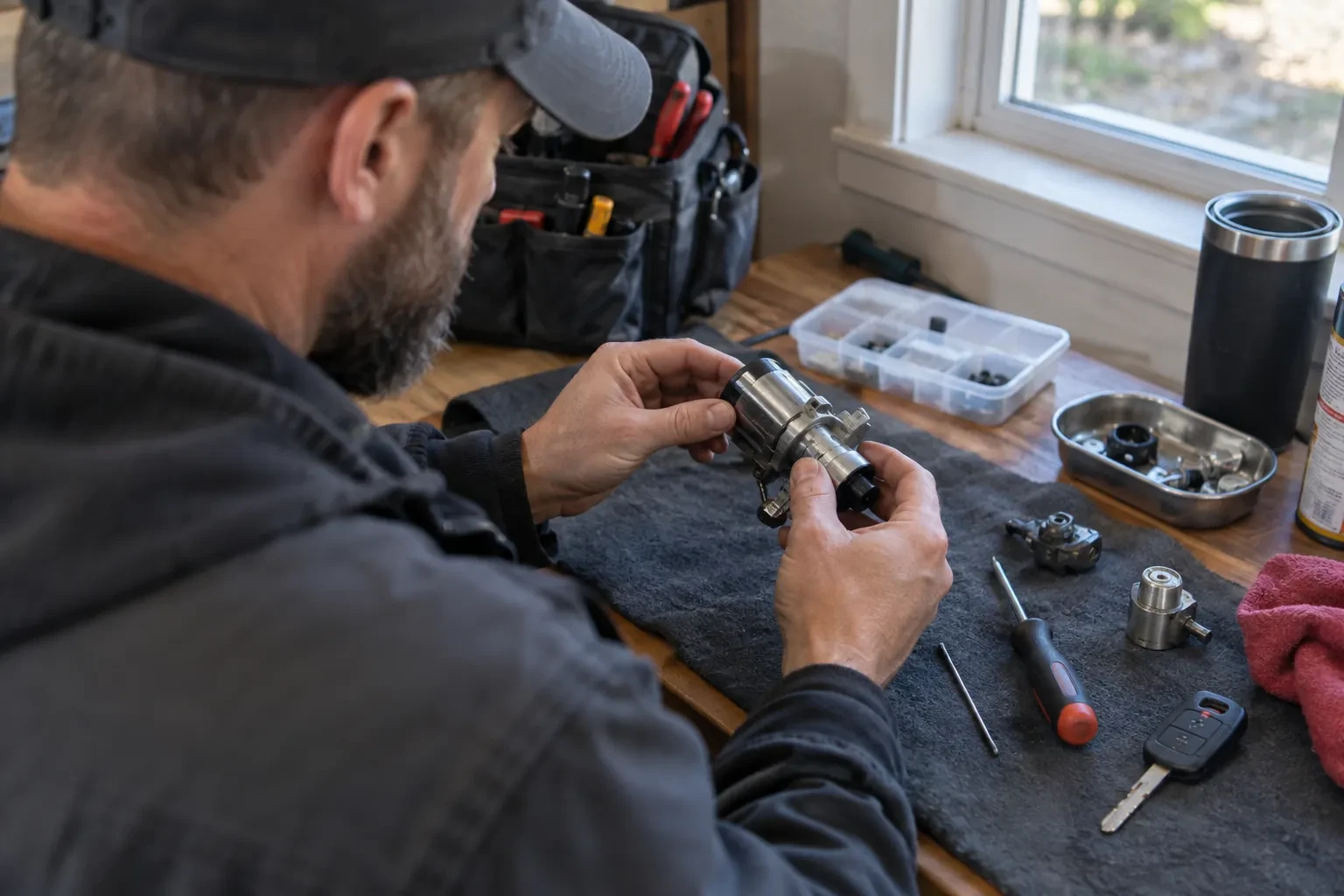
A cylinder that has been apart, cleaned and repinned usually feels better than it did before the key went missing. Old grease, road salt and the grit that collects in a keyway over a decade came out with the plug, and a dry lubricant went in. Keys cut to code seat fully and lift each pin cleanly. If a door had a key that needed a wiggle or a shove, that is often gone. Follow your lock's own maintenance guidance to keep it that way: many cylinders take a puff of graphite or PTFE into the keyway now and then, some a specified liquid lubricant instead; general household oils and sprays collect dust and gum the pins.
Lost Keys — Same-Visit Rekey
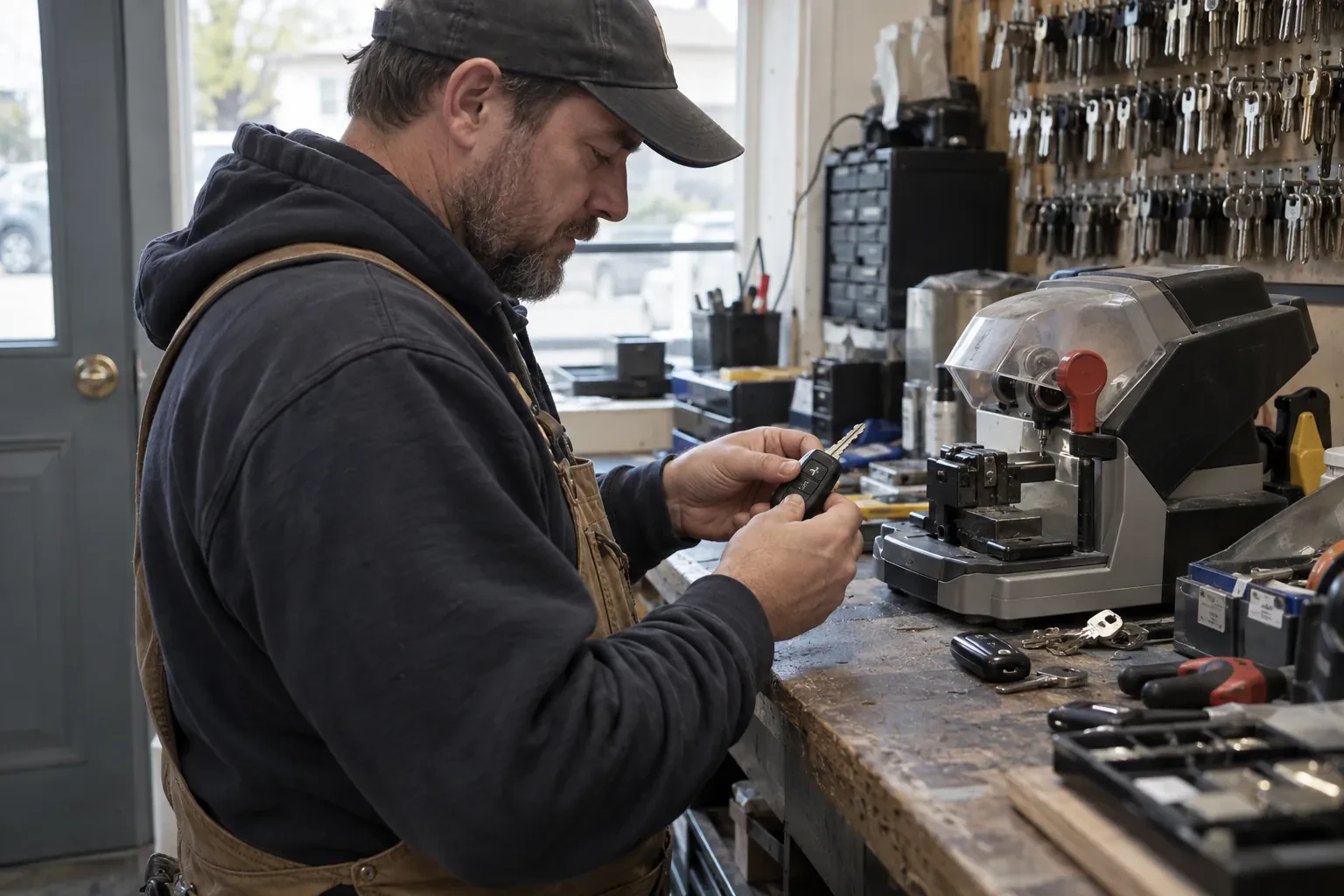
In the van
Dry graphite or PTFE lubricant
Replacement cylinders
Plug follower set
Rekeying pin kit
Pin tweezers and shims
Lost Keys — Same-Visit Rekey
What affects the quote
Paperwork for a landlord or building
Where a landlord, condominium or lease requires a written record of the lock change and key count, preparing that note and any key register update is a small named item.
Outbuildings, gates and padlocks
Sheds, gates and detached garages often carry padlocks or light cylinders. Bringing them onto the house key may mean a new padlock of a matching keyway, quoted as a part.
Restricted or high-security keyways
Patented and high-security cylinders carry more parts, need dedicated pin kits and issue keys through authorised channels. Rekeying them takes longer and the blanks cost more than common residential ones.
What to have ready
- Which doors did the missing key open: front, back, side, garage, shed, gate?
- How many people will need a key afterwards?
- Do you know roughly how many copies of the old key exist?
Lost Keys — Same-Visit Rekey: questions
QuestionsWhat is a restricted keyway, and is it worth having?
A restricted keyway uses a controlled key profile whose blanks are supplied only through an authorised channel; the credential required, a letter, a registered account, a dealer agreement or a key card, depends on the system. Rekeying such a cylinder is routine work with the right pin kit. For a household that has just lost a key and wants the next one to be truly countable, it is a sensible upgrade for the main doors, and it can be fitted during the same visit.
Should I rekey after a renovation or when a cleaner stops coming?
It is good practice whenever a key has been out of your hands for a while and you are not certain it came back. Contractors, cleaners, sitters and short-term guests all have honest reasons to hold a key, and most return it, but a rekey at the end of the arrangement is what turns 'probably' into certainty. Some households make it a habit at the close of every project.
Can a rekey be done in winter, and will the locks freeze afterwards?
Winter is a normal time for this work. Cylinders come off the door and are pinned in the van, out of the wind, and go back on with a dry graphite or PTFE lubricant that sheds moisture rather than holding it the way oil does. A cleaned, dry-lubricated cylinder is less likely to freeze than the gritty one it replaced. Keeping a storm door closed over the main lock helps through freeze-thaw weeks.
Related services
- Business Lockout ServiceA cook stepped into the alley with the recycling and the rear door swung shut behind him.
- Broken Key ExtractionOvernight the deadbolt froze, and this morning the key would only turn partway.
- Break-In Damage Lock RepairSomeone smashed the little window beside the door, reached in and turned the thumb-turn.