Change or rekey · Norfolk County
Mailbox Lock Replacement
The property manager mentioned that half the compartments in the lobby's mailbox panel are original to the building and are starting to fail one by one, key by key, as tenants turn over year after year.
In plain words
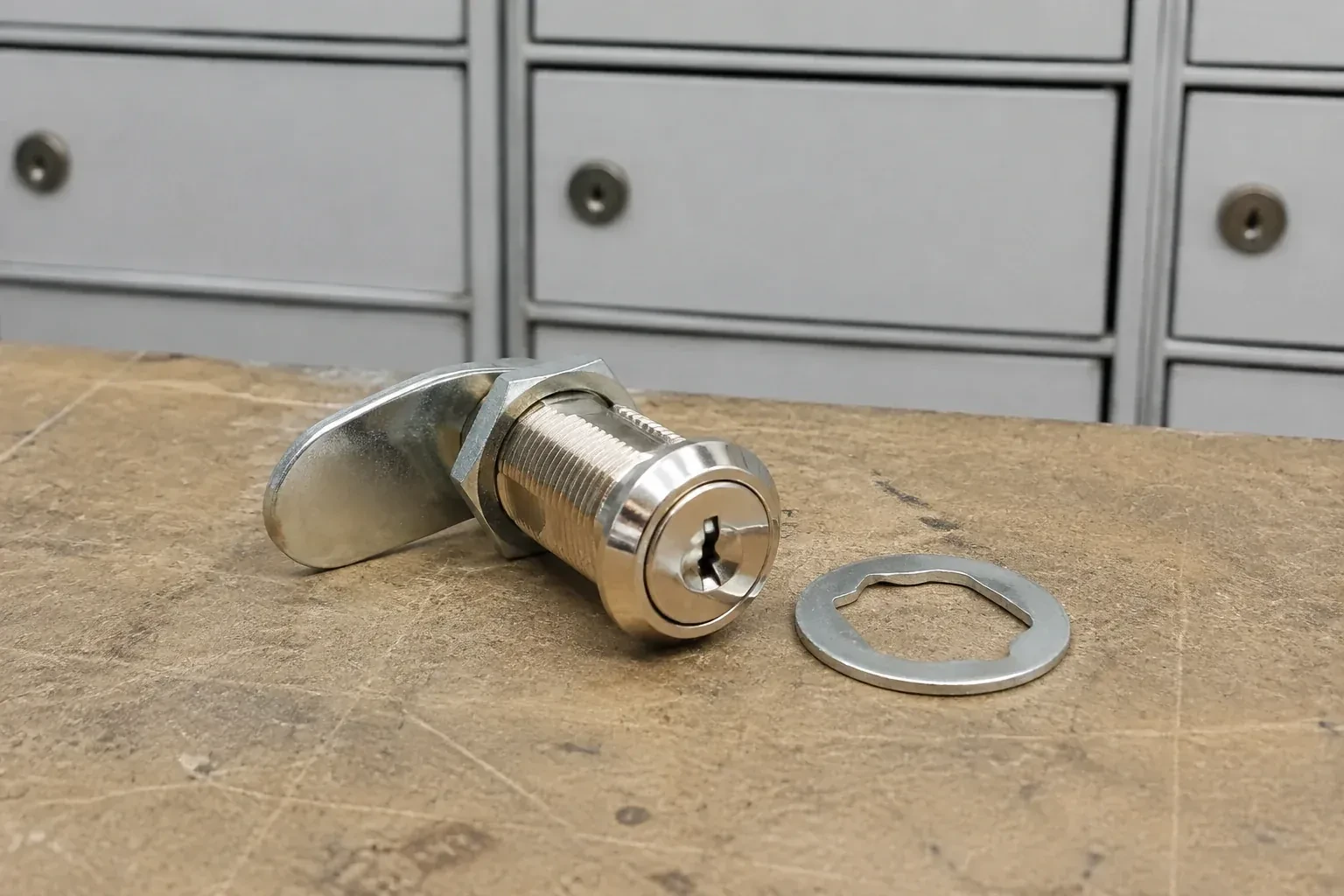
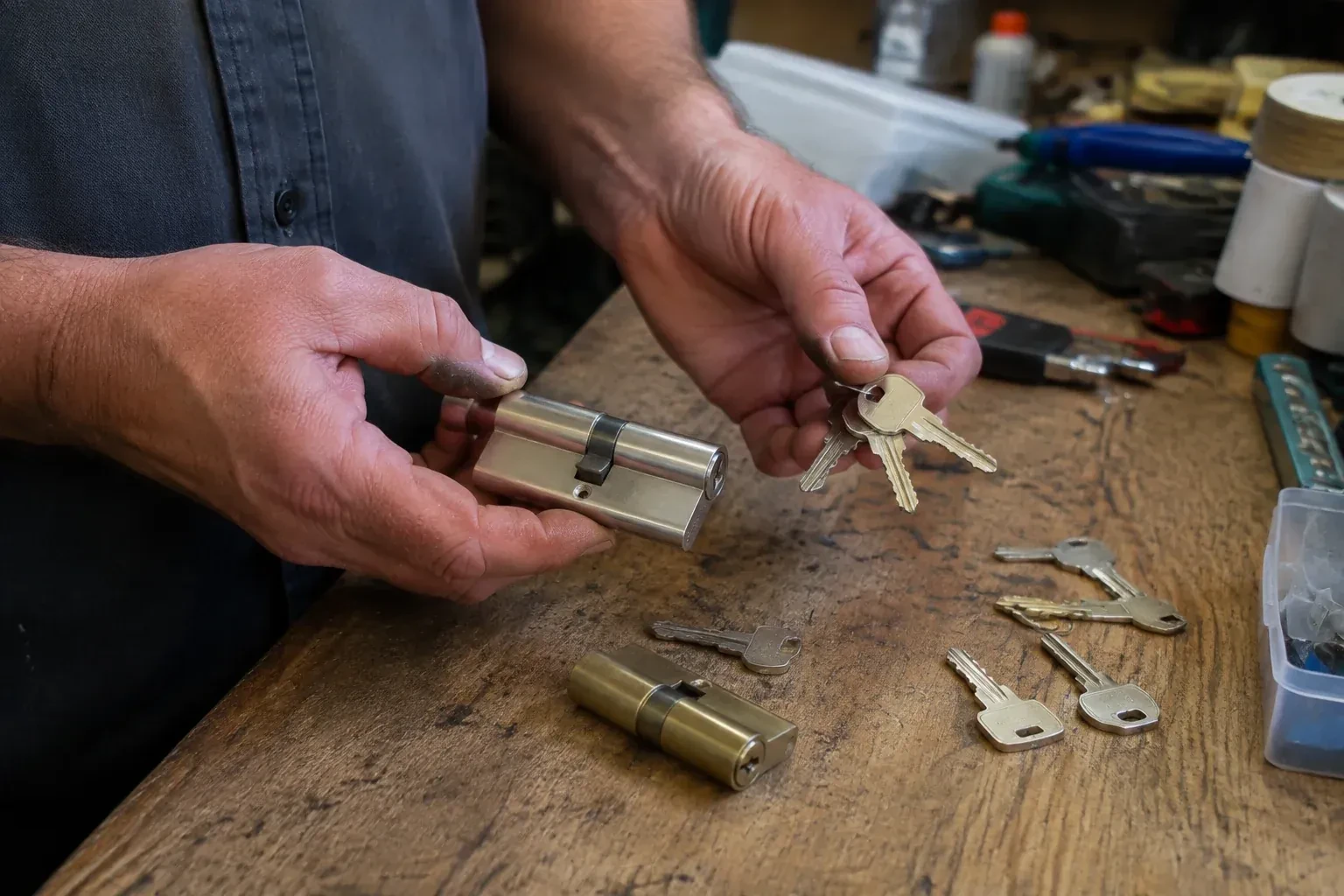
Moving into a new place is a common moment for this service, since a mailbox compartment rarely comes with a documented history of who was handed a key. Rather than trust hardware with an unknown past, the cylinder and cam are swapped for new ones sized to the same compartment door, two fresh keys are cut, and whatever key the previous resident or owner may still be carrying stops being useful from that afternoon onward.
How the visit goesSomeone tried to pry the little door on the mailbox open with a screwdriver, and though the mail sitting inside is untouched, the lock now sits crooked in its hole and the key barely catches when it is turned.
Mailbox Lock Replacement
How the visit goes
How the old lock is held in
Most small mailbox locks are held in place from the inside of the compartment door by a nut, a spring clip, or a pair of small screws, rather than by anything visible from the front. Reaching that fastener means opening the compartment first, which is straightforward if a working key is still available and slower if it is not. Years of moisture and road salt can seize the fastener itself, and the locksmith checks for that early, since a corroded retaining nut changes how the old lock has to come out.
Taking out the old lock
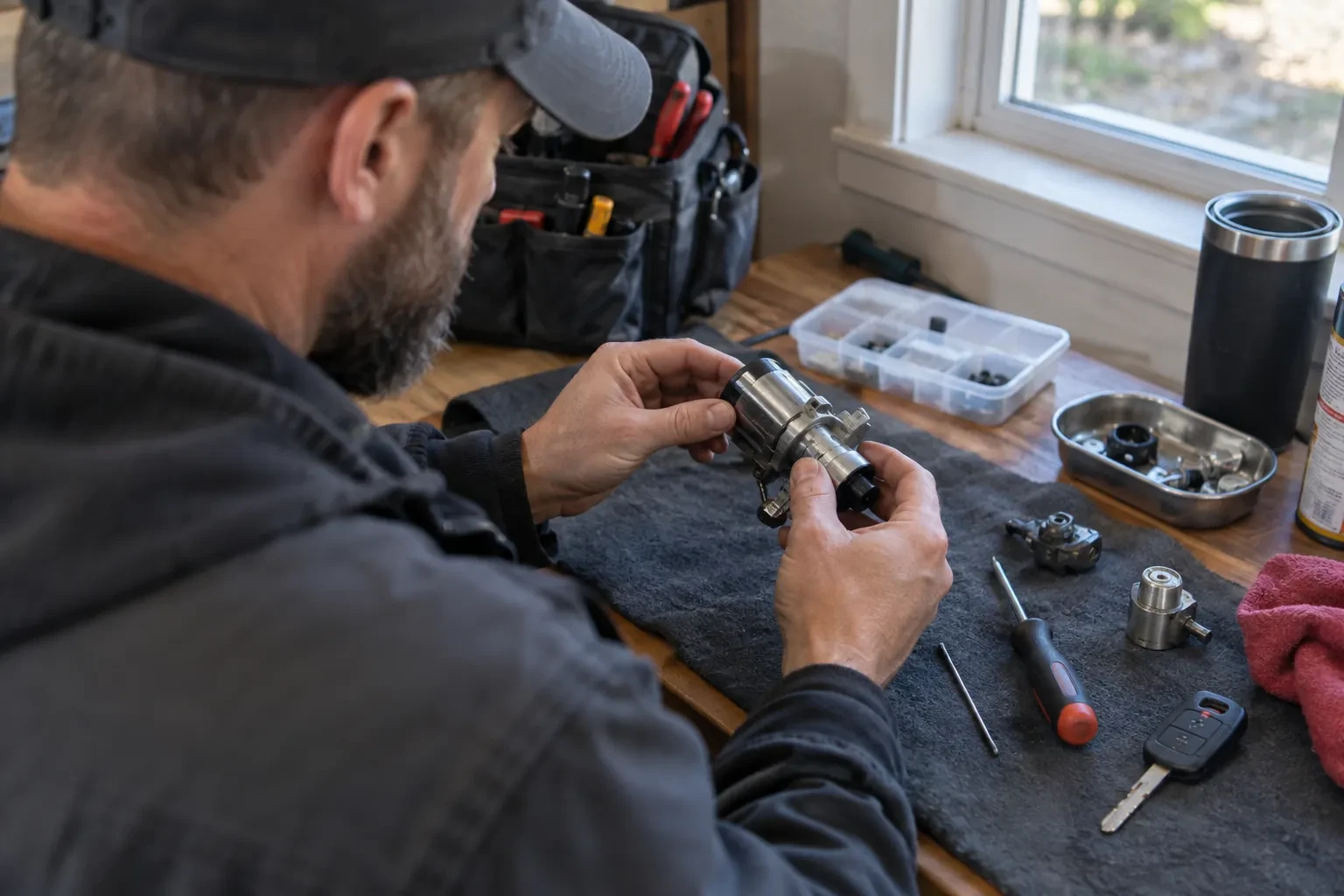
With the compartment door open, the old lock is usually removed from the inside: a retaining nut is unscrewed with a small wrench or nut driver, or a spring clip is pressed free, and the whole cylinder and cam lift out as one piece. When the compartment cannot be opened this way because the key is lost, snapped, or simply unknown, picking or decoding is tried first, and the lock is drilled only when that is not practical, aimed precisely at the wafers so the plug turns and the housing releases without damaging the door around it. Either route ends the same way, with an open hole ready for the matched replacement.
Keeping the new lock turning smoothly
A small mailbox cylinder benefits from the same care as a house lock: whatever lubricant that cylinder's own maker specifies, often dry graphite or PTFE-based, worked into the keyway once or twice a year keeps grit and moisture from building up inside. Wiping road salt off the key itself in winter, rather than letting it ride into the keyway, is a small habit that spares the new lock the slow decline the last one went through.
Mailbox Lock Replacement
In the van
Drill and drilling guide
Replacement compartment hinge
Wafer tumbler pick set
Lock de-icer
Penetrating lubricant
Mailbox Lock Replacement
What affects the quote
Access to the compartment
A ground-floor mailbox or a lobby panel with easy entry is straightforward to reach. A building requiring a call to reception, an escort, or a separate access arrangement adds a step before work can start.
Type and brand of mailbox
A standalone curbside box, a house door's built-in slot, and a compartment in a large building panel use different hardware, and some brands are easier to source matching replacement cylinders for than others.
Keying to match another lock
Cutting a mailbox cylinder to match an existing front door or a second compartment's key, where the keyways are compatible, is extra work beyond a standalone replacement, since more than one lock has to be fitted and tested together.
What to have ready
- Do you have a lease, deed, or photo identification for the address?
- Is the current key lost, snapped, broken, or simply worn out?
- Has a property manager or superintendent been told about this request?
Mailbox Lock Replacement: questions
QuestionsIs it common for a previous owner or tenant to keep a mailbox key?
It happens more often than people expect, especially in a building where compartments changed hands with a single set of keys and no clear record of who returned what. Replacing the lock rather than simply asking around settles it, since a new cylinder makes any key still out there, regardless of who holds it, stop working.
What is the difference between a private mailbox and a building's mailbox panel?
A private mailbox, whether a standalone box at the curb or a slot in a house door, belongs entirely to that home. A building's mailbox panel groups many small locking compartments in one frame, usually in a lobby, with each compartment assigned to a unit. The lock itself works the same way in both cases; what differs is who confirms the change and how many other doors sit nearby.
What happens to the old lock and the old key afterward?
The old cylinder is removed and handed to you or taken away, whichever you prefer, and any key still floating around no longer fits anything once the new lock is seated. If the old lock was drilled out, the leftover pieces are shown to you so it is clear what was removed and why.
Related services
- Deadbolt InstallationThe old deadbolt has grown lazy.
- Lock Replacement & UpgradeThe lever on the side door droops toward the floor and rattles in your hand.
- Vintage Mortise Lock ServiceThe old skeleton key still fits the keyhole, but it now needs a jiggle, a lean on the door and a little luck before the bolt moves.