Locksmith
Locks explained simply
You do not need to become an expert to make good choices about locks. A little understanding goes a long way. These short pieces give you that: how keys are copied, what a lock grade means, when a repair beats a replacement and how to prepare for the unexpected.
Asked and answered
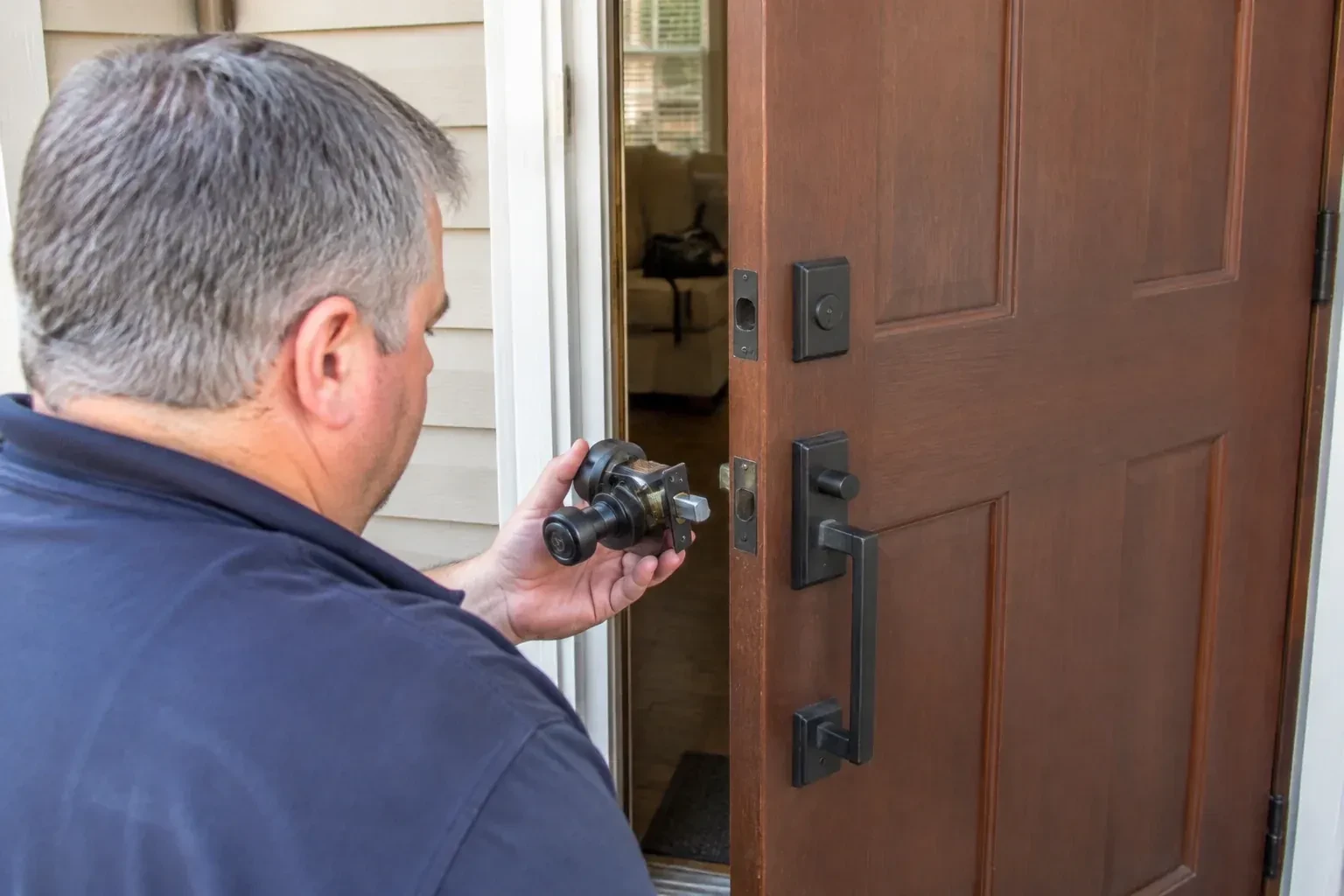
Do I have to show identification before you open my door?
Yes, and it is a reassuring step rather than a hurdle. Photo identification that matches the address settles it in seconds. When your identification still carries a previous address, other proof does the job: a tenancy agreement, a recent bill, a piece of addressed mail, or a word with your building manager. Locksmiths take this seriously because it protects every home they are asked to open, including yours.
Our door uses fobs and the reader is dead. Can you get us in?
Yes, and usually without disturbing the access system. Many readers and electric strikes go dark because a power supply, breaker or backup battery has failed, and restoring power reopens the door. Where a mechanical override cylinder is fitted, it opens like any other lock; not every system includes one. An ordinary magnetic lock releases on its own once its power is actually removed, so a genuine power loss opens that door without waiting on a remote release. Afterwards, credentials and schedules are confirmed with whoever manages the system.
Is a broken key a sign the whole lock is worn out?
Sometimes, and the visit answers it. A key that failed from its own fatigue in a clean, smooth cylinder says nothing against the lock. A key that broke because the pins were worn flat, the cap had loosened or the keyway was full of grit says the cylinder needs a service or a rekey. One that broke in a corroded, pitted plug is telling you the lock is due for replacement.
Do longer screws really make a difference?
A large one. Factory strike and hinge screws are usually short enough to grip only the jamb, a piece of trim about an inch thick. Three-inch screws pass through the jamb and the gap behind it into the stud, so a blow has to move the wall rather than the trim. Lock manufacturers supply reinforcement plates with three-inch screws for exactly this reason, and note that a door beside a sidelight needs a different arrangement because glass sits where the stud would be.
What should I tell you on the phone?
Say what the key does: refuses to turn, spins without effect, or works only when the door is pushed or pulled. Name the lock type if you can, whether it is a deadbolt, knob, lever or an old mortise lock, and which side of the building the door faces. Mention recent weather, any spray that went into the keyway, any other door you can use, and whether anyone is inside. That short list decides the tools that come.
What is a restricted keyway, and is it worth having?
A restricted keyway uses a controlled key profile whose blanks are supplied only through an authorised channel; the credential required, a letter, a registered account, a dealer agreement or a key card, depends on the system. Rekeying such a cylinder is routine work with the right pin kit. For a household that has just lost a key and wants the next one to be truly countable, it is a sensible upgrade for the main doors, and it can be fitted during the same visit.
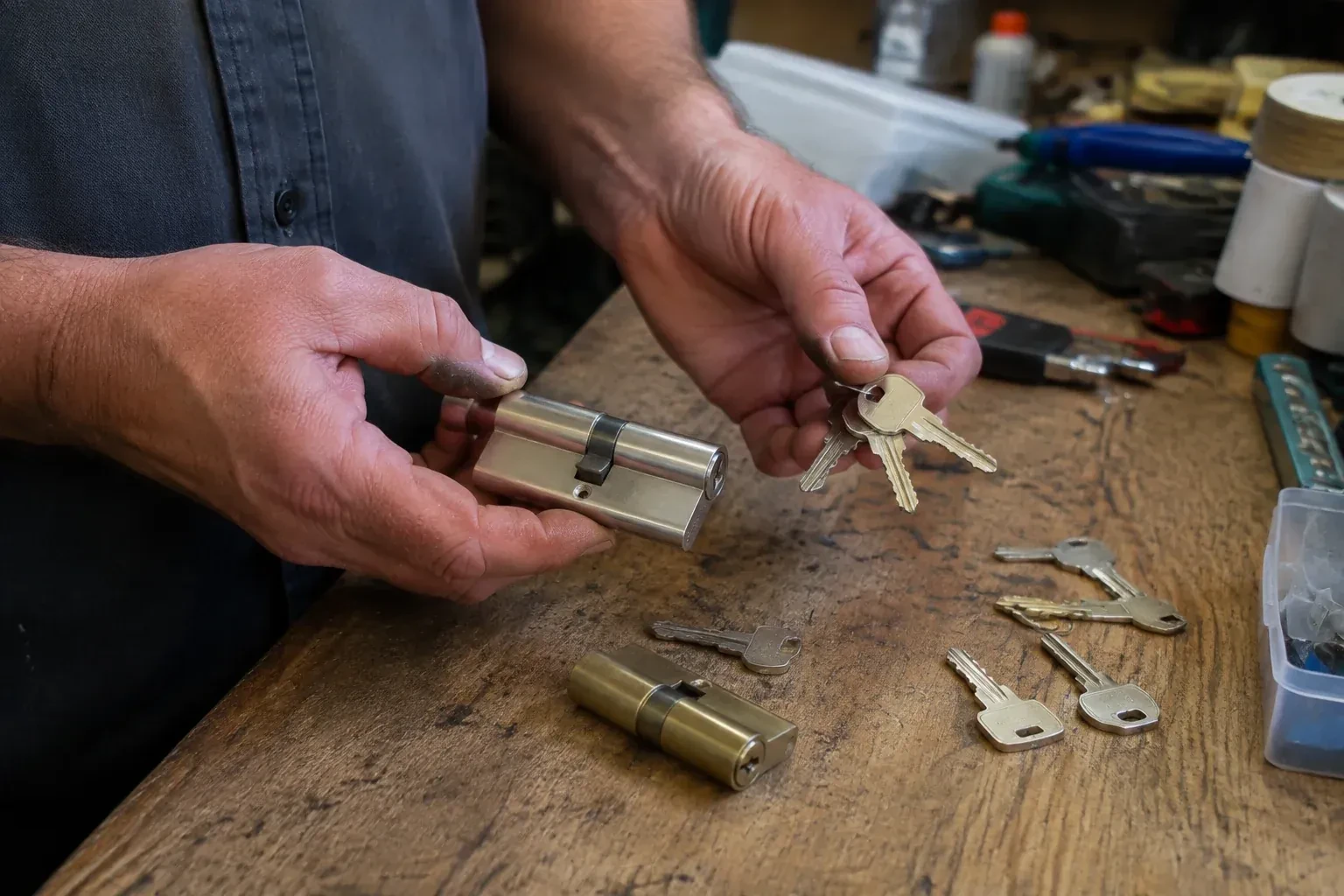
What is a restricted keyway, and does it change anything?
A restricted or patented keyway is one whose blanks are not sold to the public, so copies can only be cut by an authorized dealer from a record of who is allowed to have them. Rekeying such a cylinder is the same operation inside, but the new keys are cut from controlled blanks and the count is logged. The benefit is that a key cannot be duplicated at a kiosk without your knowledge, which makes the record of who holds one much easier to trust.
How long should the bolt be?
The bolt should extend at least 25 mm into the frame, which is the standard throw for a dwelling's entrance doors and the length most residential deadbolts provide. Part of the bolt stays inside the door for support while the rest sits in the pocket. A hardened steel insert that spins under a saw blade is a common feature worth having on doors that face a street or laneway.
My door has glass beside it. Should I fit a deadbolt keyed on both sides?
A keyed interior cylinder means finding a key to get out, which is not what you want on a door people use every day. The steadier answer for a door with glass is a single-cylinder deadbolt with a thumb-turn, combined with a reinforced strike, a longer bolt and a security film or laminated glass in the sidelight.
Can you make a key for a lock that has none?
Yes. A bit key is cut to the lock rather than copied from another key: the locksmith chooses a blank of the right size and files the bit until it clears the wards and lifts the levers inside your case, testing as they go. A pin-tumbler cylinder on a later lock is decoded or rekeyed and keys cut to it. Bring any loose keys that came with the house, since one may be close enough to serve as a starting pattern.
How does a smart lock cope with our winters?
Well, with a little planning. Cold reduces battery capacity, so the locksmith fits fresh cells of the type the maker specifies and points you to the low-battery alert, and a new set before the first hard frost is a good habit. The bolt is aligned with clearance so a door that swells or shifts with freeze and thaw does not strain the motor. Keep ice off the keypad, and use lock de-icer only in the key cylinder, never on the touch surface.
A tenant moved out of our building. Do we need to rekey the shared entry?
It is worth doing, since a move-out is exactly the situation a rekey is meant to cover: a former tenant's key still operates the same lock everyone currently living there relies on. Rekeying resets the cylinder to a fresh combination and issues new keys to current residents, without requiring a whole new lock in most cases. Bringing any other gates or doors that share that key along at the same time keeps the whole property on one current combination.
Is it common for a previous owner or tenant to keep a mailbox key?
It happens more often than people expect, especially in a building where compartments changed hands with a single set of keys and no clear record of who returned what. Replacing the lock rather than simply asking around settles it, since a new cylinder makes any key still out there, regardless of who holds it, stop working.
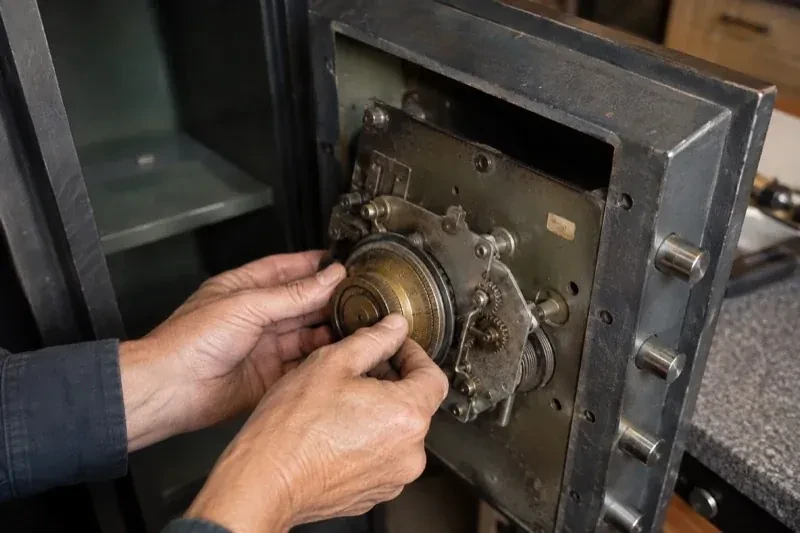
Can a mechanical dial safe be opened without drilling it?
Most of the time, yes. Manipulation reads the wheel pack through the dial by feel, and decoding tools built for a specific lock family read the gate positions directly, both without any lasting effect on the lock. Whether either works depends on the lock's own security rating and condition, since a high-security Group 1 lock resists these methods far longer than an older Group 2 one, but drilling is only used once both routes are ruled out.
Why does the inside of my fireproof safe feel damp?
A fire-rated interior works by sealing tightly, and that same seal traps ordinary household humidity over time with nowhere to go. Opening the door for a few hours every few weeks lets trapped air exchange with the room, and a desiccant packet inside absorbs moisture between those openings if it is refreshed on schedule. A musty smell or a soft-feeling document is the interior telling you it needs airing out.
What actually makes a lock high security?
Three things working together. The cylinder has a second locking mechanism, usually a sidebar released by finger pins or rotating pins, plus hardened steel in the path of a drill, so picking, bumping and drilling take far longer than on an ordinary lock. The deadbolt and strike are heavier and fastened into the framing. And the key is cut on a patented or restricted blank that only an authorised person can have copied. Remove any one and the door is weaker than the label suggests.
What happens with our fire exit doors and panic bars?
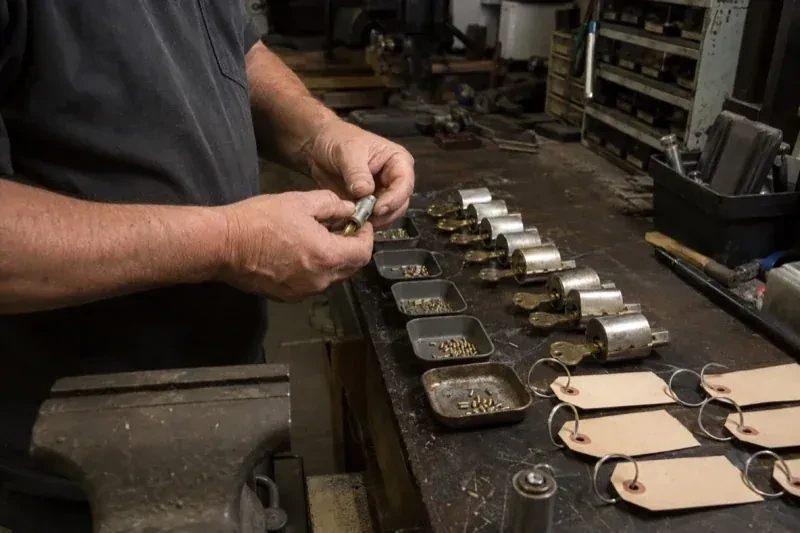
The outside cylinder on an exit door controls entry only, and it can be rekeyed like any other. The inside stays as it must: one push or one turn, no key, no special knowledge, on the exit door itself and on any door on the way to it. A locksmith will not add a keyed device to the inside of an exit, and will point out one if it already exists.
Can my existing locks be used, or do I need all new hardware?
Many existing cylinders can join a new hierarchy as they are, once their keyway and condition are confirmed compatible. Others, particularly older or mismatched hardware, are replaced so the whole system pins cleanly without cross-keying. The assessment identifies which doors fall into each group before any work begins, so the plan reflects what is actually on the property rather than assuming everything needs to change.
Can access control go on a fire exit or a required exit door?
Yes, with extra care taken specifically because it is an exit. A magnetic lock on an exit door is paired with a request-to-exit device and wired into the fire alarm system so it releases automatically the instant an alarm activates, and the door is confirmed to open with one motion from the inside at all times. An electric strike on an exit door generally needs no additional egress hardware.
Can the door be alarmed without making it hard to open?
Yes. An exit alarm module sounds when the device is used, which tells staff a door meant to stay closed has been opened, but it does not add any resistance to the push that releases the latch. The alarm is a notification layer on top of hardware that still opens under one motion, which is why it suits stockroom, dock or perimeter doors where entry through that opening should be rare.
How does this service differ from a home lockout or residential rekey?
A home lockout or residential rekey is usually about one door and one household's keys. Commercial-grade lock replacement more often involves a system, several doors, a master key structure, and sometimes a fire or exit rule the door has to satisfy, so the assessment, the hardware selected and the record kept at the end are all built around managing that wider structure rather than a single lock.
Should I call a tow truck or a locksmith?
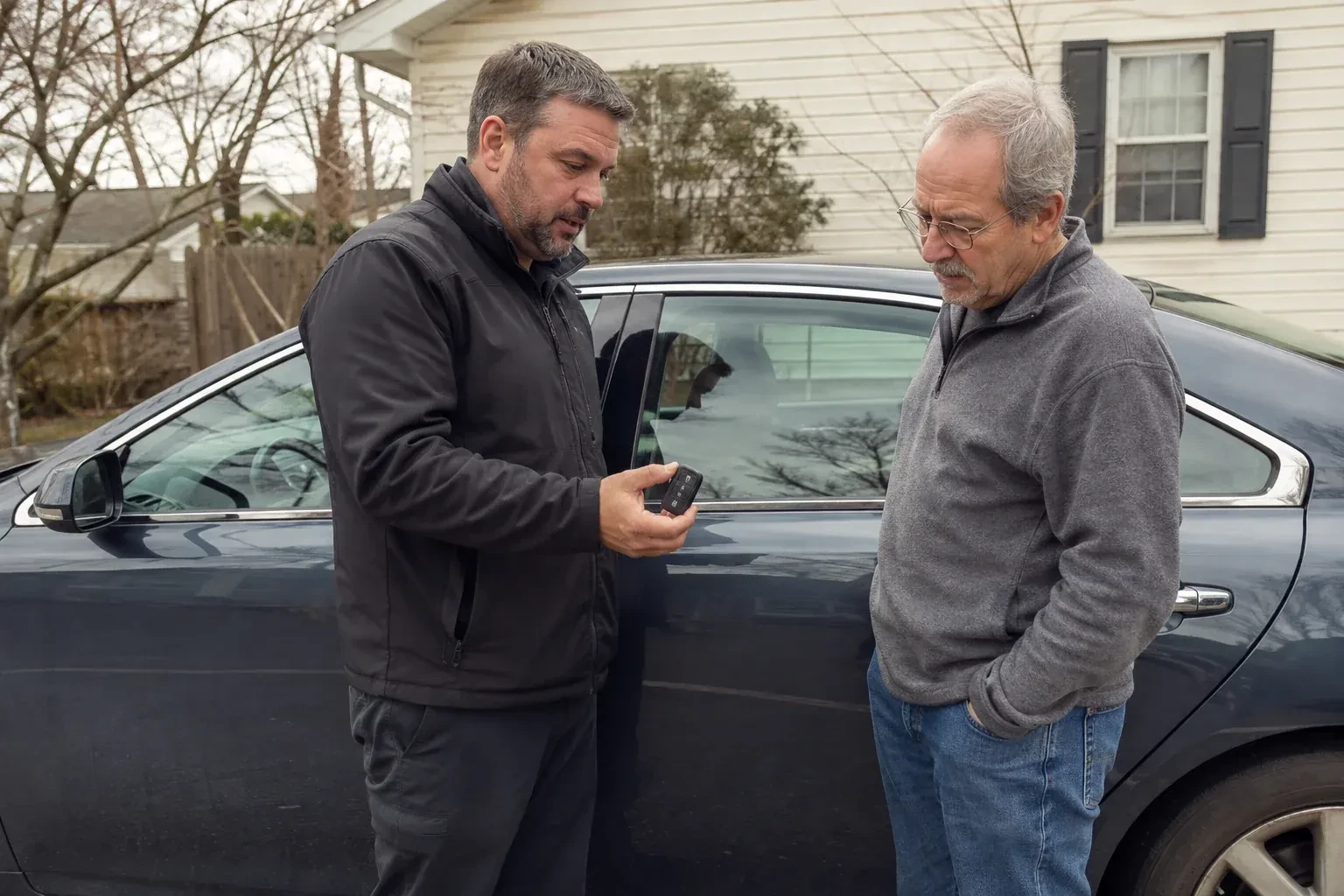
For keys locked in, lost or broken, a locksmith opens the car where it stands and can usually make a key on the spot, so the car drives away. A tow moves the car to a shop but leaves the key problem unsolved. Roadside clubs send a locksmith for lockouts and reserve towing for cars that cannot be made drivable. If the shoulder is unsafe to work on, a short tow first may be sensible.
My copied key opens the doors but the engine cuts out. Why?
The blade was copied but the chip was not. A hardware-store duplicate cut onto a plain blank has the right teeth, so it turns the locks and the ignition, yet the immobilizer hears no answer and shuts the engine off after a moment. The remedy is a proper transponder key: a blank with the correct chip, cut to your blade and programmed to the car, or a chip cloned from a working original.
Does cold weather affect a key fob?
Yes, in a couple of small ways. Battery performance drops in cold temperatures, so a fob that already had a fading battery is more likely to act up on a cold morning, and a proximity system's range can feel shorter in the cold as well. Testing a spare's battery before winter, and keeping a spare battery on hand, avoids being caught out by either.
Can a cracked fob shell be fixed without replacing the whole fob?
Often, yes. A replacement shell built for the same internal electronics can be fitted around the working circuit board and buttons, so a fob that still functions but looks and feels worn out gets a new case rather than a full replacement. This only applies when the electronics inside are still sound; a board damaged by water or impact may need the fob itself replaced.
Do I need paperwork from the dealer, or a code from them?
Not usually. Programming equipment reads and writes the vehicle's key list directly in most cases, without needing anything from the dealer. Many recent vehicles gate that access behind a manufacturer-level security session instead, which the locksmith handles as part of the visit rather than asking the owner to obtain anything in advance.
My key turns but the engine doesn't crank. Is that an ignition lock problem?
It can be, but it can also point past the lock entirely, toward the electronic immobilizer, the transponder chip in the key, or wiring behind the switch. The locksmith checks whether the barrel itself moves cleanly through every position first. If it does, and the vehicle still stays silent, the electronic side is one possibility among several, alongside the battery, starter and park/neutral circuit, so the cause is diagnosed rather than assumed.
Is it normal for only the trunk or hatch lock to fail while the doors are fine?
Yes, this happens fairly often because a trunk or hatch lock gets used far less than the door locks and can seize from disuse, dust or corrosion, or spin freely if its own linkage has come loose over time.
Could a key from one motorcycle ever accidentally open a different one?
It is uncommon but not impossible, since wafer locks have a limited number of combinations and manufacturers reuse keyway profiles across models. This is one reason manufacturers space their depth increments further apart than the lock's tolerances strictly require, to cut down on accidental matches. It is also why a locksmith reads the specific lock in front of them rather than assuming a key that looks similar will behave the same way.