Lockouts · Tillsonburg
Seized & Jammed Lock Opening in Tillsonburg
Every time you pull the key out of the side door it comes away gritty.
In plain words
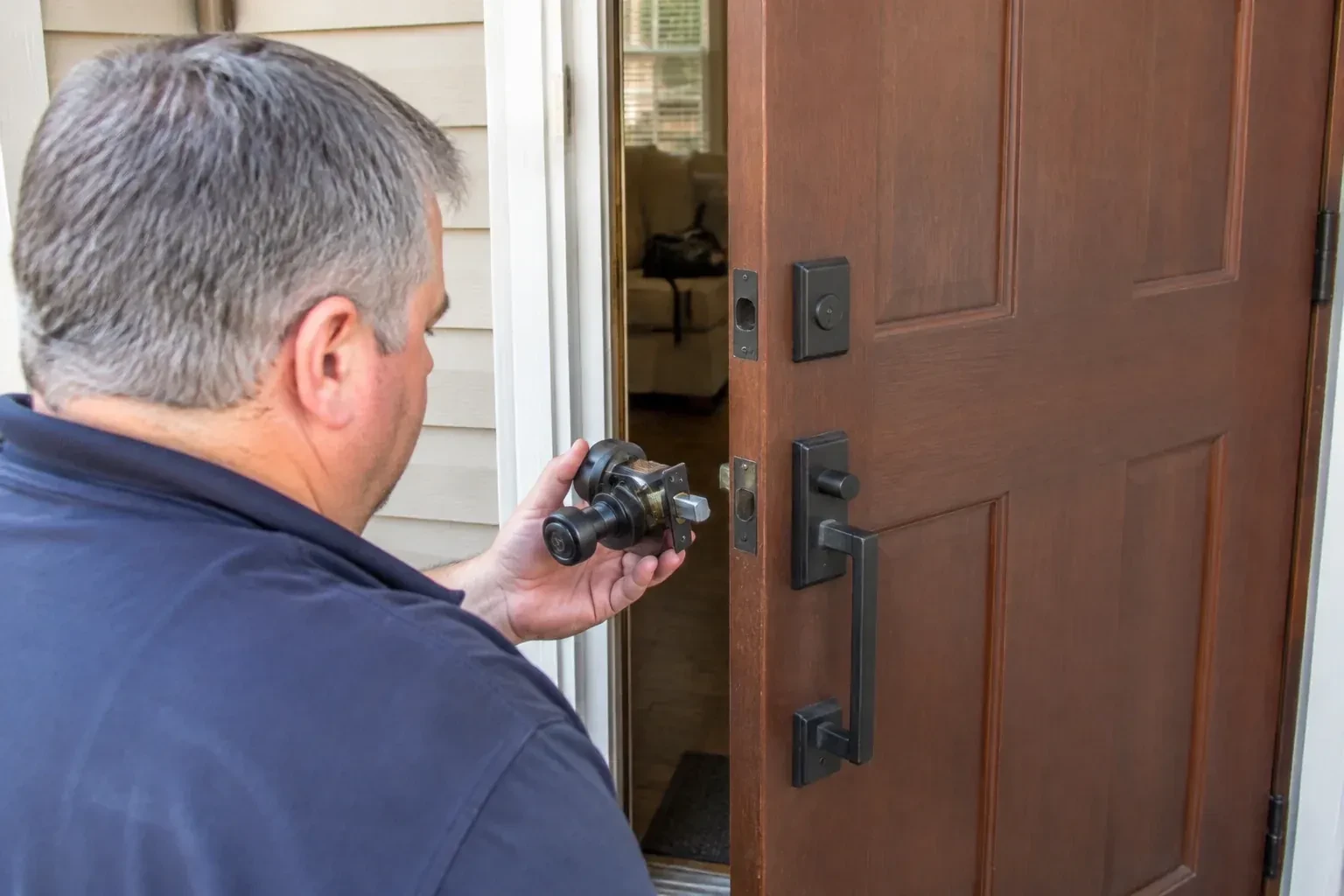
Many jammed locks are not lock problems at all. Wood doors swell in humid weather and shrink in dry winter air, hinges loosen and let the door drop, and a strike plate that was fine in spring is a few millimetres out by autumn. When that happens the bolt is squeezed in its pocket and the key cannot move it. The locksmith checks this first by loading the door in different directions while working the key, and by comparing how the lock behaves with the door open. If the door is the cause, the opening is gentle and the lasting fix is a hinge, strike or seal adjustment.
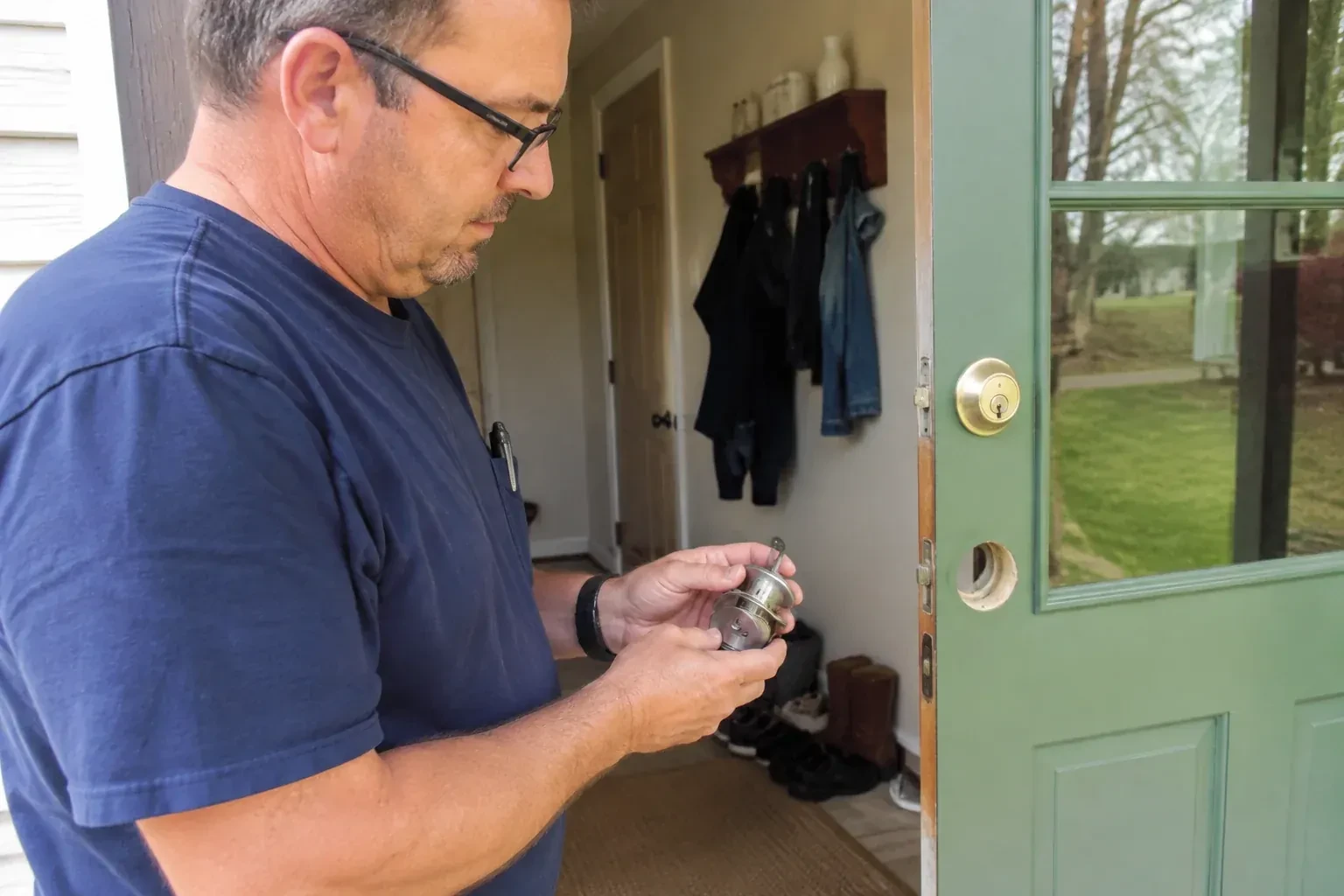
How the visit goesIt is the coldest morning of the winter and the key goes halfway into the side door and stops. There is frost on the face of the cylinder, and the door on the shaded side of the house has done this before.
Seized & Jammed Lock Opening
How the visit goes
Strike plate, bolt pocket and seal
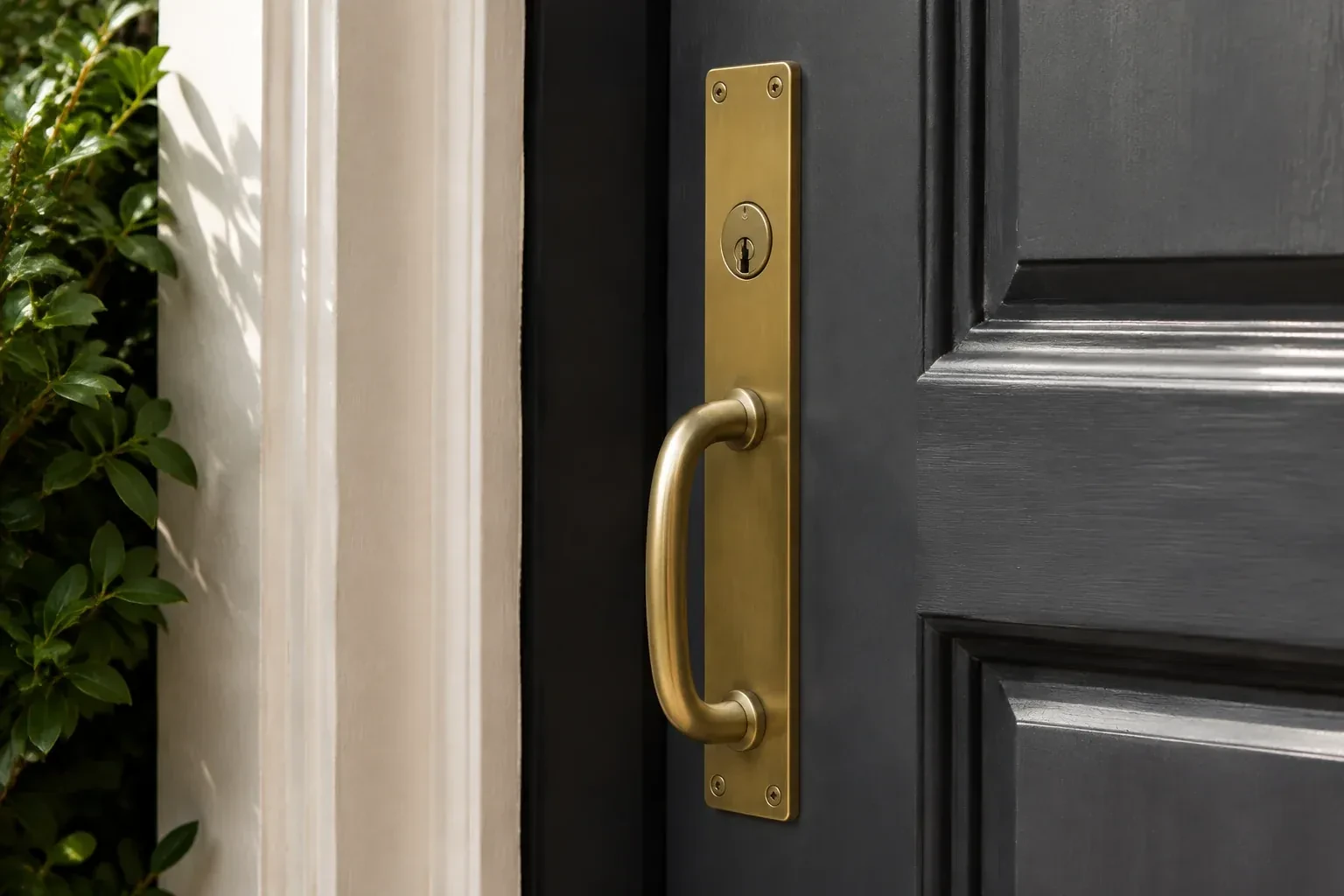
The frame side gets as much attention as the door side. The locksmith looks at where the bolt meets the strike plate: scuff marks on the plate's edge, a bolt pocket shallower than the roughly twenty-five millimetres a deadbolt needs, paint or filler that has crept into the pocket, and weatherstripping thick enough to hold the door proud of the frame. A dab of chalk on the bolt end shows exactly where it lands. These findings explain a lock that works with the door open and jams when it is shut, and they point to a chisel, a screwdriver and a strike adjustment rather than to anything inside the cylinder.
Thawing ice and clearing salt
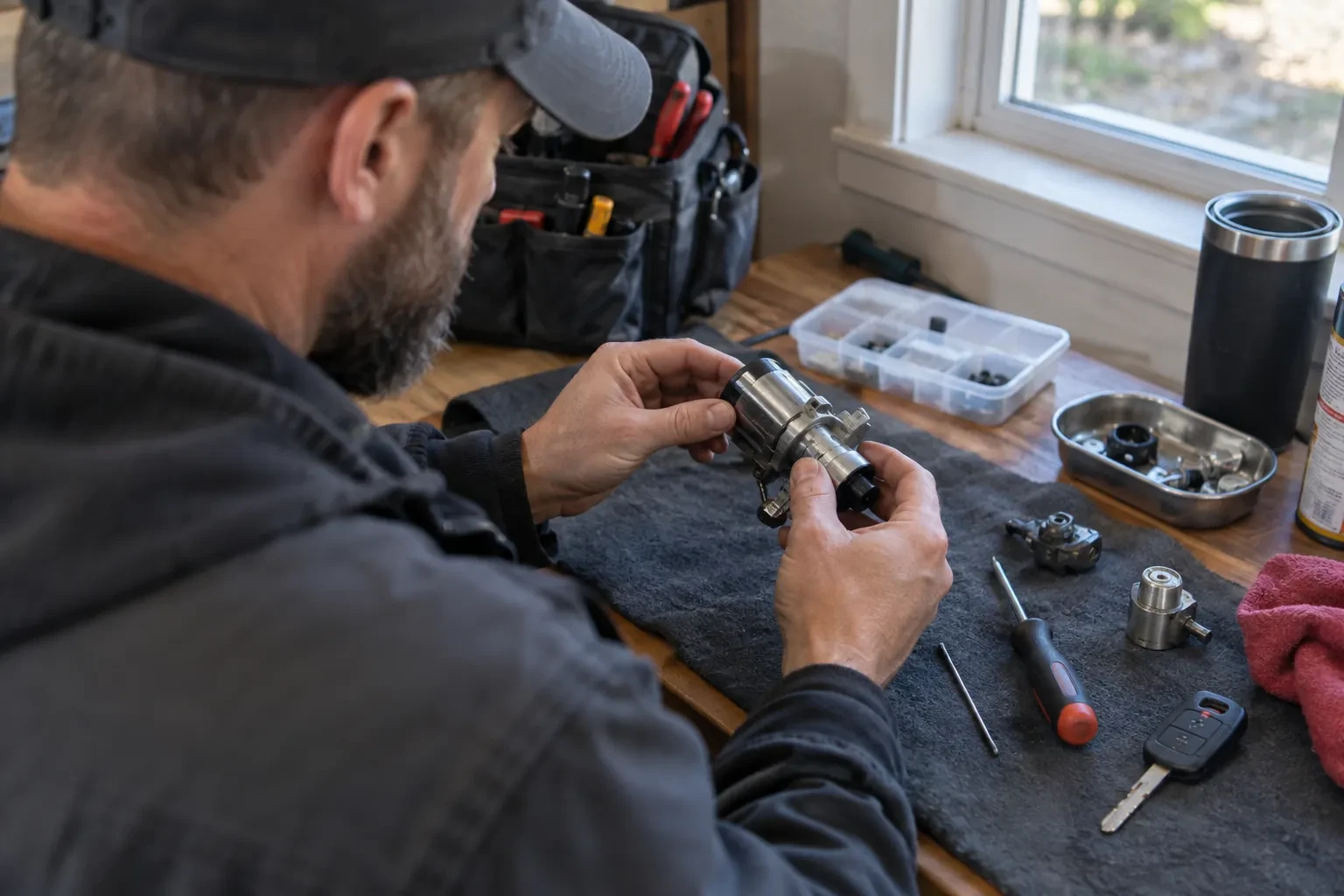
Ice is melted, never chipped. A lock de-icer or gentle warmth on the cylinder face turns the frozen meltwater back to liquid so it can drain, and the key is then worked until the plug turns. Boiling water is kept well away, because it refreezes inside and can crack cold brass. Salt crust is flushed out with contact cleaner and the plug is dried thoroughly before any lubricant goes in, since salt and moisture sealed under lubricant keep corroding. The cylinder is then dressed with the lubricant specified for that product, applied once everything is dry. If the weatherstrip has frozen to the door, that bond is released and the seal wiped.
The early warnings to act on
A lock gives notice before it seizes, and now you know the signs. A key that needs a jiggle to seat, a plug that turns stiffly on cold mornings, a bolt that drags in its pocket, a lever that returns slowly, or a key that comes out gritty are all invitations to act while the fix is small. Stop as soon as a key begins to bend; a snapped key turns a service call into an extraction. A puff of dry lubricant or a turn of the strike screws often settles it, and a call while the lock still turns is a shorter visit than a call after it stops.
Seized & Jammed Lock Opening
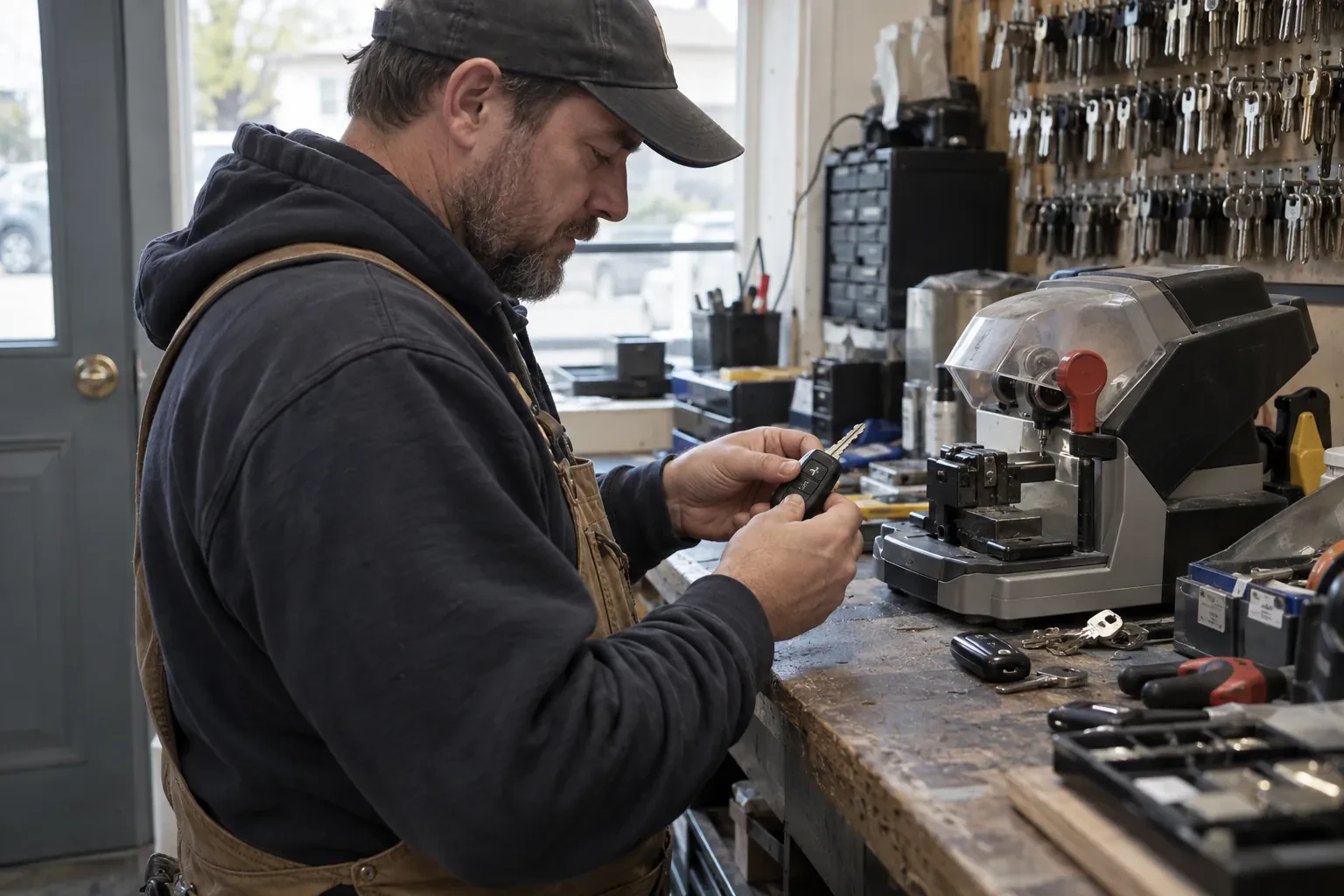
In the van
Replacement cylinder
Dry PTFE or graphite lock lubricant
Cylinder springs, pins and cap
Strike plate and hinge shims
Key blanks and code cutter
Seized & Jammed Lock Opening
What affects the quote
When the call comes in
An evening, weekend or holiday call for a jammed lock costs the same amount as a weekday one. The locksmith looks at what is actually jammed once on site, and the exact figure follows from that, not from the clock.
Type of lock on the door
A residential deadbolt, a knob latch, a lever set, a mortise case in an older house and a high-security cylinder each take different tools and time to open and to service.
Signs of an earlier struggle
A key snapped in the plug, a twisted cylinder or a bent latch from a screwdriver adds an extraction or a repair to the opening, and the locksmith points that out before quoting it.
What to have ready
- Has anyone sprayed oil or another product into the keyway?
- Does the lock work if you push, pull or lift the door while turning the key?
- Which side of the building does the door face, and is it near a salted driveway?
Seized & Jammed Lock Opening: questions
QuestionsWhat should I tell you on the phone?
Say what the key does: refuses to turn, spins without effect, or works only when the door is pushed or pulled. Name the lock type if you can, whether it is a deadbolt, knob, lever or an old mortise lock, and which side of the building the door faces. Mention recent weather, any spray that went into the keyway, any other door you can use, and whether anyone is inside. That short list decides the tools that come.
How can I tell whether the lock or the door is the problem?
Try the key while gently pushing, pulling and lifting the door. If it frees up in one position, the bolt is being pinched by the frame and the door is the cause. If nothing changes, look at the key: does it go fully in and refuse to turn, or spin freely? The first points to the cylinder, the second to the tailpiece behind it. Tell the locksmith which you found and the right parts come in the van.
My keypad deadbolt is jammed and the motor just whirs. Is that the same service?
Yes, with one difference. On an electronic deadbolt the motor is trying to throw a bolt that is bound in the strike, and it strains or times out instead of driving it. Door alignment is a common cause, though batteries, corrosion, an overtightened mounting bolt, or a hardware fault can produce the same strain. The locksmith frees the bolt, adjusts the strike or hinges so it travels without resistance, checks the battery contacts, and confirms the auto-lock throws cleanly with the door closed.
Related services
- Business Lockout ServiceA cook stepped into the alley with the recycling and the rear door swung shut behind him.
- Broken Key ExtractionOvernight the deadbolt froze, and this morning the key would only turn partway.
- Break-In Damage Lock RepairSomeone smashed the little window beside the door, reached in and turned the thumb-turn.