Car keys · Norfolk County
Motorcycle & Scooter Keys
A copy cut at a hardware kiosk turns the ignition on some mornings and skips it on others, occasionally sticking halfway and needing a wiggle that the original key never required.
In plain words
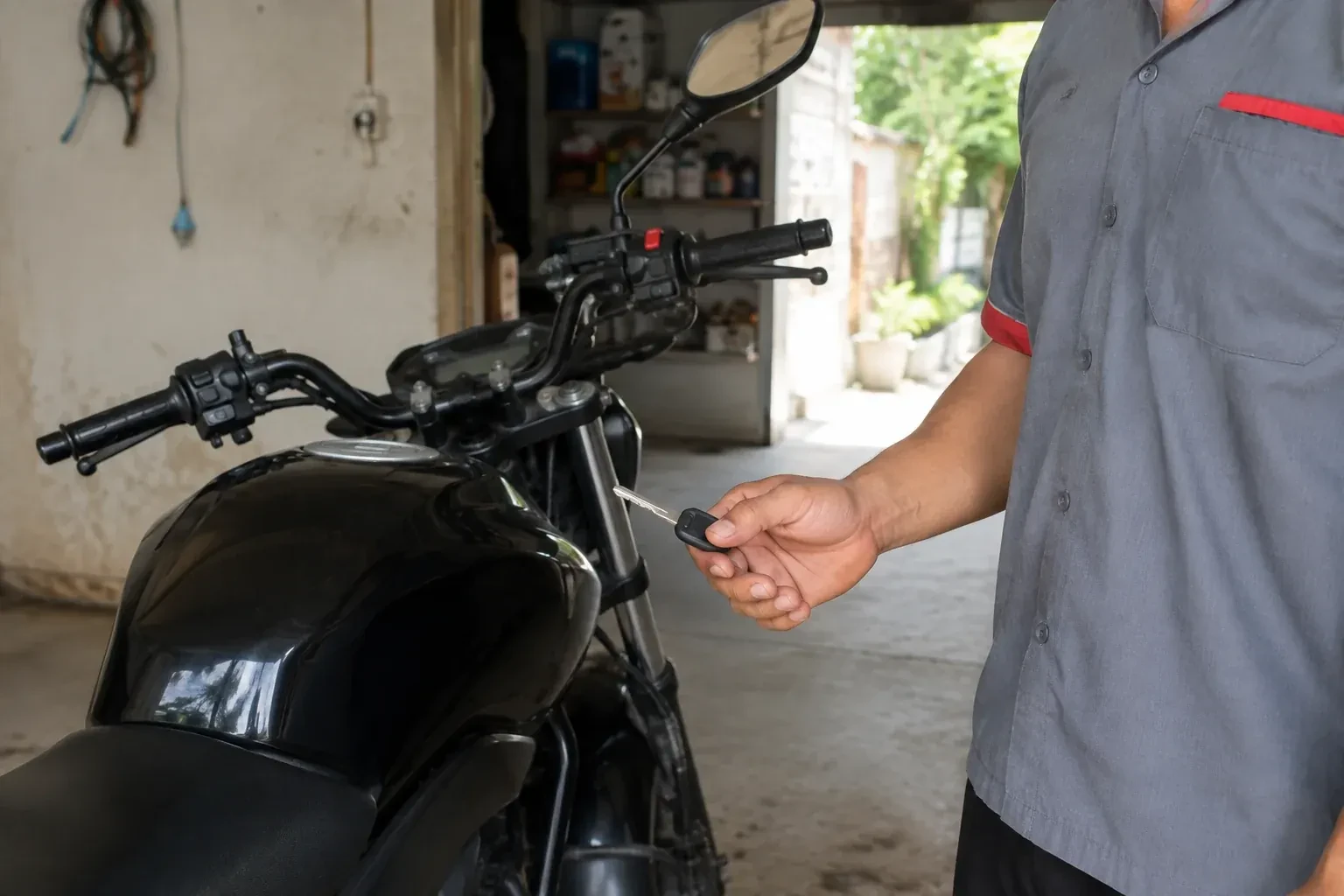
A machine bought without a full history often arrives with one worn key and no idea what, if anything, opens the seat or the fuel cap. Key service in that situation starts by identifying every lock on the machine and testing whichever key came with it against each one, then decoding or cutting whatever the existing key does not already cover. The result is a full, known set of keys for the machine rather than a single blade of uncertain origin.
How the visit goesTwo keys came with the scooter: one for the ignition and steering, an entirely different one for the seat and the storage compartment underneath it, so opening the seat means carrying twice the metal.
Motorcycle & Scooter Keys
How the visit goes
Checking the steering lock's condition
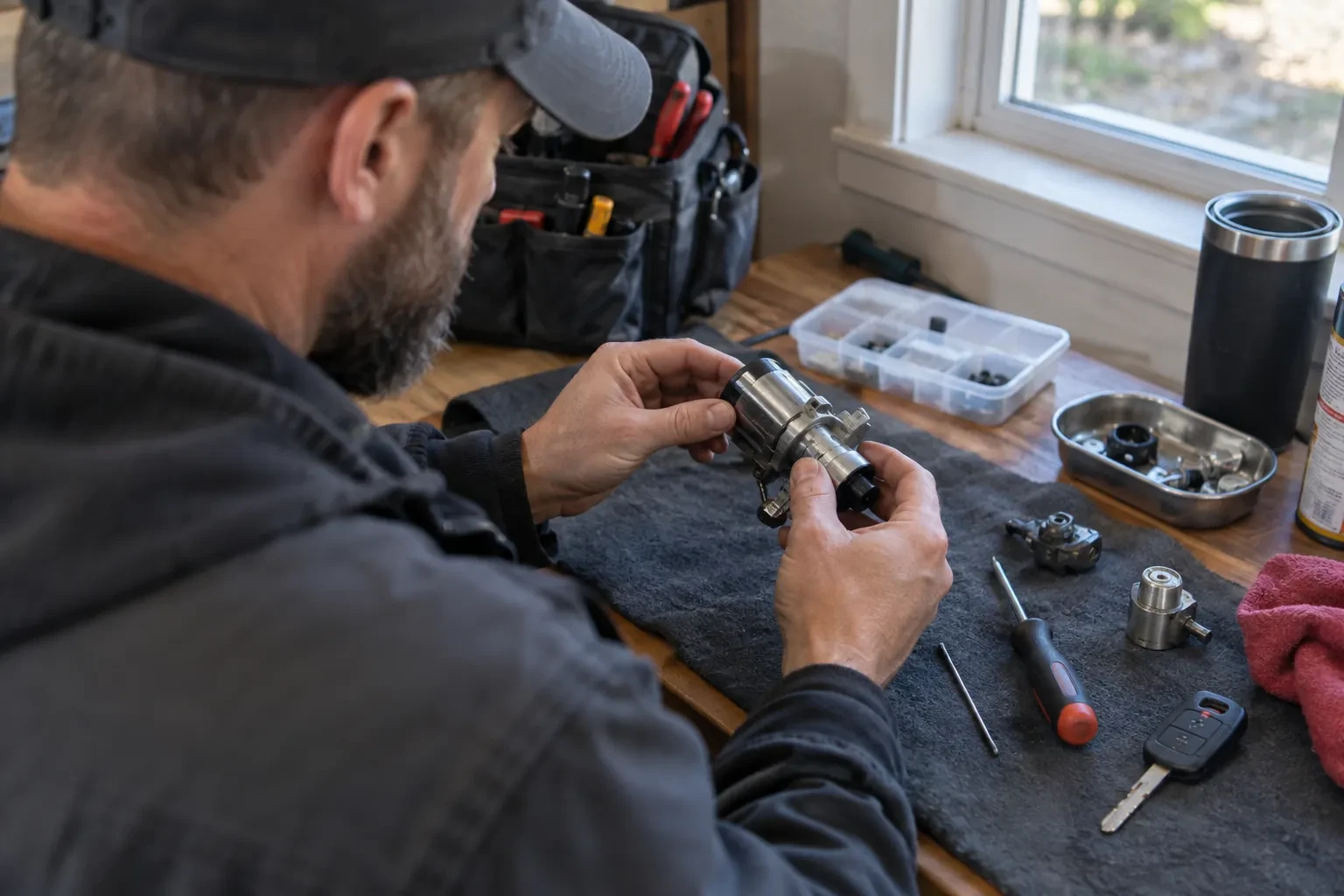
Where the steering lock is a separate mechanism from the ignition switch, or has simply sat unused through a season of storage, the locksmith tests how freely it turns before relying on it to hold the front wheel. A lock that resists turning, catches partway, or needs unusual pressure is flagged early, since forcing it with a new key risks the same snapped blade that likely affected the old one. This check takes only a moment but matters, because a steering lock that will not release properly can leave the machine effectively immobile even with a working key in hand.
Freeing a seized steering lock
A steering lock seized by rust, dried grease or months of disuse is worked open with the cleaning method the lock's own maker directs and small, repeated movements rather than a harder push on the key. The locksmith lets the fluid sit, works the lock gently from both directions, and repeats rather than reaching for more force, since a stuck lock forced past its resistance is more likely to break internally than release cleanly. Once it turns freely through its full range, it is cycled several times and dressed with whatever lubricant its maker specifies so it moves easily the next time the machine is parked.
Looking after a wafer lock
A wafer lock rewards a little occasional attention. Cleaning matters more than lubricant for a wafer lock like this; where the maker calls for it, a puff of the specified lubricant into the keyway once or twice a year keeps the wafers moving freely. Wiping the key itself clean before use, especially after a wet ride, keeps grime from being carried into the lock on every insertion. These are small habits, but they are the difference between a lock that turns the same way for years and one that slowly stiffens.
Motorcycle & Scooter Keys
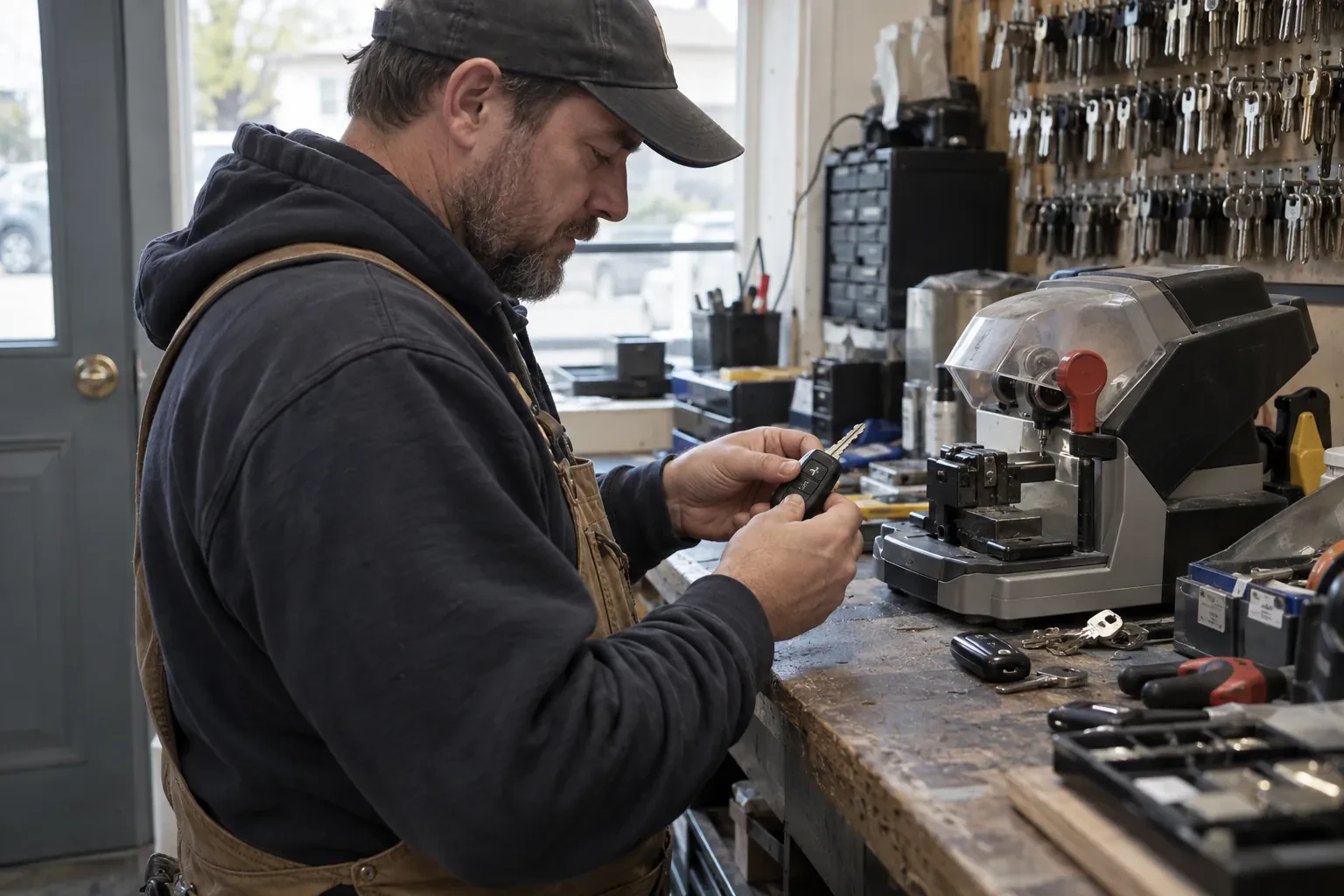
In the van
Transponder programming unit
Motorcycle key blanks
Replacement transponder chips
Replacement ignition or steering lock
Code-cutting machine
Motorcycle & Scooter Keys
What affects the quote
Whether the lock needs replacing
Where wafers, springs or the housing itself are worn or damaged beyond a clean repair, replacing the lock rather than continuing to chase a fit is the more practical route, and is quoted as its own item.
Make, model and age of the machine
Make, model and age decide how common the keyway and blank are. A widely used platform is usually the more straightforward case; an uncommon or older machine can take longer to source parts for.
Number of locks on the machine
A single ignition lock is the simplest case. A machine with a separate seat, fuel cap and storage lock involved is a longer visit with more hardware to read, cut and test.
What to have ready
- Where is the machine currently kept?
- Has anyone already tried to cut or copy this key elsewhere?
- Is the steering lock turning freely, or does it feel stuck?
Motorcycle & Scooter Keys: questions
QuestionsCould a key from one motorcycle ever accidentally open a different one?
It is uncommon but not impossible, since wafer locks have a limited number of combinations and manufacturers reuse keyway profiles across models. This is one reason manufacturers space their depth increments further apart than the lock's tolerances strictly require, to cut down on accidental matches. It is also why a locksmith reads the specific lock in front of them rather than assuming a key that looks similar will behave the same way.
Do you need the vehicle's VIN to make a key?
It helps but is not always required. The VIN can confirm the exact model and sometimes points to a factory key code on file, which speeds up cutting a key without reading the lock from scratch. Where the VIN is not available or does not lead anywhere useful, the locksmith works directly from the lock or an existing key instead, so a missing VIN slows the process rather than stopping it.
Do all motorcycles have an immobiliser these days?
Not all of them. Many machines built in roughly the last two decades carry a transponder chip and an ignition module that checks it, but plenty of smaller-displacement bikes, scooters and older machines still use a purely mechanical lock with no electronic layer at all. The locksmith checks for a coil around the ignition barrel and asks how the engine behaves with the current key to tell which type is on hand.
Related services
- Car Key ReplacementThe key snapped at the head while you were turning it in a stiff, frosty door lock.
- Spare Car Key DuplicationA lockout last month ended with a locksmith opening the door and going home, and the same single key has been carried ever since with nothing behind it.
- Key Fob ProgrammingA new driver has joined the household, and the one existing fob is the only key anyone has ever had cut for this vehicle.