Car keys · Norfolk County
Vehicle Lock Repair
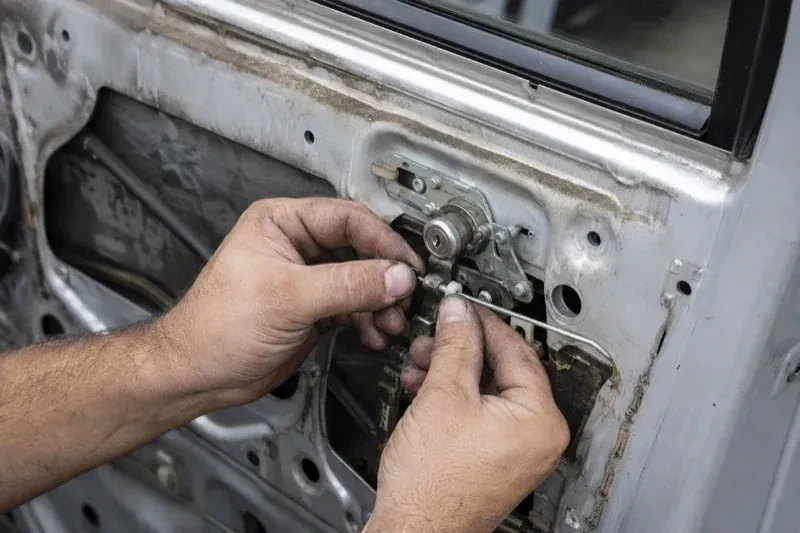
Every door drops into place together when the fob is pressed, except the driver's door, which stays unlocked while the rest click shut around it.
In plain words
Vehicle Lock Repair addresses a single locking point, a door, the trunk or hatch, or a storage compartment, that has stopped behaving like the rest of the vehicle. After confirming the customer's connection to the vehicle against its registration, the locksmith opens the affected panel, tests the cylinder, the linkage and, where fitted, the power actuator, and traces the fault as far as it goes. Repair or replacement usually targets that part alone, though freeing a stuck mechanism can sometimes need a carrier plate, glass run guide or latch replaced alongside it; either way, the finish and the rest of the locking set carry on as they were.
How the visit goesEvery door drops into place together when the fob is pressed, except the driver's door, which stays unlocked while the rest click shut around it. A twist of the key still locks that door by hand, so the mechanism inside is clearly still working.
Vehicle Lock Repair
How the visit goes
Confirming the vehicle is yours to work on
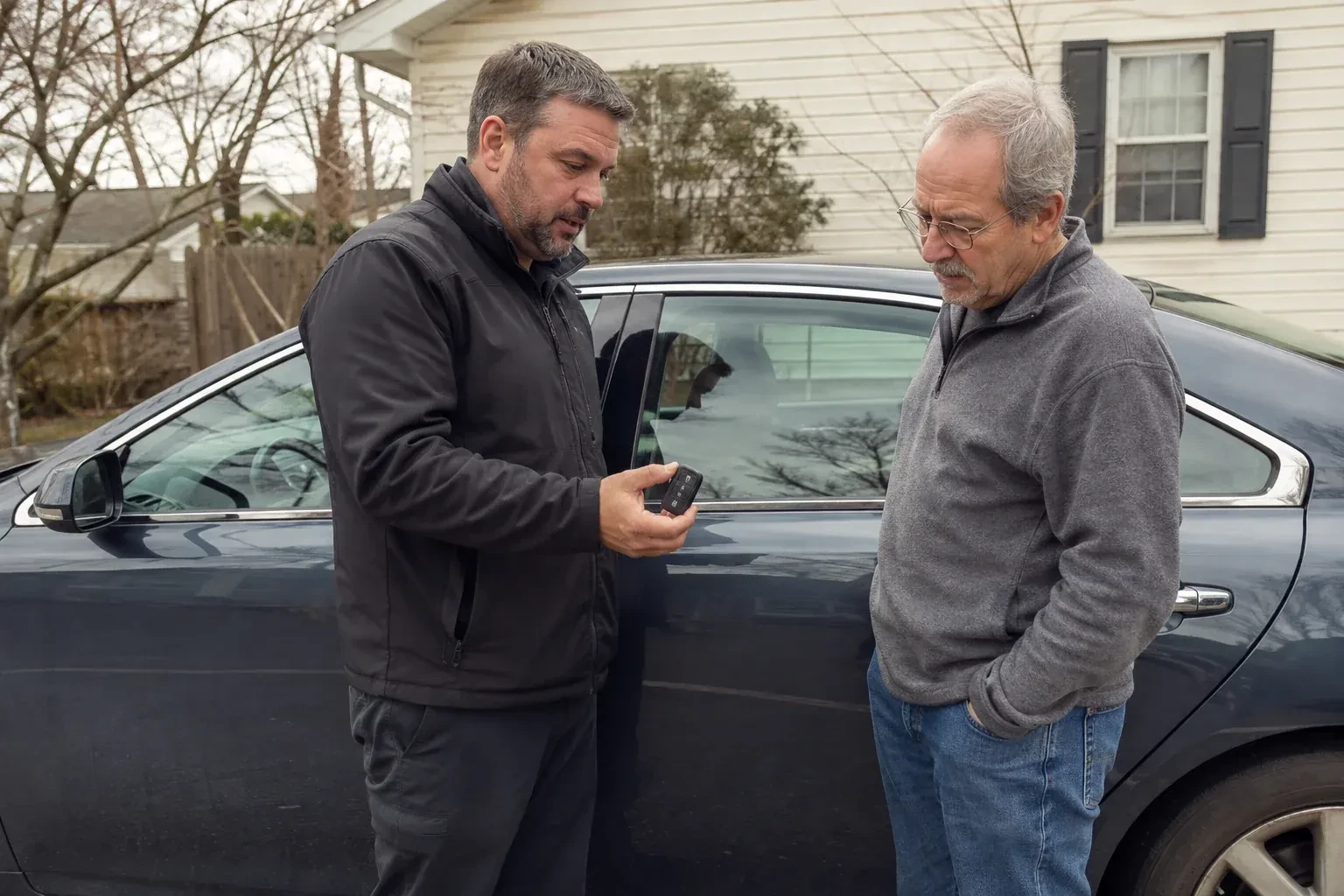
Before any panel comes off, the locksmith confirms that the person asking for the repair has the right to have it done. The vehicle's registration document, matched against the vehicle identification number stamped on the dash or door jamb, is the simplest route, and a rental agreement or fleet authorization does the same job for a vehicle you do not personally own. This step protects every vehicle a locksmith is asked to open or repair, including yours, and it happens before the first tool touches the door.
Replacing a power lock actuator
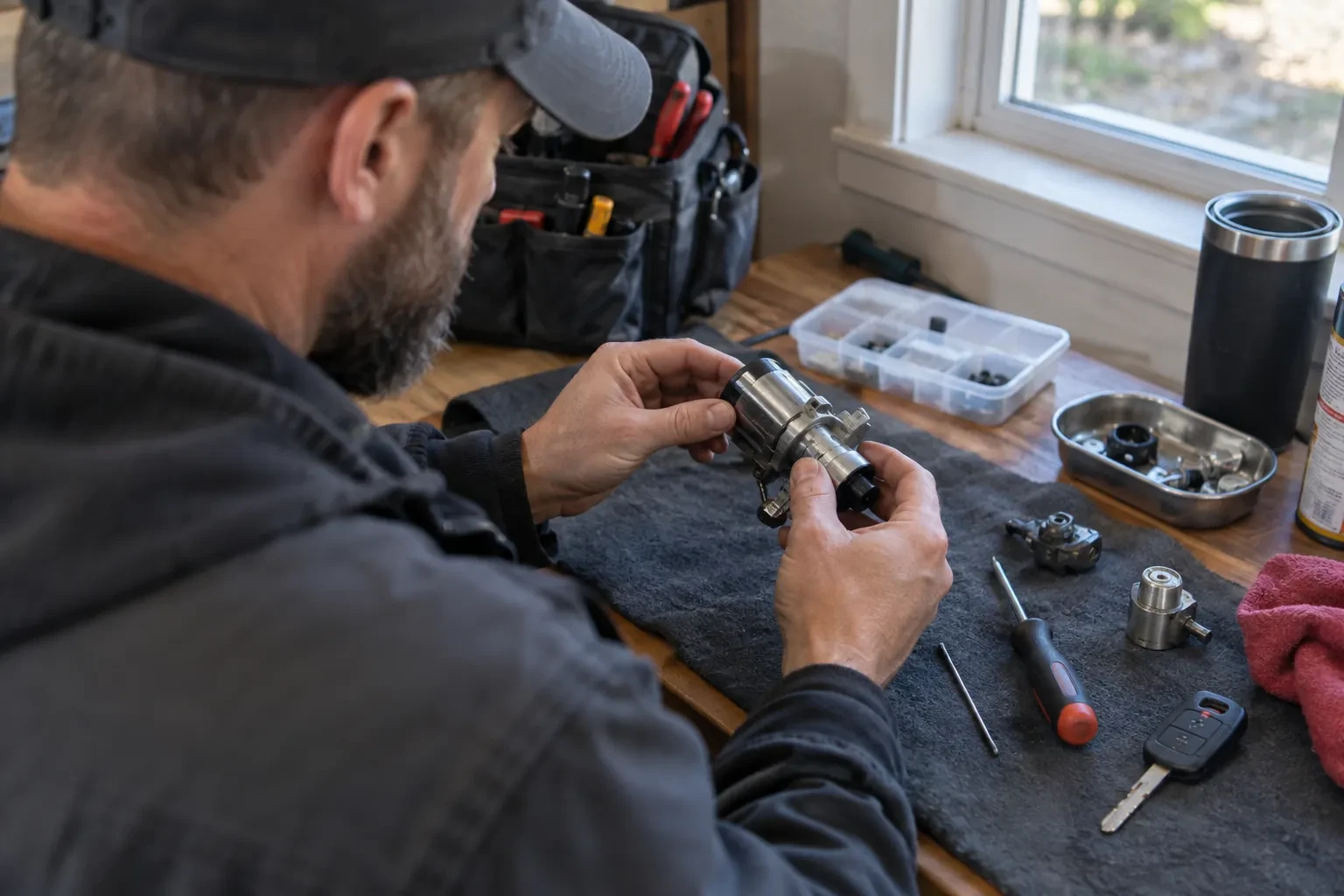
A door that answers the key but ignores the remote is checked before any part is named: partial manual-lock position, door fit, cable routing, connectors and harness continuity can restore it without a new part, and only once those are clear does a worn power lock actuator, the small motor that pulls the linkage, become the answer. The locksmith removes the failed unit, connects the replacement to the existing wiring and linkage, and tests it through several full cycles before the panel is closed up, confirming both the switch inside the car and the remote outside it move the lock the same way.
Looking after the key fob going forward
A freshly serviced fob does well with a little care: keep it away from standing water and away from high heat on a dashboard in direct sun, since both shorten a coin battery's life and can affect the case seal. If the battery was replaced during this visit, it is worth noting roughly when, since most fob batteries last a few years and a slow response is often the first sign the next one is due.
Vehicle Lock Repair
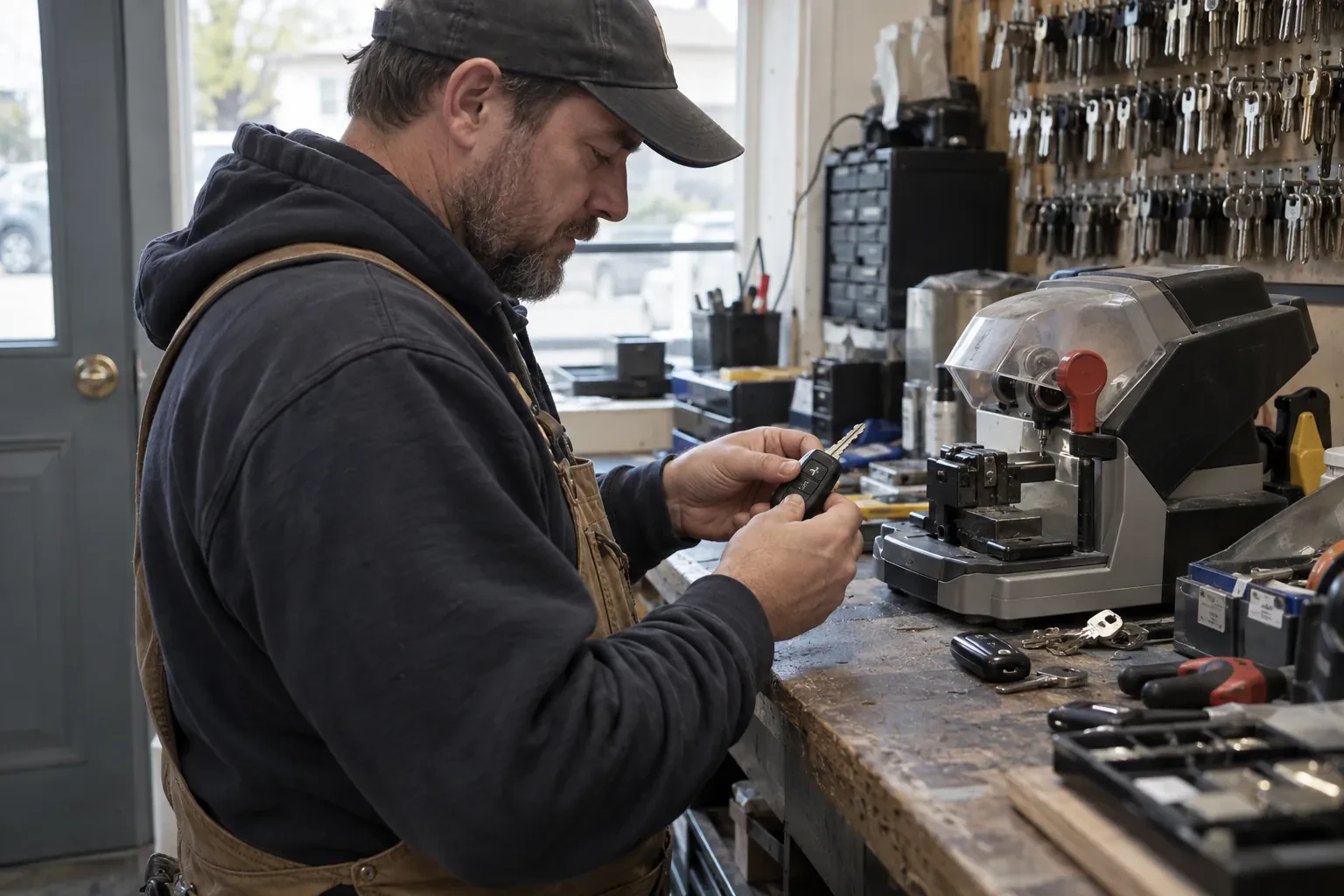
In the van
Power door lock actuator
Transponder chips
Key blanks cut to code
Trim panel removal tools
Linkage rods and clips
Vehicle Lock Repair
What affects the quote
Getting to the vehicle
A vehicle parked in an accessible driveway is straightforward. One in an underground garage, a gated lot or a location with limited parking adds time that the quote takes into account.
Condition of the trim panel and clips
Interior panels and their retaining clips vary in how easily they come off and go back on without marking or breaking. Older or previously disturbed panels sometimes need extra care or replacement clips.
Central locking versus a single door
A fault confined to one lock is more contained than one that involves the vehicle's central locking module or wiring shared across several doors, which takes longer to trace and quotes accordingly.
What to have ready
- Does the key turn without effect, resist turning, or not go in at all?
- Which lock is affected: a door, the trunk or hatch, or a storage compartment?
- Has the key fob's battery been replaced recently, or not that you recall?
Vehicle Lock Repair: questions
QuestionsIs it normal for only the trunk or hatch lock to fail while the doors are fine?
Yes, this happens fairly often because a trunk or hatch lock gets used far less than the door locks and can seize from disuse, dust or corrosion, or spin freely if its own linkage has come loose over time.
Can a damaged weatherstrip really affect the lock itself?
Yes. A perished or torn seal around a door or hatch lets rain and winter brine reach the cylinder, the linkage and the wiring behind the panel, and repeated exposure is one of the more common reasons a lock that used to work smoothly starts sticking or failing.
What should I do before calling about a vehicle lock problem?
Note which lock is affected, whether the key turns without effect or resists turning, and whether the remote behaves differently from the mechanical key on that same door. That description helps the locksmith bring the right parts for the specific fault.
Related services
- Car Key ReplacementThe key snapped at the head while you were turning it in a stiff, frosty door lock.
- Spare Car Key DuplicationA lockout last month ended with a locksmith opening the door and going home, and the same single key has been carried ever since with nothing behind it.
- Key Fob ProgrammingA new driver has joined the household, and the one existing fob is the only key anyone has ever had cut for this vehicle.