Commercial · Norfolk County
Commercial Rekeying
A key turned up in the parking lot with the shop's name on its fob.
In plain words
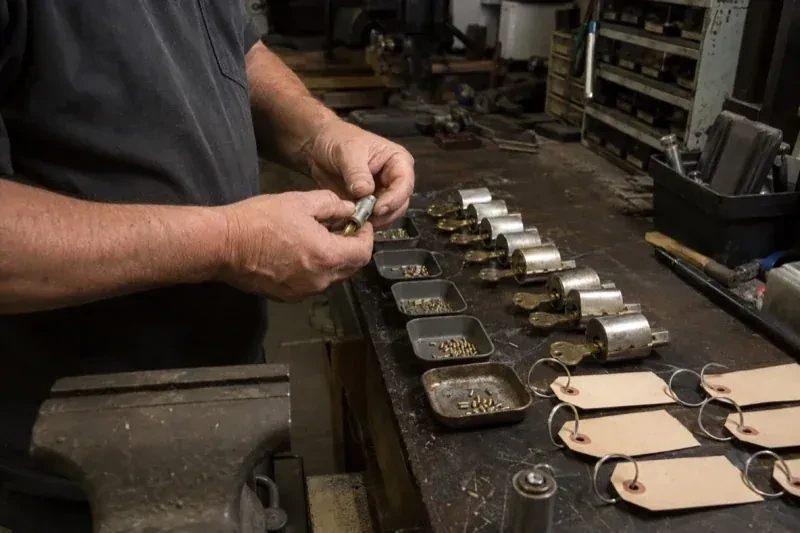
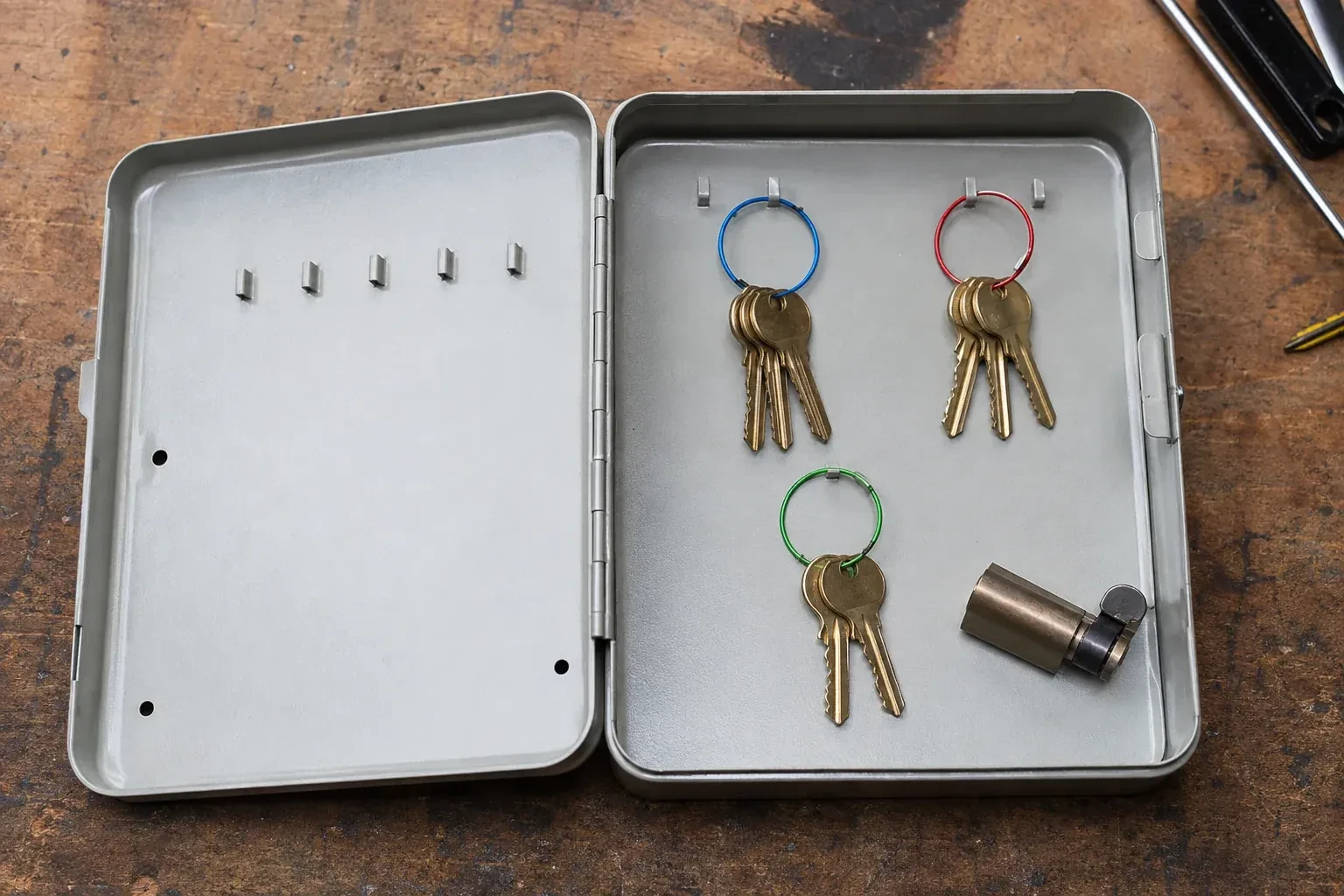
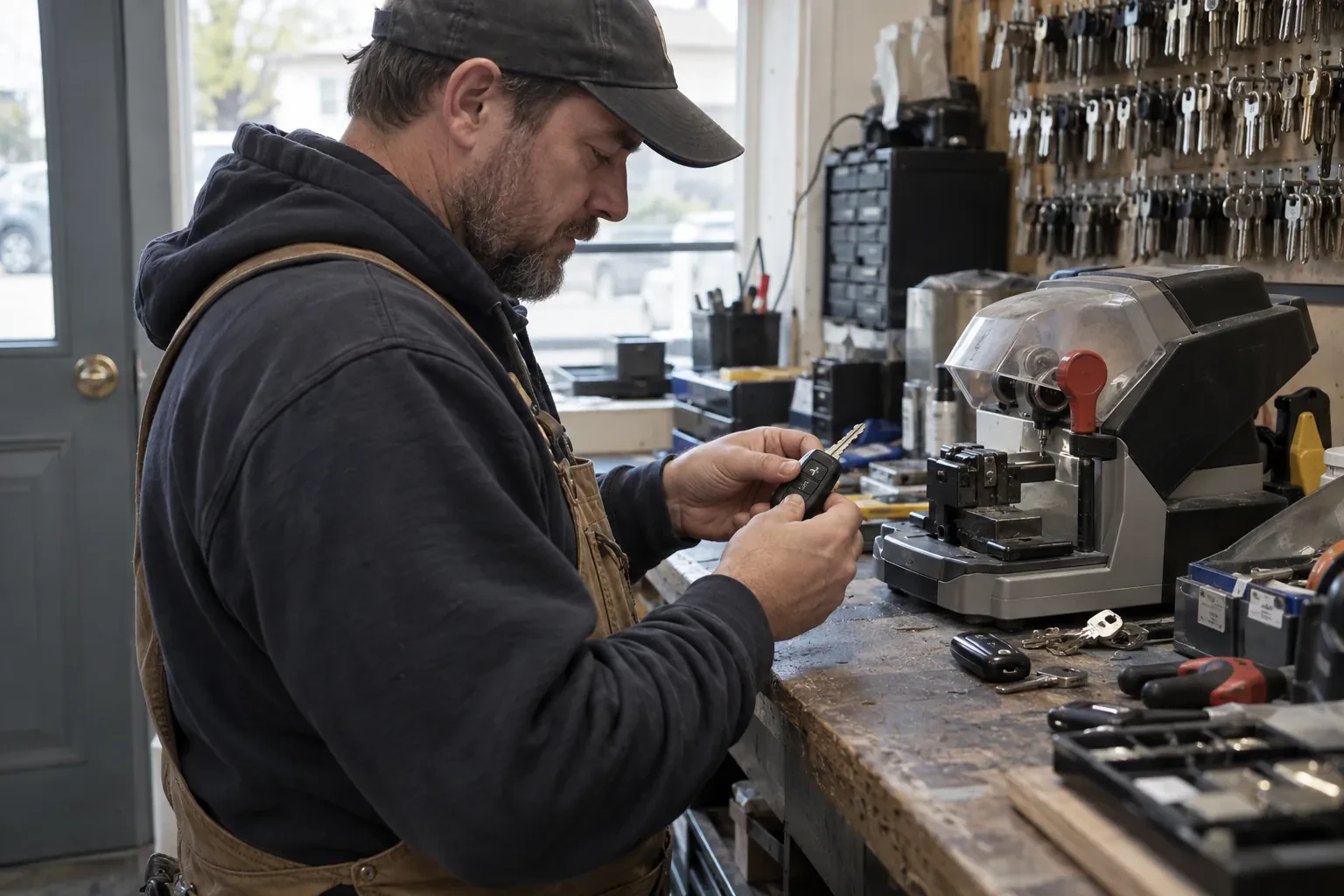
A commercial rekey is planned around the trading day. The locksmith agrees a window, often after close or before opening, and works door by door so the premises is never left without a locking entrance. Cylinders come out, are repinned at a bench in the van or on a counter, and go back in; interchangeable cores are simply swapped for freshly combinated ones. Each door is tried with both new and old keys before the next is started. New keys go to whoever opens up in the morning, and a written chart of doors and key groups stays with the manager.
How the visit goesA key turned up in the parking lot with the shop's name on its fob. It came back to you, which is lucky, but it means keys are leaving the building on rings you have never seen, and the shop's locks have not changed since opening day.
Commercial Rekeying
How the visit goes
A walk of every door and lock
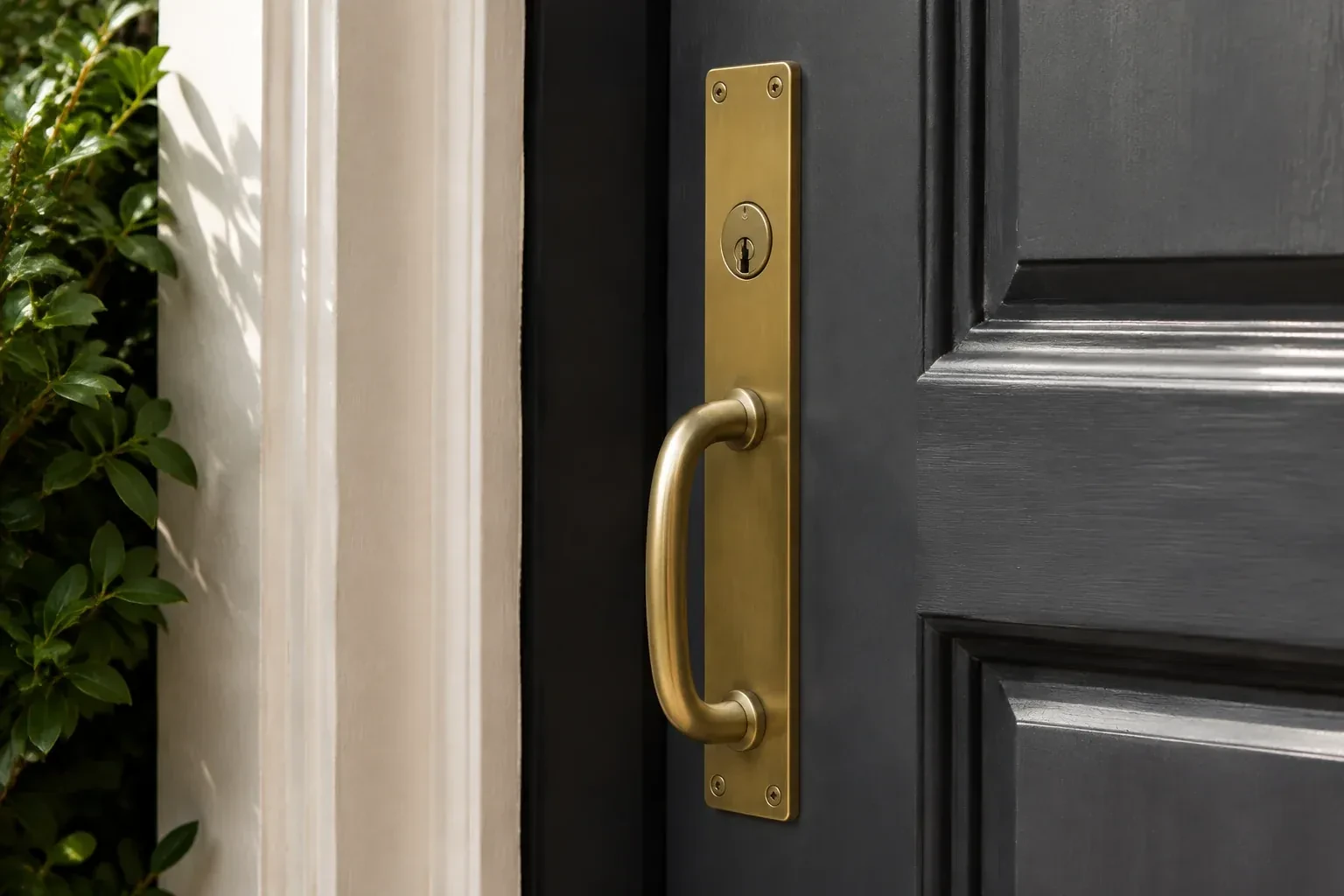
The locksmith walks the premises with you and lists every opening that should be in the plan: the customer entrance, the receiving door, offices, stockroom, cash room, server closet, the mailbox, cabinets, and any padlocks on gates, compounds or roll shutters. Each lock is identified by type, since a mortise cylinder in an aluminum storefront door, a key-in-lever set on an office, a rim cylinder on a back door and an interchangeable core in a stockroom each come out and go back in differently. The keyway and the maker's mark are noted, and the condition of each cylinder is checked, so the list from the walk is what the quote and the work are built on.
Storefront and mortise cylinders
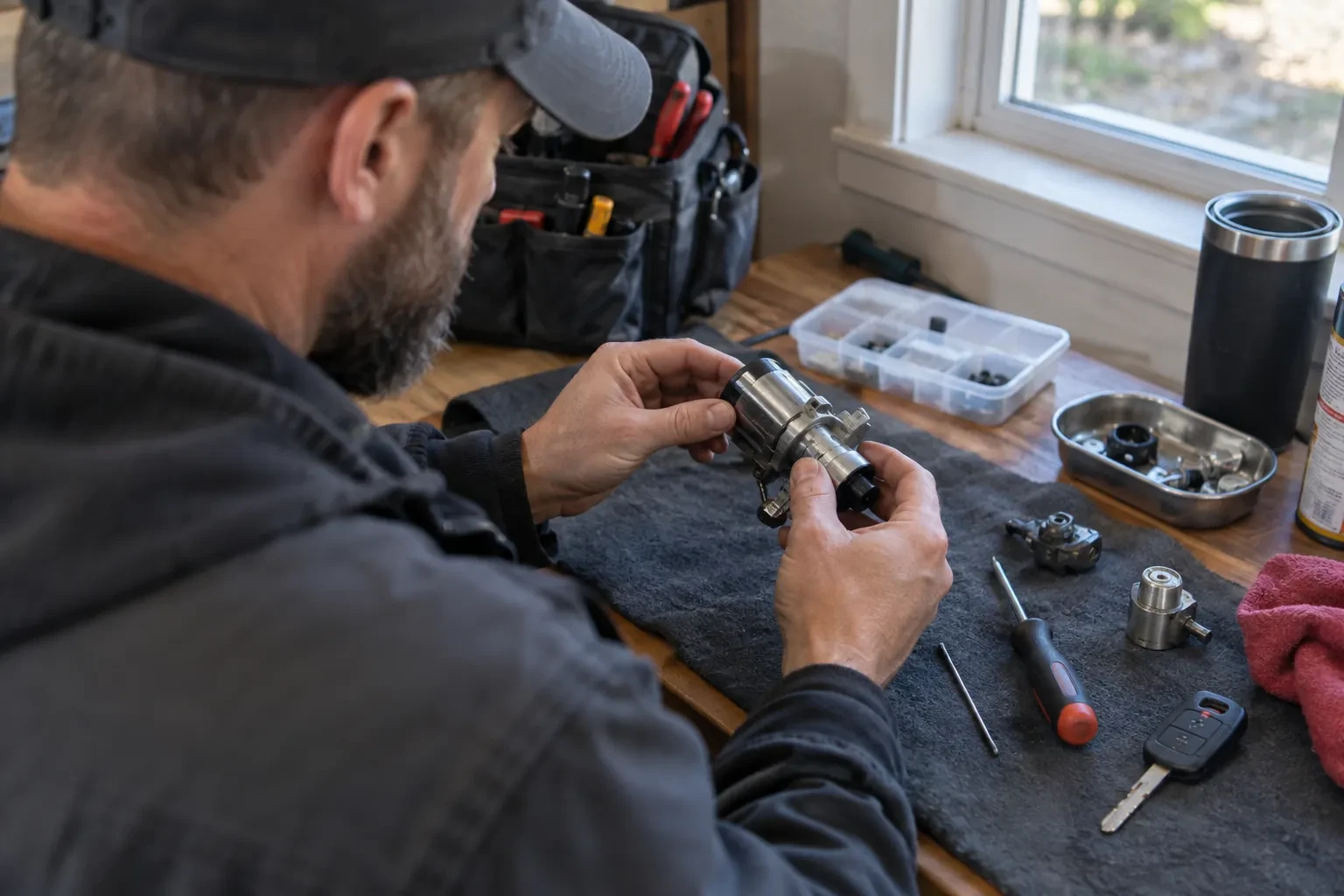
Aluminum storefront doors carry a threaded mortise cylinder held by a small set screw in the door edge. The locksmith loosens the screw, spins the cylinder out, repins it, and threads it back to the same depth so the cam engages the deadbolt or hook bolt behind it and nothing else. Mortise locks in older office doors work on the same principle with a heavier lock body. On both, the depth and cam type matter as much as the pinning: a cylinder a turn too far in or a cam of the wrong shape will feel right in the hand but fail to throw the bolt, so each is cycled open and closed.
Adding a door without starting over
The pinning records kept from the visit mean the system can grow. When the business takes the unit next door, adds a storage cage or replaces a worn lever set, the new cylinder is pinned into an unused combination on the existing chart and handed a key from the right group, and nobody already carrying a key notices anything changed. That is the value of leaving reserve combinations in a master system rather than using them all up on day one. Keep the locksmith's reference number for the system with the chart, mention it when you call, and a single new door becomes a short visit instead of a fresh plan.
Commercial Rekeying
In the van
Rekeyable padlocks
Master pins
Interchangeable cores and control key
Commercial pin kit
Cylinder removal and spanner tools
Commercial Rekeying
What affects the quote
No existing chart or keys
When nobody knows what the current keys open, the locksmith reads and records each cylinder before planning the new keying, and that reconstruction is time in the quote.
How many keys are cut
Each key cut to code and stamped is counted into the quote. Two per door group for a small shop and forty for a warehouse shift are different numbers.
Mix of lock types
A key-in-lever cylinder, a storefront mortise cylinder, a back-door rim cylinder and a padlock take different handling, though several full-size formats can share one pin kit for the same key system; a premises with a wide mix of cylinder types and brands still takes longer than one with one.
What to have ready
- Do you want one key for everything, or separate groups with a master?
- Who at the business has the authority to approve changing the locks?
- How many keys do you need cut, and for whom?
Commercial Rekeying: questions
QuestionsWhat happens with our fire exit doors and panic bars?
The outside cylinder on an exit door controls entry only, and it can be rekeyed like any other. The inside stays as it must: one push or one turn, no key, no special knowledge, on the exit door itself and on any door on the way to it. A locksmith will not add a keyed device to the inside of an exit, and will point out one if it already exists.
How do you confirm I am allowed to have the locks changed?
For a business the locksmith looks for someone with standing: the owner, a director, or a manager who can show written authority from one of them. A lease, a business registration or a letter on company paper usually settles it, along with photo identification. Where doors belong to a landlord, the property manager's approval is asked for as well. This is a short step and it protects the business from having its own locks changed by the wrong person.
We lost a master key. Does the whole building need doing?
Only the cylinders that master opened, which the keying chart identifies. If the lost key was the top master, that is every lock in the system; if it was a departmental master, it is that department's doors. Where no chart exists, the locksmith reads the cylinders first to establish what the key reached. The remaining doors, and any keys that never opened them, are left exactly as they are.
Related services
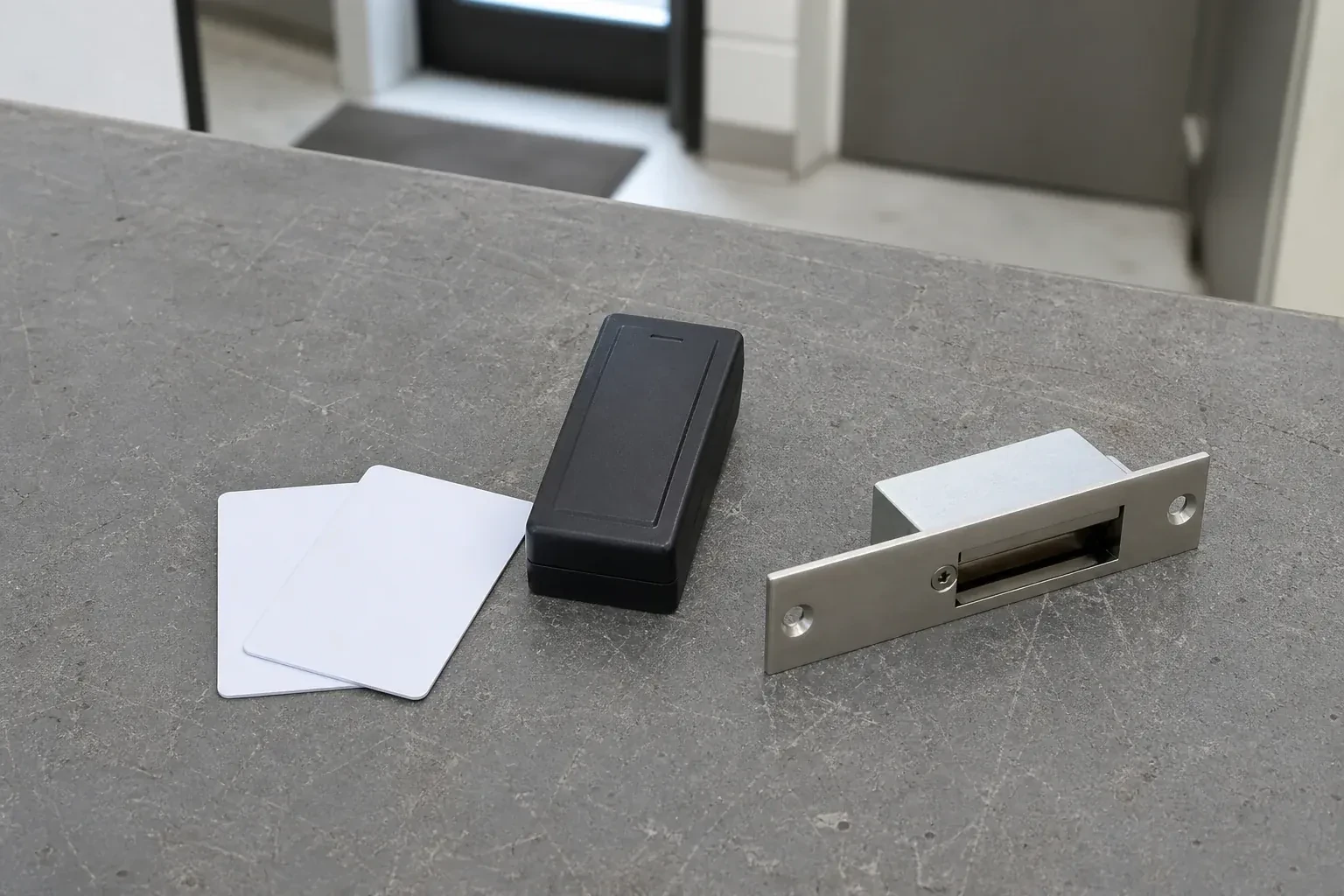
- Access Control InstallationHead office wants a record of who opens the branch and when, tied to an actual name rather than a shared code scrawled on a sticky note taped under the till.
- Panic & Exit HardwareAfter the fit-out, the gym floor now holds more people than the old office space ever did, and the exit door at the back still has the same turn-lock it had when the room held desks.
- Commercial-Grade Lock ReplacementAt closing time the hookbolt on the storefront door catches the keeper only on the second or third try, and one employee has started giving the door a shoulder to force it home.