Change or rekey · Gilbertville
Deadbolt Installation in Gilbertville
The old deadbolt has grown lazy.
In plain words
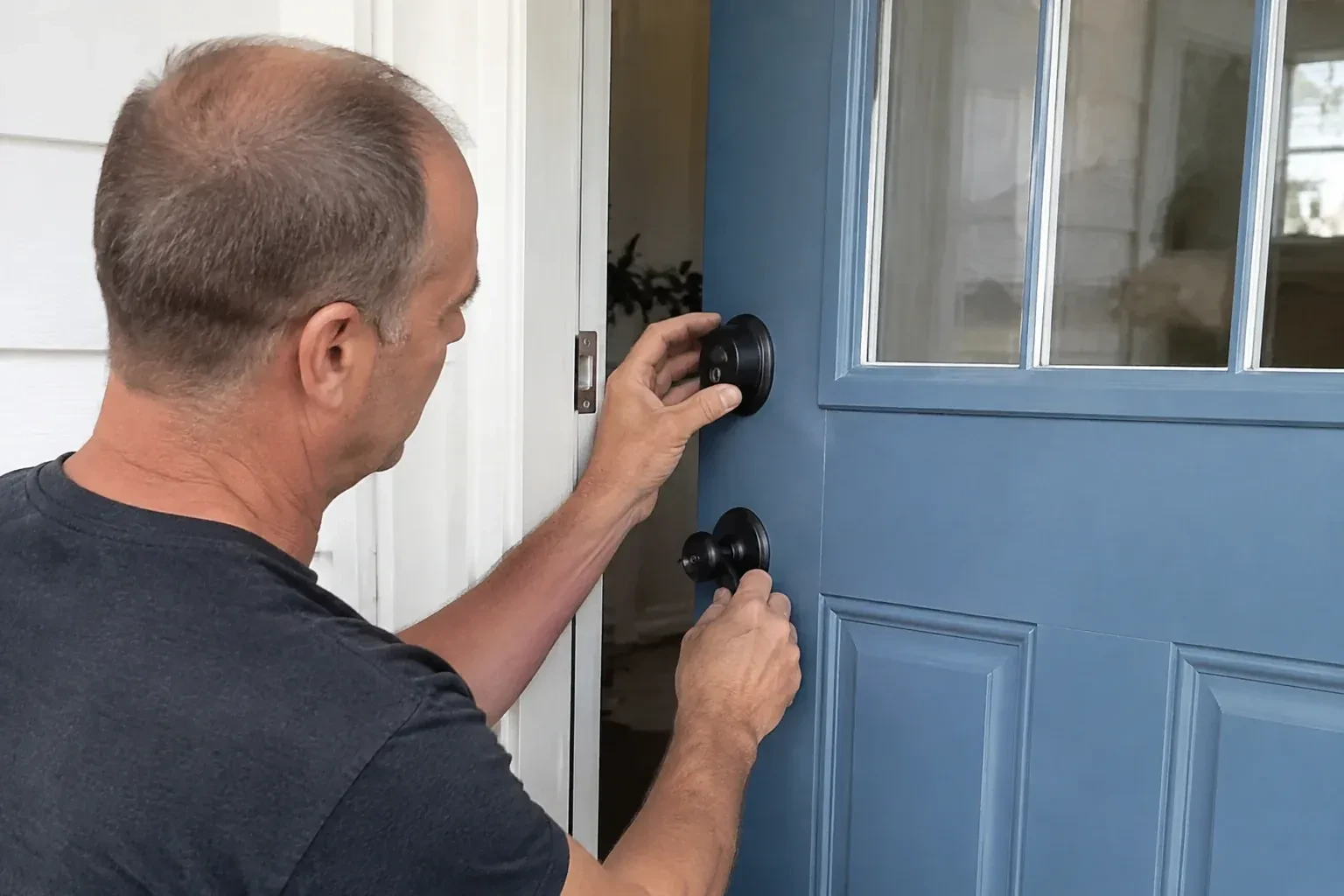
Deadbolt installation puts a solid bolt lock on a door that either has none or has one that is past its useful life. Unlike the spring latch in a knob or lever, a deadbolt is a straight bar of metal that only moves when the key or thumb-turn moves it, so a card slipped into the gap or a shove against the door does nothing. The locksmith bores the door if needed, fits the bolt and cylinder, cuts a proper pocket in the frame and secures a reinforced strike with screws long enough to reach the framing. You are left with a door that locks with a firm, full throw.
How the visit goesThe front door has a handsome lever and a keyed knob, and that is all. Nothing above it. When the door is shut, the only thing keeping it closed is a spring latch the width of a thumbnail, and you have started to notice.
Deadbolt Installation
How the visit goes
How the door hangs and closes
Before a new bolt goes in, the door has to close properly on its own, so the locksmith swings it a few times and watches. A door that drops on tired hinges, binds against thick weatherstrip or has to be pulled to latch will put a new deadbolt out of line the moment the season changes. Hinge screws are tested for grip, the gap around the door is read for evenness, and the existing latch is checked against its strike. Small corrections here, such as a longer hinge screw into the framing or a trimmed weatherstrip, are made first so the deadbolt can be set to a door that sits square and stays there.
Testing open, then closed, then keyed alike
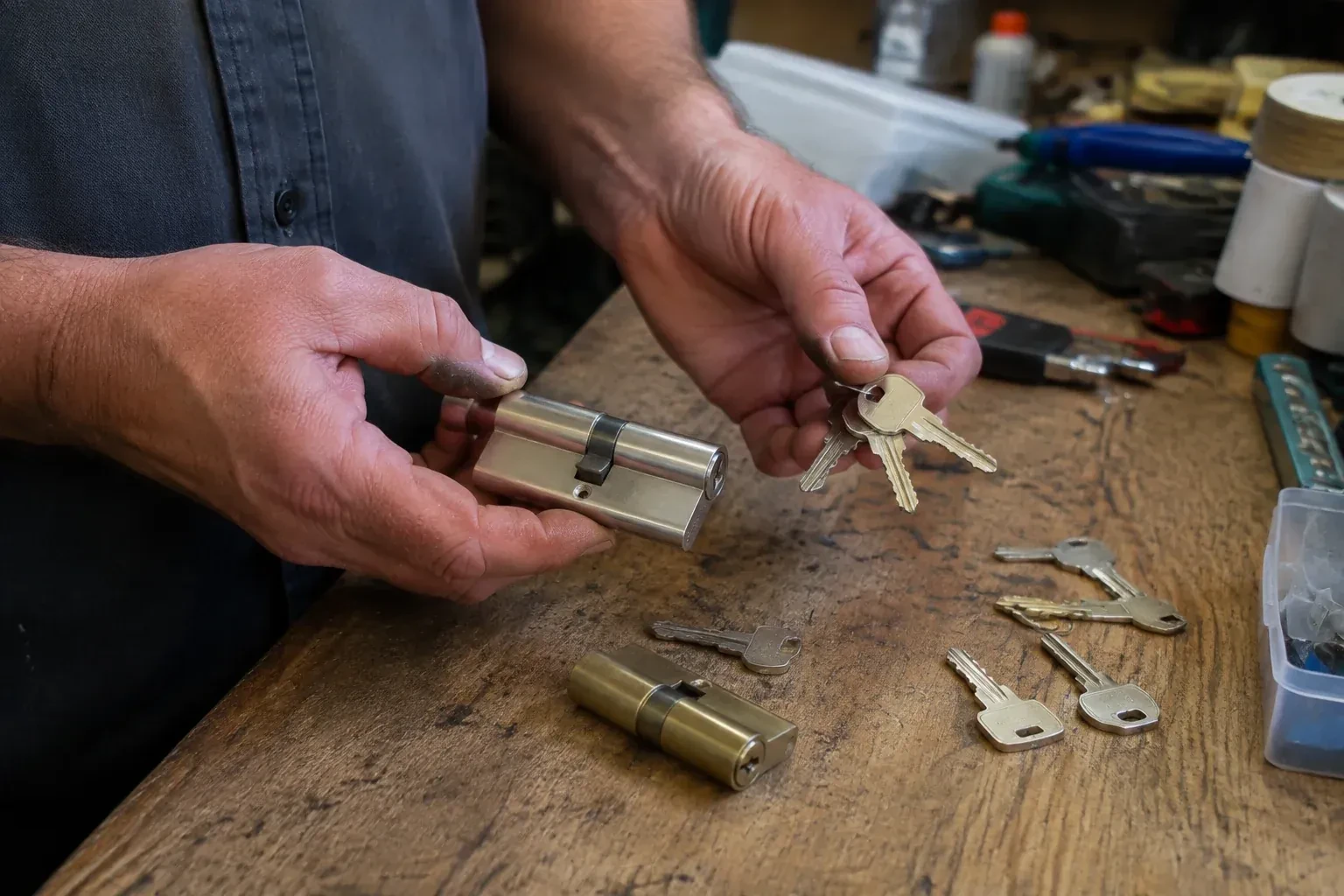
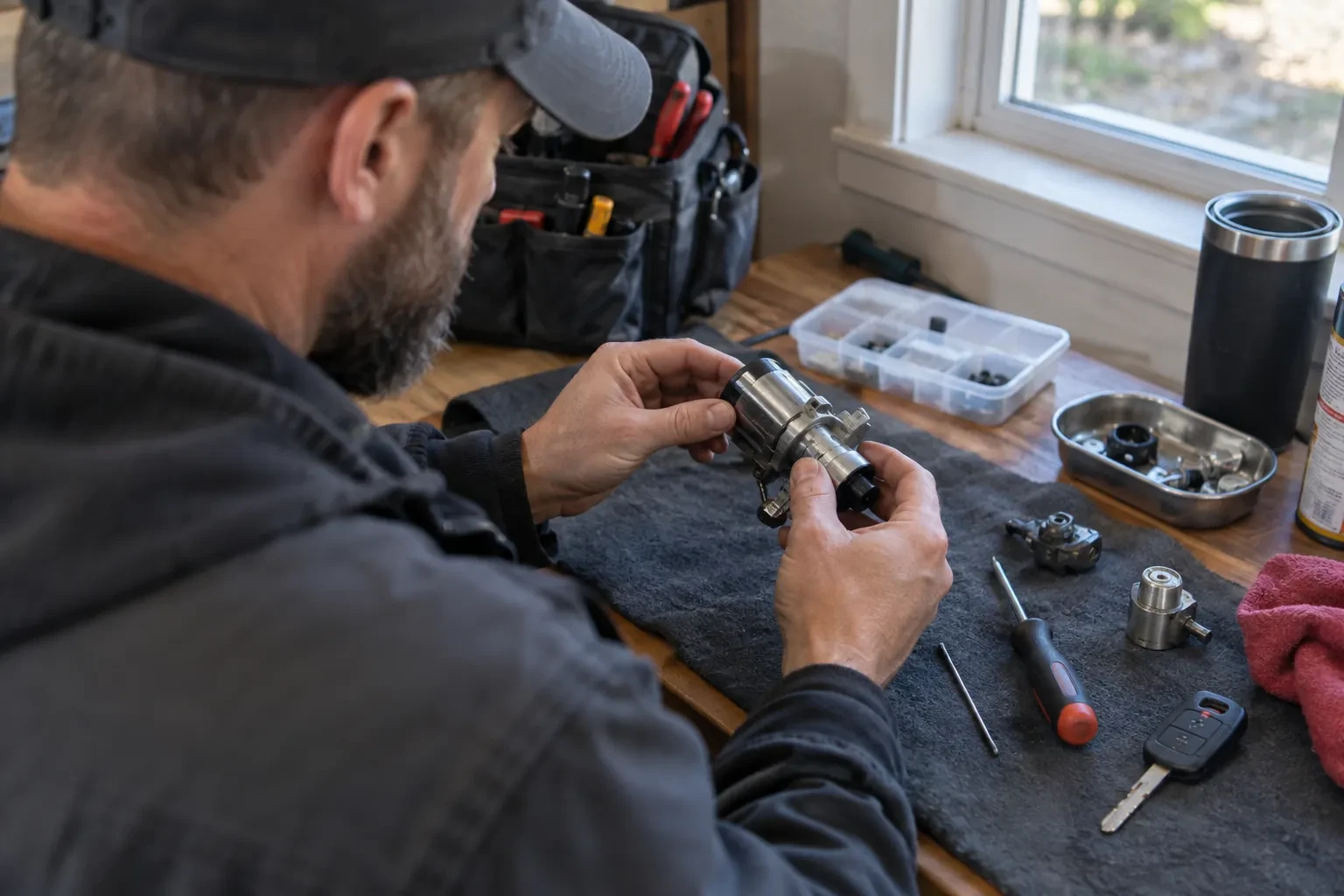
The finished lock is proved in three stages. With the door open, the thumb-turn and then the key are cycled several times to confirm the bolt throws fully and returns freely. With the door closed, the same tests show whether the bolt clears the strike opening and seats in the pocket; any drag is marked with chalk and the strike is dressed or shifted until the bolt moves with fingertip effort. If the cylinder is being keyed to the household key, it is repinned on the bench and tested from outside with the door closed, and every key that should work is tried before the tools go back in the van.
Ready for a smart lock later
Because the door was prepared to the standard bore and backset, it suits many future options, though the model chosen later still sets its own bore, backset and thickness requirements. Keypad and app-controlled deadbolts fit the same 54 mm cross bore and the same edge bore as the mechanical lock fitted today, so upgrading later means swapping the hardware, not cutting the door again. The backset and bore measurements are written on the packaging left with you. If you want to think about a keypad down the road, ask the locksmith which models suit the door thickness and whether a backup keyed cylinder is worth having for the one day the batteries are flat.
Deadbolt Installation
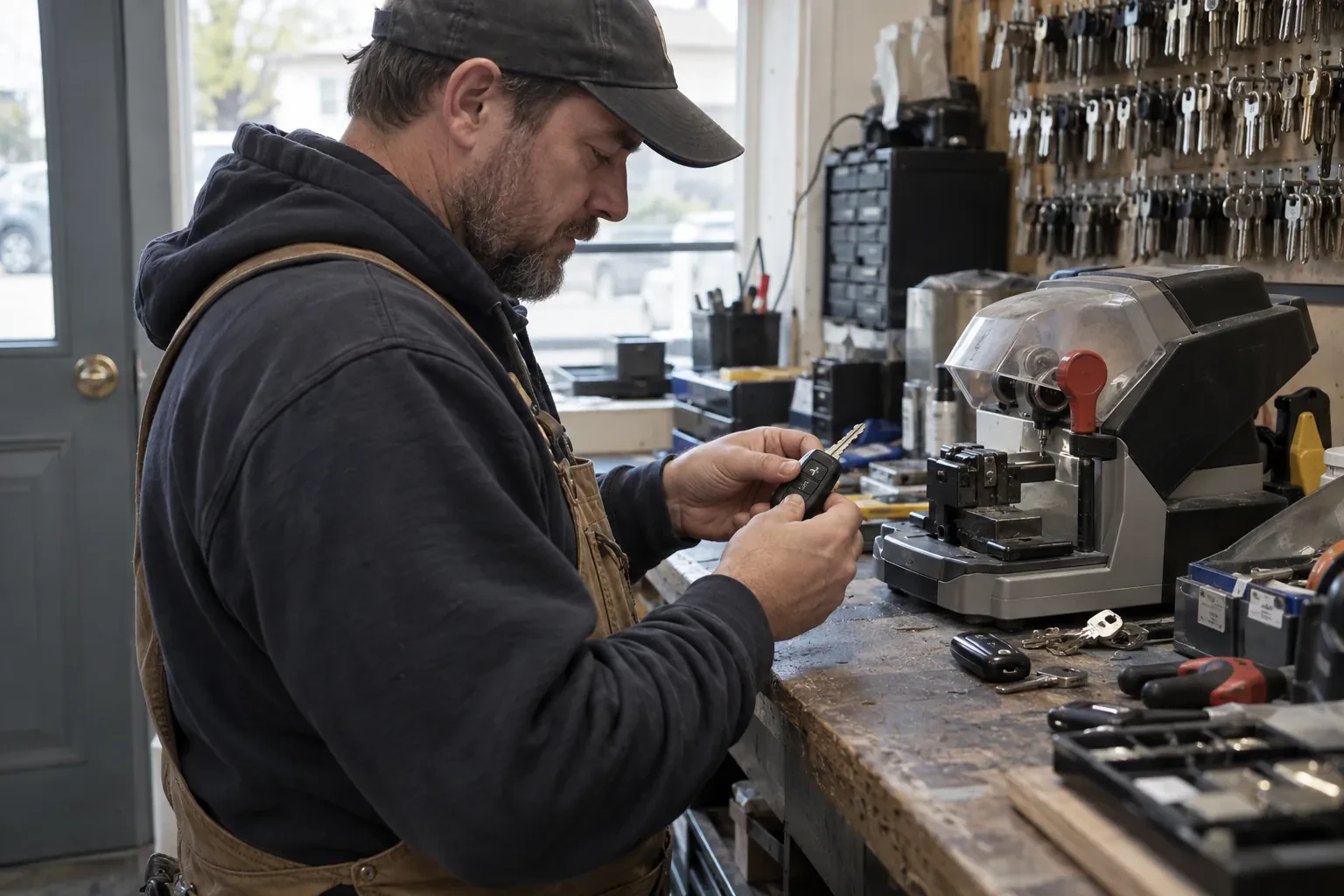
In the van
Rekeying pins and key blanks
75 mm (3 in) strike screws
Reinforced strike plate
Bolt faceplate or drive-in collar
Boring jig and 54 mm hole saw
Deadbolt Installation
What affects the quote
Grade and type of deadbolt
A builder-grade bolt, a residential model with a high security grade, and a heavy commercial-pattern deadbolt sit at different points in the hardware part of the quote, and the locksmith explains the differences.
Door material
Solid wood, steel-clad and fibreglass doors are each cut differently. Metal skins call for slower cutting and cleanup of filings, so the material is one of the first things a quote takes into account.
New bore or replacement into existing holes
Boring a door that has never had a deadbolt takes more time and tooling than dropping a new bolt into holes that are already there, and the quote reflects which of the two your door needs.
What to have ready
- Has the door or frame ever been forced, or are any screw holes stripped?
- Does anyone in the household have trouble with small knobs or stiff thumb-turns?
- Would you like a keyed deadbolt, a keypad, or a smart lock you can control from a phone?
Deadbolt Installation: questions
QuestionsHow long should the bolt be?
The bolt should extend at least 25 mm into the frame, which is the standard throw for a dwelling's entrance doors and the length most residential deadbolts provide. Part of the bolt stays inside the door for support while the rest sits in the pocket. A hardened steel insert that spins under a saw blade is a common feature worth having on doors that face a street or laneway.
Does the finish of the deadbolt matter beyond looks?
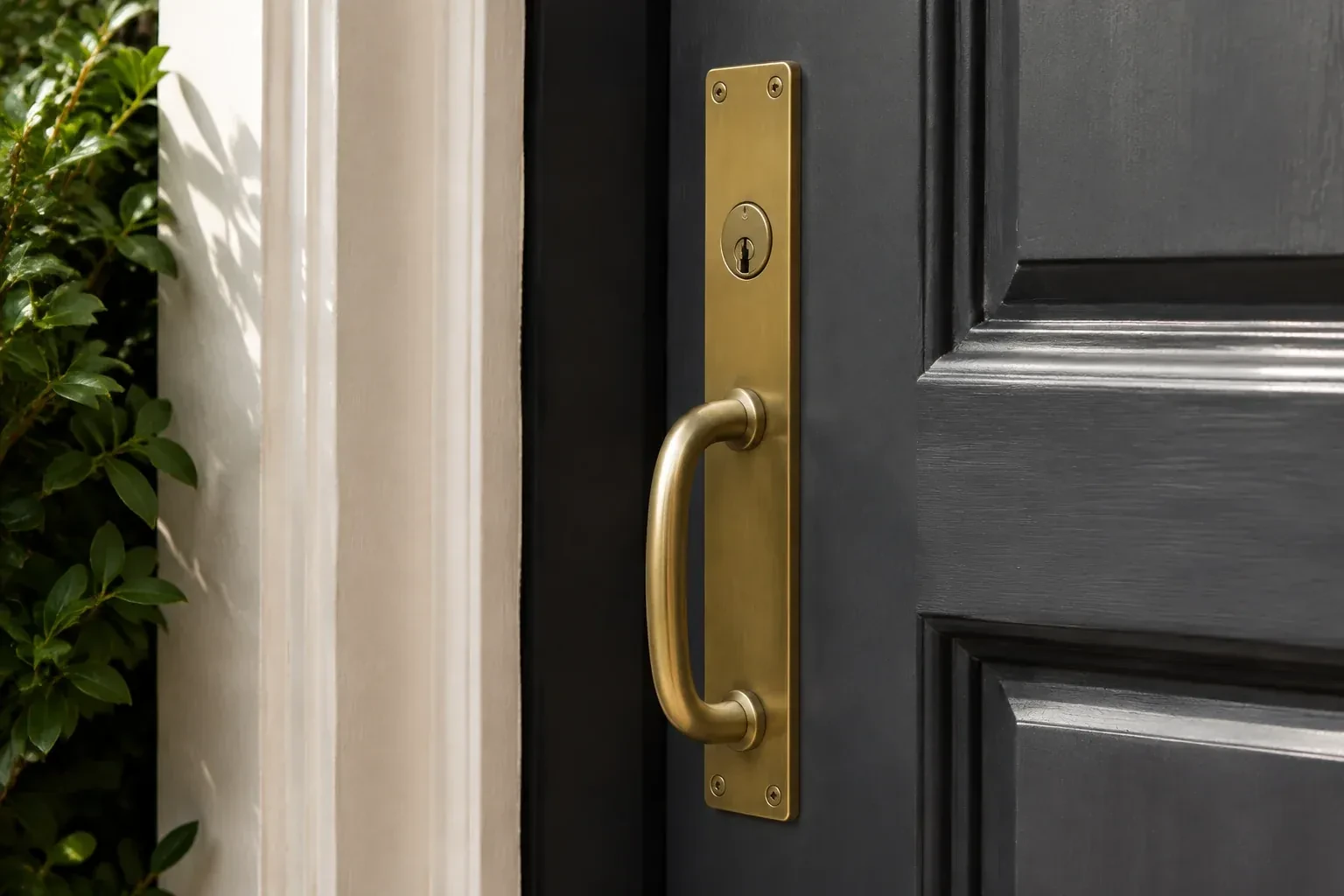
It does on an exposed door. Winter salt spray, summer sun and humid air all work on the outside trim, and residential deadbolts carry a finish grade that reflects how well the coating resists them. A lifetime or PVD-style finish stays bright longer on a south-facing or roadside door, while a sheltered porch door can carry any finish you like. Matching the knob or lever below is mostly a matter of taste.
What happens during the visit, step by step?
The locksmith looks at the door, frame, glass and hinges, measures the bore and backset, and confirms the hardware and key plan with you. The door is bored or the old lock removed, the bolt is set to the backset, and the cylinder and thumb-turn are assembled. The strike position is marked from the bolt itself, the pocket bored, and a reinforced strike fastened into the framing. Everything is tested open and closed, keys are cut and tried, and the area is vacuumed.
Related services
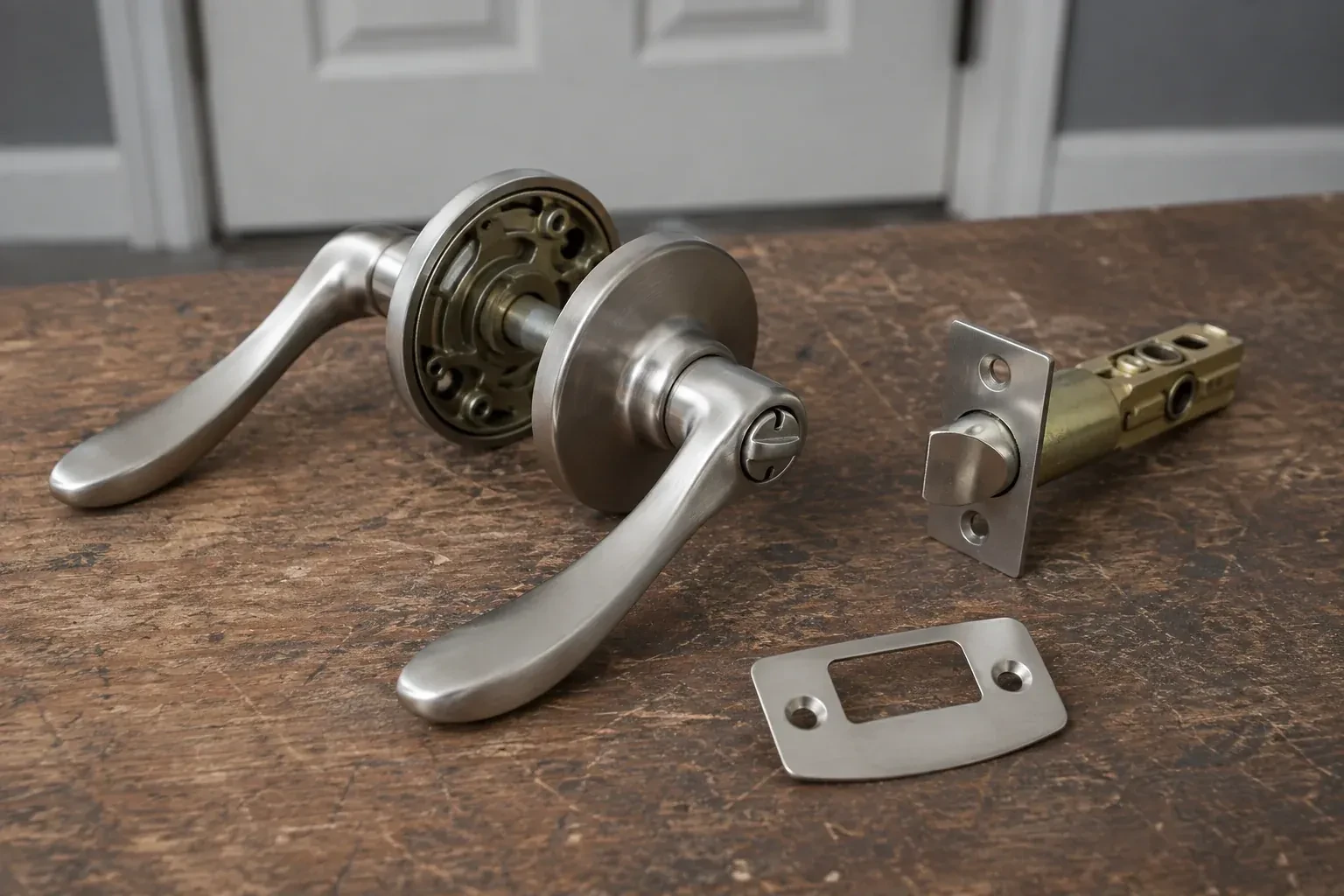
- Lock Replacement & UpgradeThe lever on the side door droops toward the floor and rattles in your hand.
- Vintage Mortise Lock ServiceThe old skeleton key still fits the keyhole, but it now needs a jiggle, a lean on the door and a little luck before the bolt moves.
- Smart Lock InstallationArthritis has made the small house key hard to grip and turn, especially with gloves on in January.