Car keys · Norfolk County
Car Key Replacement
The key snapped at the head while you were turning it in a stiff, frosty door lock.
In plain words
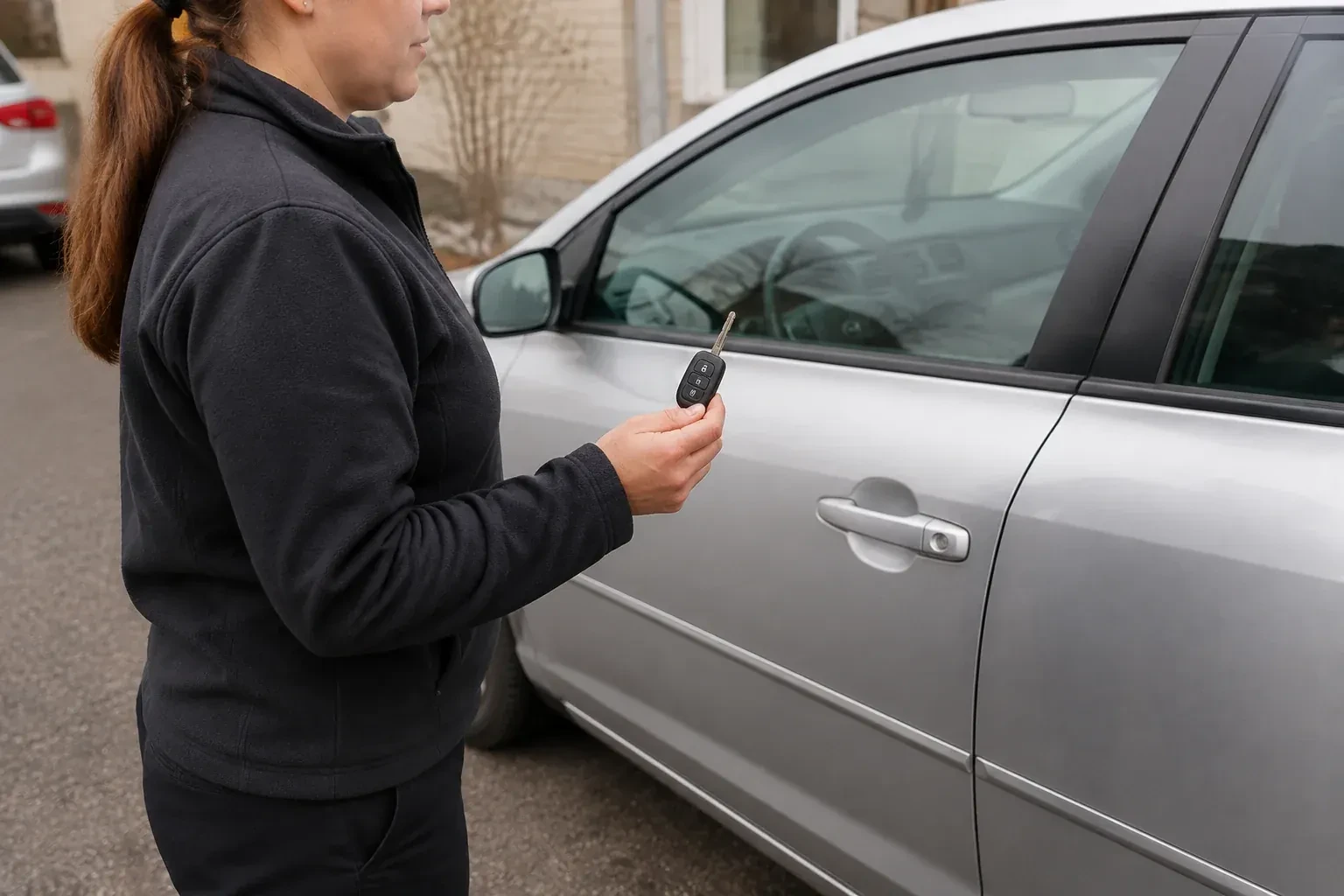
Winter produces its own kind of key trouble. Coin cells lose output in deep cold, so a fob that was fine in October goes quiet in January; a fob dropped in slush or lost under a snowbank is gone until spring; and the mechanical door lock on a keyless car, untouched for years and crusted with road salt, is stiff exactly when you need it. A replacement visit in these conditions covers it all: a working fob, fresh batteries, a cut emergency blade, and a door cylinder cleaned and lubricated per the maker's instructions, so the metal key is a real backup rather than a decoration.
How the visit goesThe engine cranks, catches for a second and dies, and a small key-shaped light keeps blinking on the dash. The blade turns the ignition and the doors perfectly well, but the car has stopped recognizing the chip inside the key.
Car Key Replacement
How the visit goes
Reading the VIN for the key system
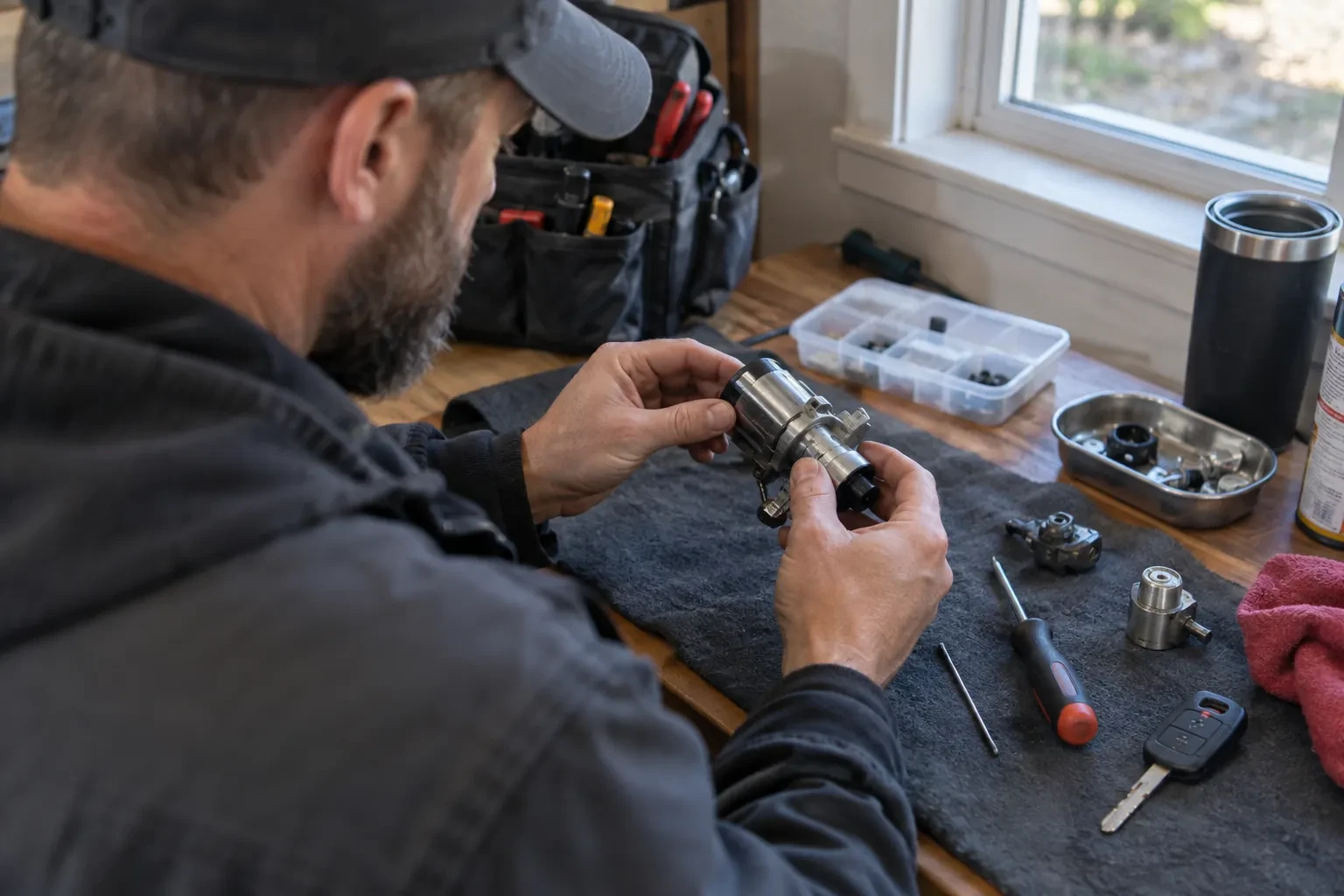
The seventeen-character VIN tells the locksmith what kind of key the car was built with. From it, together with the year, make and model, comes the blade profile (a plain edge cut or an internal high-security cut), the transponder type and immobilizer generation, the remote's frequency and part number, and whether the car uses a proximity fob, or instead a phone-key or key-card system with no cut blade at all. This lookup happens before the visit so the correct blank, shell or fob is in the van, and it flags systems needing a security PIN, manufacturer data or a dealer procedure. A photo of the old key, if any survives, confirms the reading.
All keys lost: reset first, then reissue
When nothing remains, the sequence changes. The car is opened, the blade is produced from the lock or the code, and then, where the system supports it, the immobilizer memory is reset so every stored key is erased; others follow their own maker-specific route instead. New keys are then registered one after another, and registering two gives the car a spare from day one. On some vehicles this stage needs a longer security timer or manufacturer data, which is arranged in advance. The old keys, wherever they are, are now unknown to the car. Each new key is then started and driven a short distance to confirm the reset held.
A spare, and the reason to keep it away from the car
Two working keys change the shape of every future visit. With one in hand, adding another is a short programming routine; with none, the car has to be opened, decoded and reset. For that reason the locksmith will usually suggest making the spare while the tools are out, and will suggest a home for it that is not the glovebox, the console or a magnetic box under the bumper. A drawer at home, a trusted family member or a small lockbox all work. Test the spare every few months so a flat coin cell is discovered on a Sunday afternoon rather than in a parking lot.
Car Key Replacement
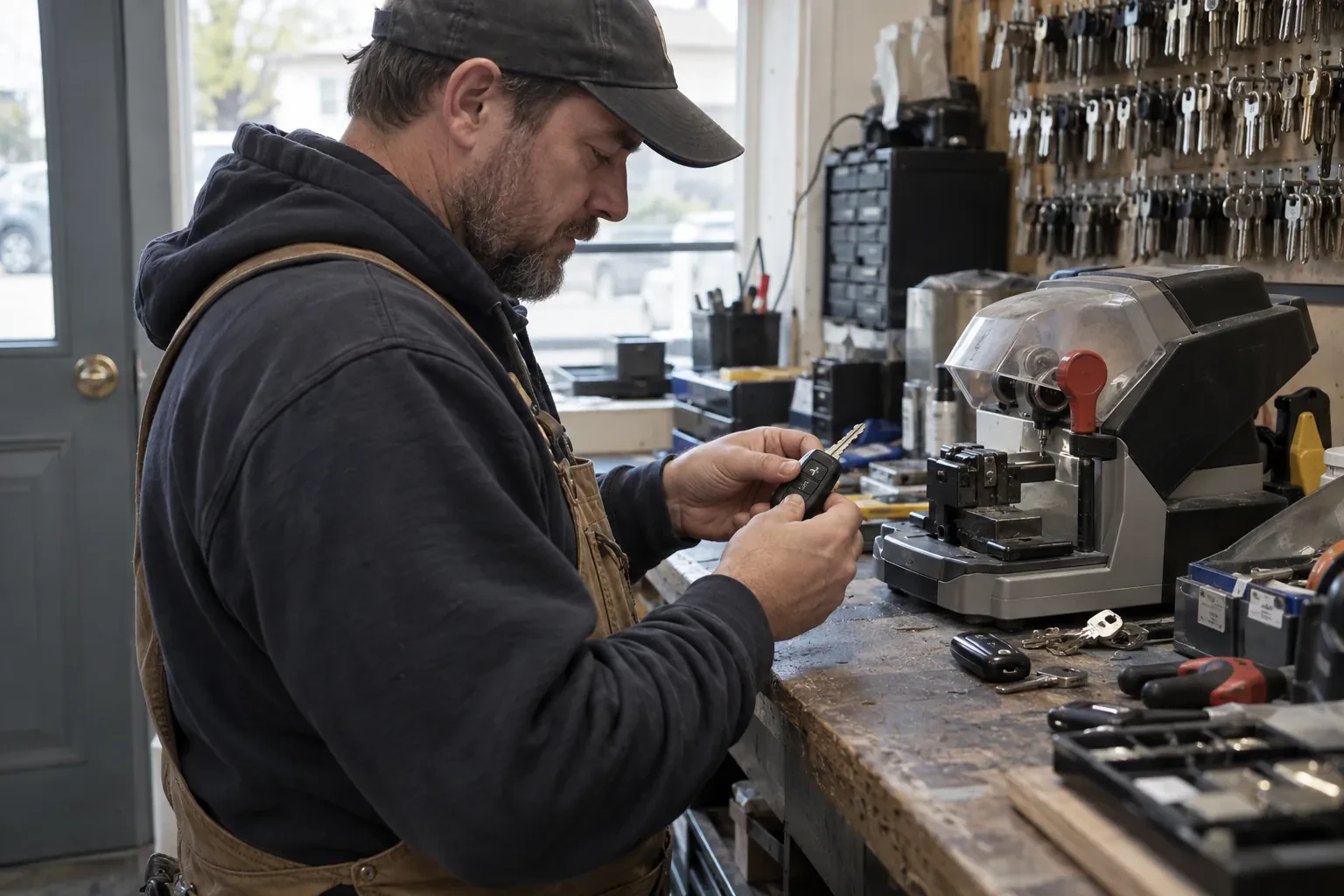
In the van
Laser-style milling cutter
Remote frequency tester
Fob coin-cell battery
Decoding pick and lock reader
Remote-head key shell
Car Key Replacement
What affects the quote
Extracting a broken key
Drawing a snapped blade out of a door or ignition cylinder without harm to the lock is a separate piece of work, done before the new key is cut, and it appears on the quote as its own line.
Transponder, remote or proximity
A key with only a chip, a remote-head key with buttons and a full proximity fob are three tiers of hardware and three programming procedures. The quote names which one your car uses.
Shell only, or a complete key
If your key's electronics are healthy, a new case and blade around the old board is a smaller job than a complete key with programming. The inspection decides which, before anything is quoted.
What to have ready
- Would you like any missing keys erased so they can no longer start the car?
- Where is the car parked right now, and is it locked?
- Do you have any key that still starts the car, or are they all gone?
Car Key Replacement: questions
QuestionsMy copied key opens the doors but the engine cuts out. Why?
The blade was copied but the chip was not. A hardware-store duplicate cut onto a plain blank has the right teeth, so it turns the locks and the ignition, yet the immobilizer hears no answer and shuts the engine off after a moment. The remedy is a proper transponder key: a blank with the correct chip, cut to your blade and programmed to the car, or a chip cloned from a working original.
Does programming a new key affect the keys I already have?
Adding a key leaves the existing keys in place; the car simply learns one more. The exception is a deliberate all-keys-lost reset or an erase you ask for, which clears every stored key and then registers only the ones you present. For that reason the locksmith asks you to bring every key you own to the visit, so each one can be re-registered and tested rather than left behind and forgotten by the car.
Can you make a key for a car with push-button start?
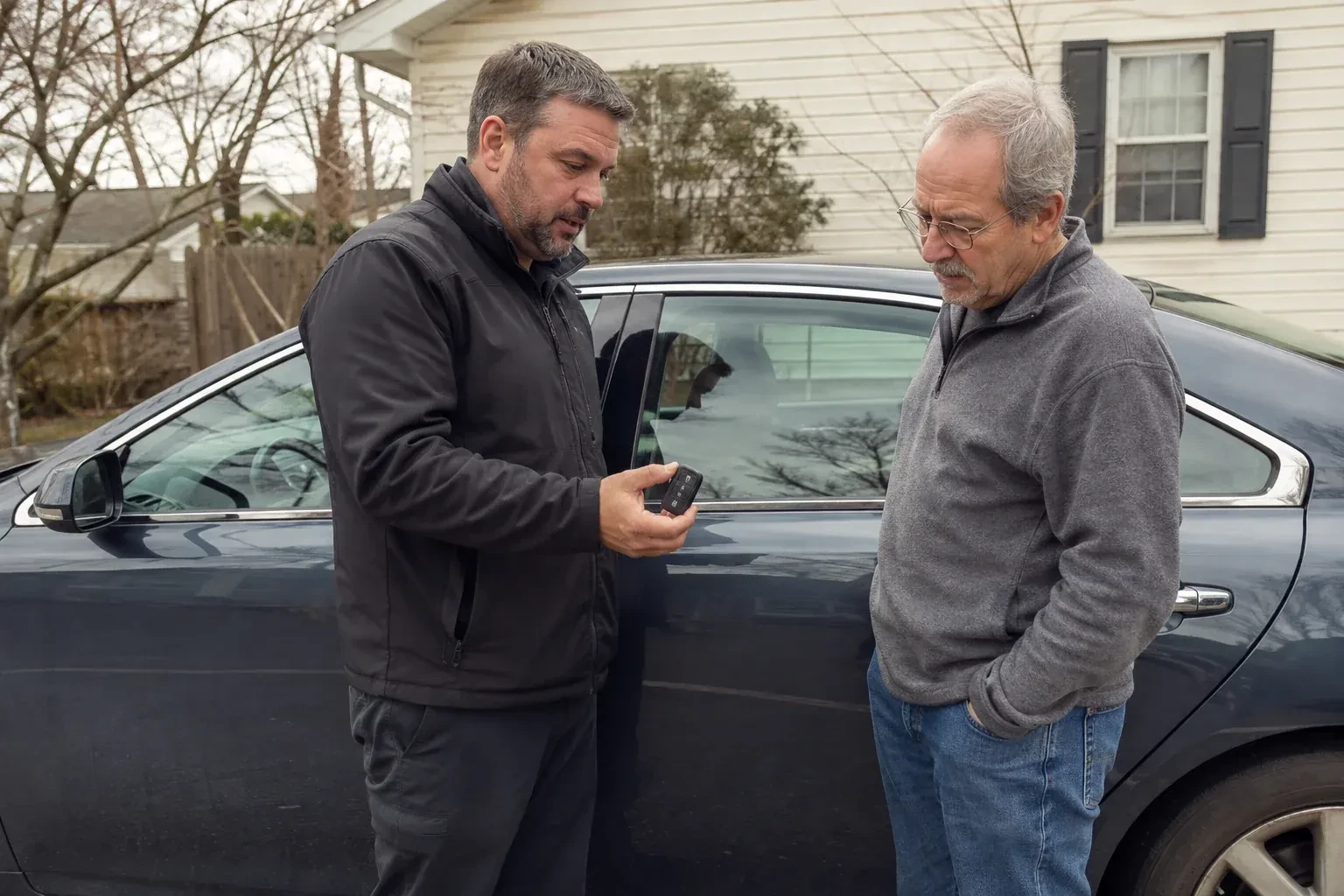
On many vehicles, yes: a proximity fob is registered to the vehicle through the diagnostic port in much the same way as a transponder key, and then tested for passive entry at the handles and for starting with the fob in a pocket. Other systems pair a proximity fob through onboard, app-based or dealer-only steps instead. The emergency blade tucked inside the fob is cut to the door lock so you have a mechanical way in, and the VIN check reveals in advance which route a given vehicle needs.
Related services
- Spare Car Key DuplicationA lockout last month ended with a locksmith opening the door and going home, and the same single key has been carried ever since with nothing behind it.
- Key Fob ProgrammingA new driver has joined the household, and the one existing fob is the only key anyone has ever had cut for this vehicle.
- Transponder Key ProgrammingEvery key that ever opened the car is gone at once, one taken with a stolen bag, the spare misplaced months ago and never replaced.