Change or rekey · Normandale
Deadbolt Installation in Normandale
The old deadbolt has grown lazy.
In plain words
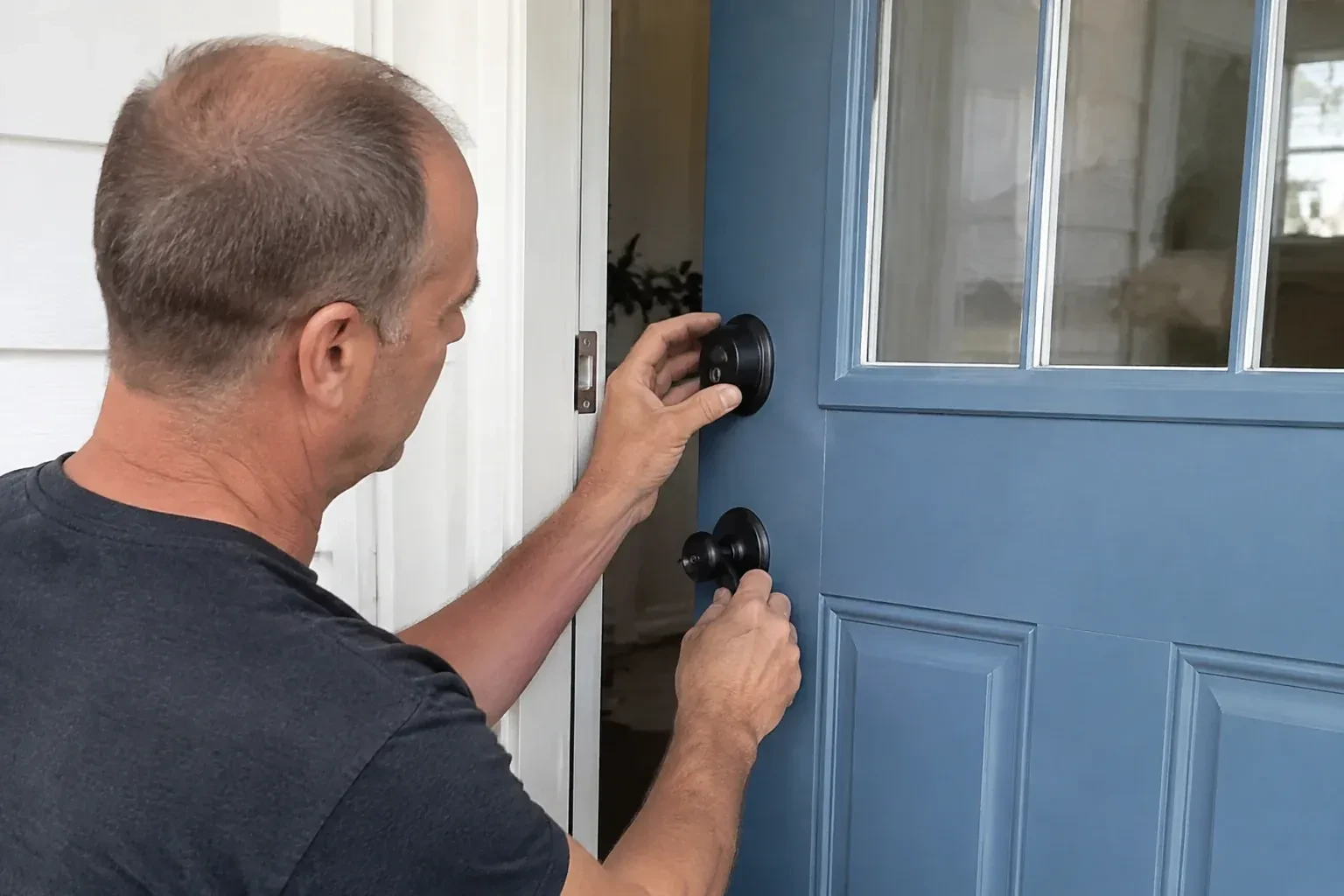
Replacing an existing deadbolt is usually a matter of matching rather than cutting. The locksmith measures the cross bore, the edge bore and the backset, checks the door thickness, and picks a bolt that drops into the holes you already have. Where the old lock was a builder-grade unit, the replacement can step up to a heavier grade with a hardened bolt, a free-turning collar around the cylinder and a low-profile face that gives a wrench nothing to grip. The old strike is checked against the new bolt's instructions, and where it calls for it, a reinforced strike and long screws go in while the door is already apart.
How the visit goesThe old deadbolt has grown lazy. You turn the thumb-turn and the bolt creeps out halfway, then needs a second push with the door pulled tight. Some mornings the key has to be jiggled before it will come back out.
Deadbolt Installation
How the visit goes
The frame behind the strike
A bolt is only as good as what it throws into, so the jamb gets a hard look before anything is ordered. The locksmith checks whether the jamb is wood or steel, whether it is backed by solid framing at lock height or by a gap of shims and air, and whether earlier screws have torn out or been stripped. A jamb that flexes under a palm tells its own story. Where a strike has been fitted before, the old pocket is examined for depth and position, since a shallow or offset pocket is the usual reason an existing deadbolt feels stiff. This check decides between a plain strike, a reinforced strike with long screws, or a full-length jamb reinforcer.
Assembling the cylinder and thumb-turn
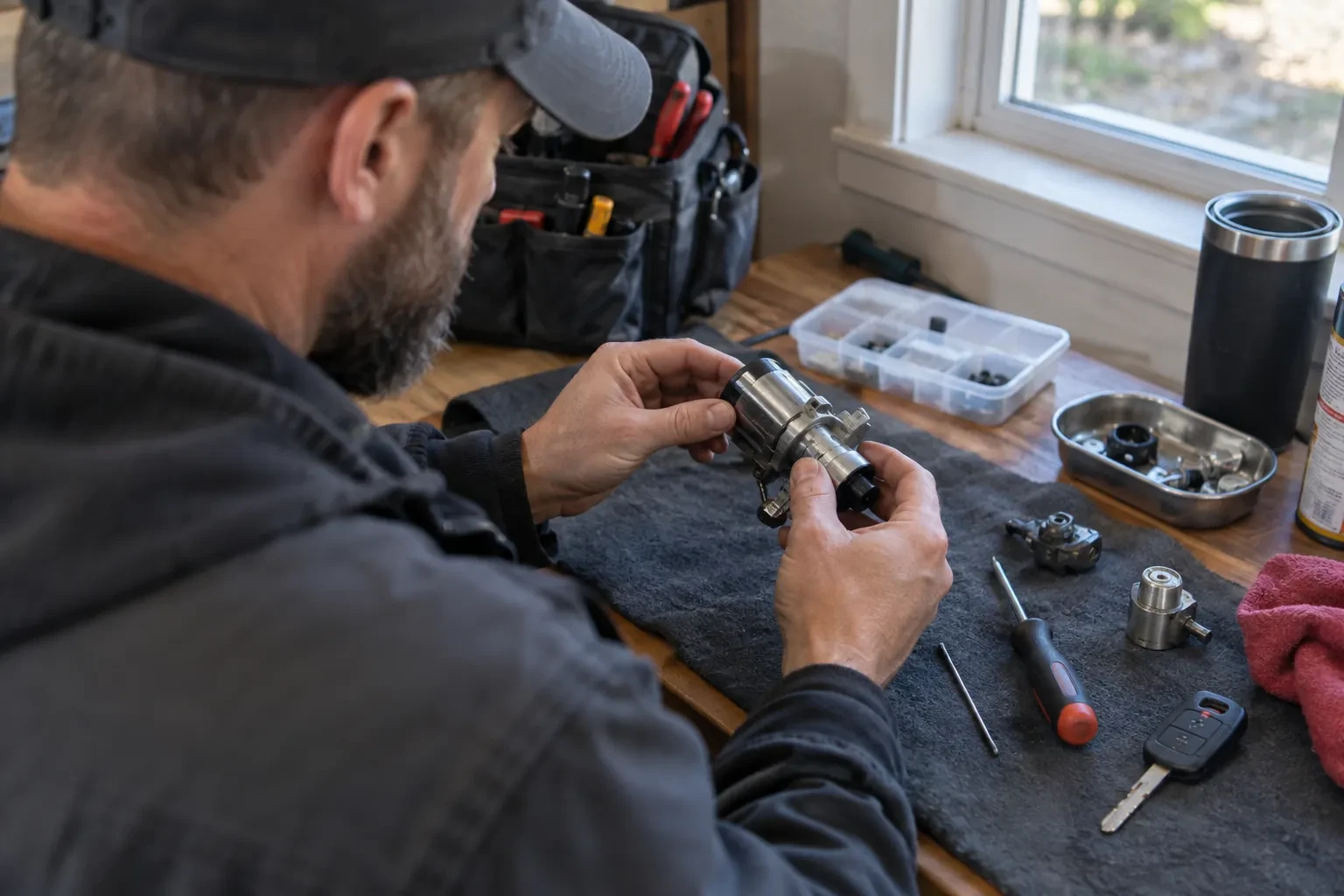
The outside housing goes on first, with its tailpiece threaded through the slot in the bolt cam and its mounting posts through the matching holes. Any plastic alignment bracket that ships with the lock is used on a 54 mm bore and removed on a smaller one. The inside thumb-turn plate is set against the door and the two long tapered screws are driven through it into the outside housing, snug rather than crushed, so the housings pull tight to the door without distorting the mechanism. The locksmith turns the thumb-turn before the door is closed to confirm the bolt throws its full length and returns without a catch.
Looking after it through the seasons
A deadbolt asks for very little, and most of it happens twice a year. In spring and again in autumn, throw the bolt with the door closed and notice whether it still slides in freely; wood doors swell in humid summers and shrink in dry winter air, and the first sign is a bolt that needs the door pulled before it will lock. If so, a small strike adjustment puts it right. Give the bolt and keyway a puff of whatever lubricant the lock's own maker specifies, often dry PTFE or graphite, since some cylinders are serviced with oil instead. Wipe salt off the outside trim after a slushy week so the finish stays bright.
Deadbolt Installation
In the van
Rekeying pins and key blanks
75 mm (3 in) strike screws
Reinforced strike plate
Bolt faceplate or drive-in collar
Boring jig and 54 mm hole saw
Deadbolt Installation
What affects the quote
Strike and frame reinforcement
A reinforced strike with long screws is standard; a full-length jamb reinforcer, a strike box or repairs to a split jamb after a forced entry are extra items quoted on their own.
Keying alike or a fresh key
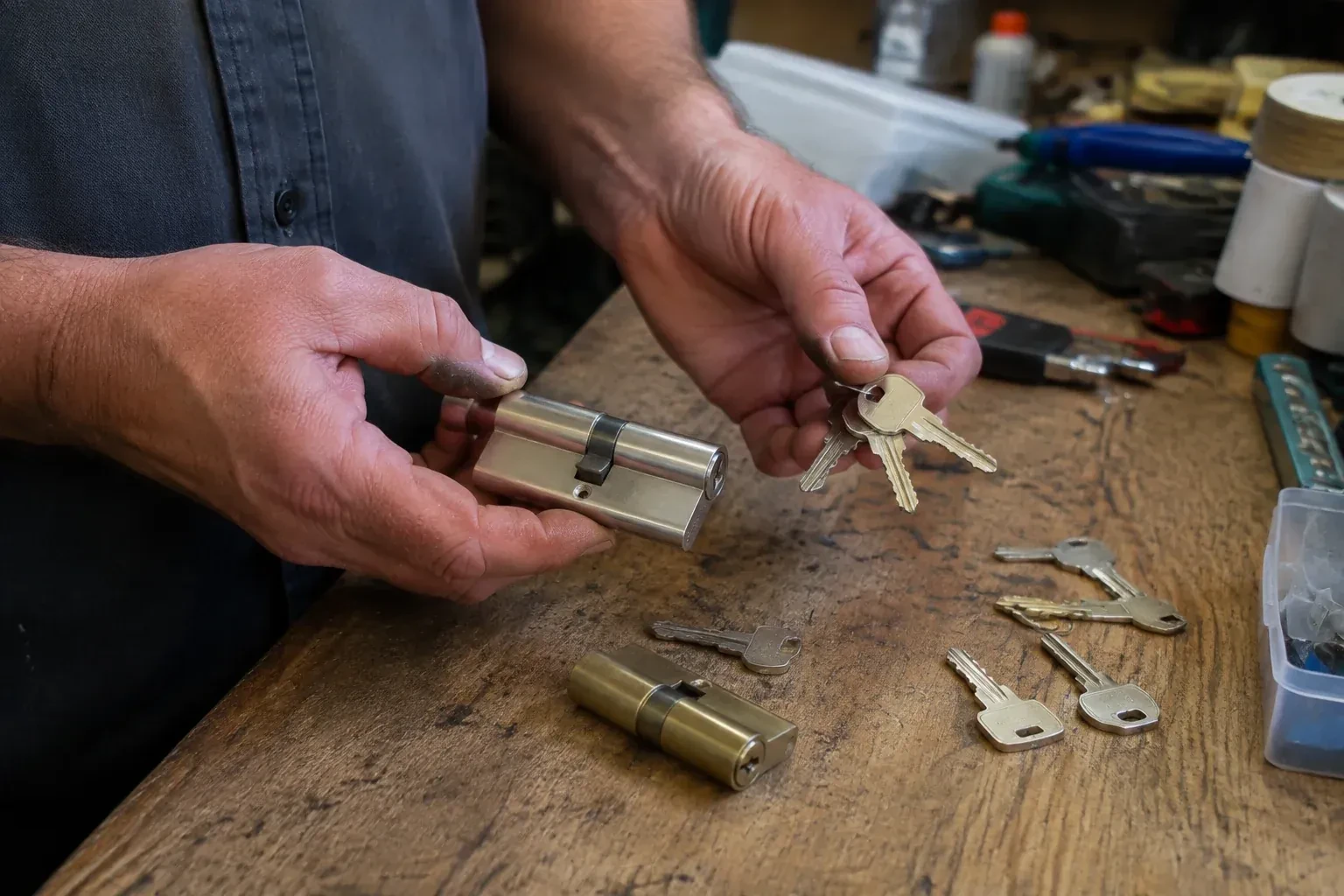
Pinning the new cylinder to your existing key, or setting several doors to a new key, is bench work quoted per cylinder, plus the number of keys you ask to have cut.
Hardware supplied by you or by the locksmith
If you have already bought the lock, the quote covers labour and any adaptation of the door to that kit. Hardware supplied from the van is listed separately with its grade and finish.
What to have ready
- Which doors do you want a deadbolt on, and does each one already have a bolt or only a knob?
- Is the door solid wood, steel-clad or fibreglass, and roughly how thick is it?
- Is there glass in the door or a sidelight beside it within arm's reach of the lock?
Deadbolt Installation: questions
QuestionsHow long should the bolt be?
The bolt should extend at least 25 mm into the frame, which is the standard throw for a dwelling's entrance doors and the length most residential deadbolts provide. Part of the bolt stays inside the door for support while the rest sits in the pocket. A hardened steel insert that spins under a saw blade is a common feature worth having on doors that face a street or laneway.
Does the finish of the deadbolt matter beyond looks?
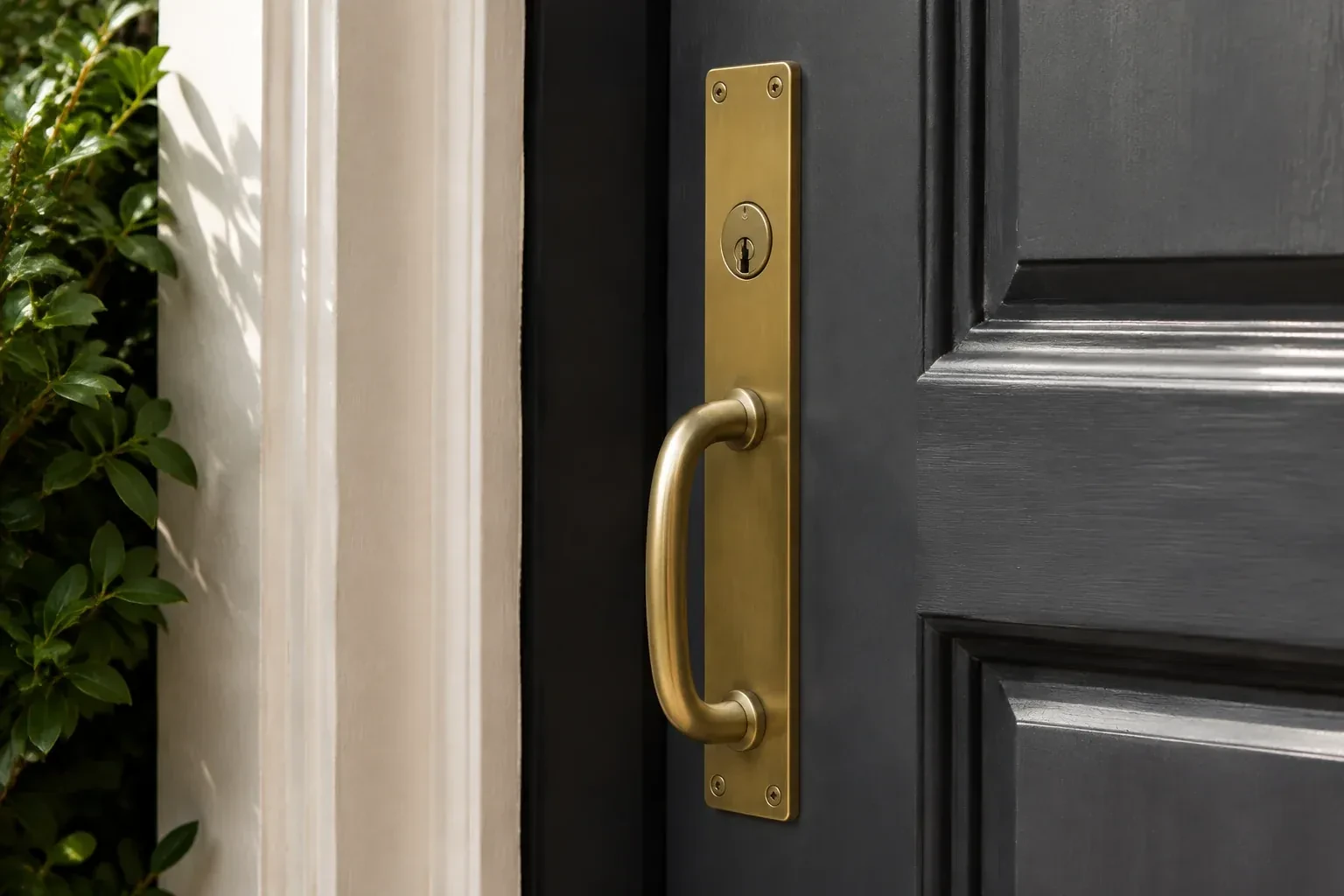
It does on an exposed door. Winter salt spray, summer sun and humid air all work on the outside trim, and residential deadbolts carry a finish grade that reflects how well the coating resists them. A lifetime or PVD-style finish stays bright longer on a south-facing or roadside door, while a sheltered porch door can carry any finish you like. Matching the knob or lever below is mostly a matter of taste.
What happens during the visit, step by step?
The locksmith looks at the door, frame, glass and hinges, measures the bore and backset, and confirms the hardware and key plan with you. The door is bored or the old lock removed, the bolt is set to the backset, and the cylinder and thumb-turn are assembled. The strike position is marked from the bolt itself, the pocket bored, and a reinforced strike fastened into the framing. Everything is tested open and closed, keys are cut and tried, and the area is vacuumed.
Related services
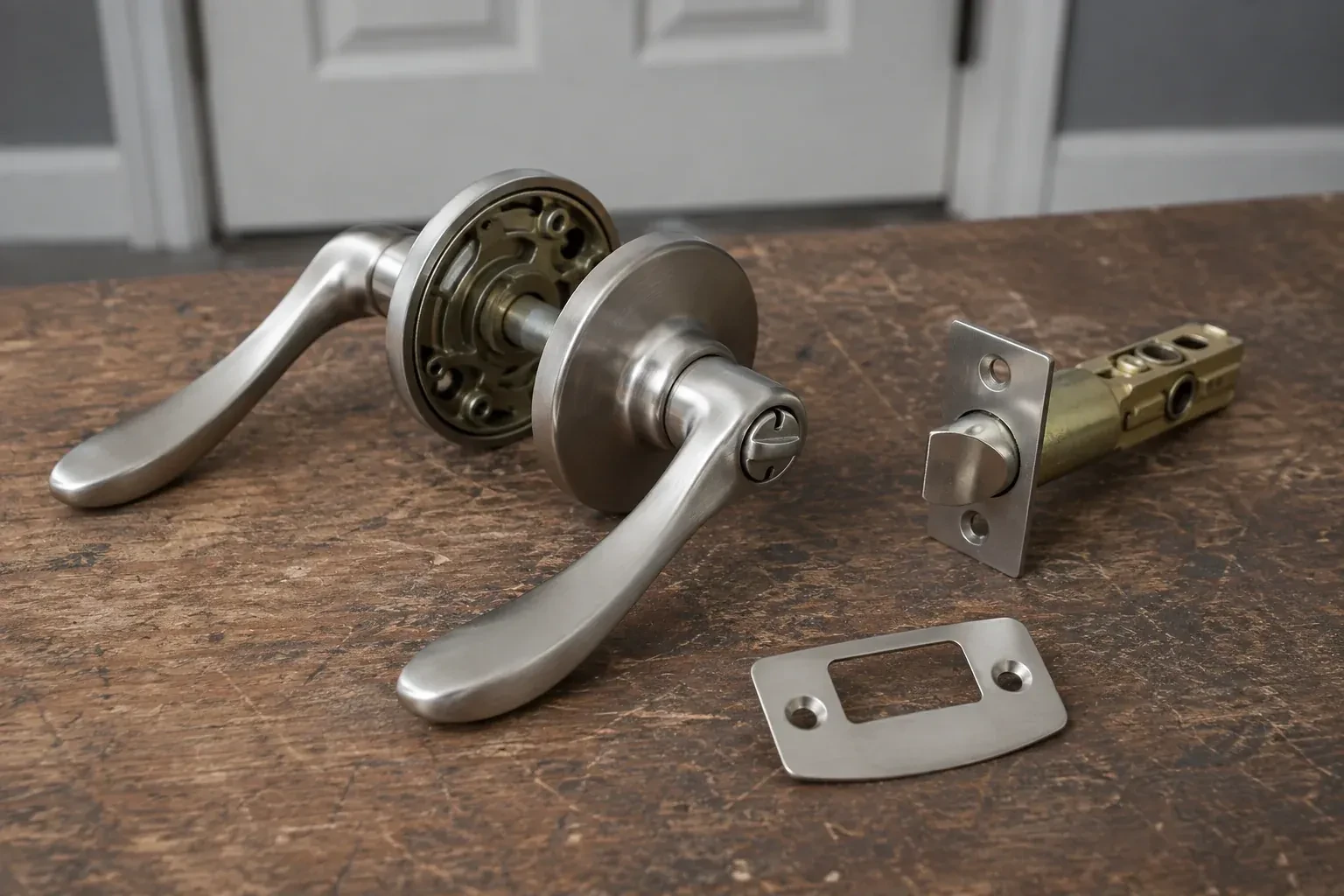
- Lock Replacement & UpgradeThe lever on the side door droops toward the floor and rattles in your hand.
- Vintage Mortise Lock ServiceThe old skeleton key still fits the keyhole, but it now needs a jiggle, a lean on the door and a little luck before the bolt moves.
- Smart Lock InstallationArthritis has made the small house key hard to grip and turn, especially with gloves on in January.