Change or rekey · Norfolk County
Vintage Mortise Lock Service
The old skeleton key still fits the keyhole, but it now needs a jiggle, a lean on the door and a little luck before the bolt moves.
In plain words
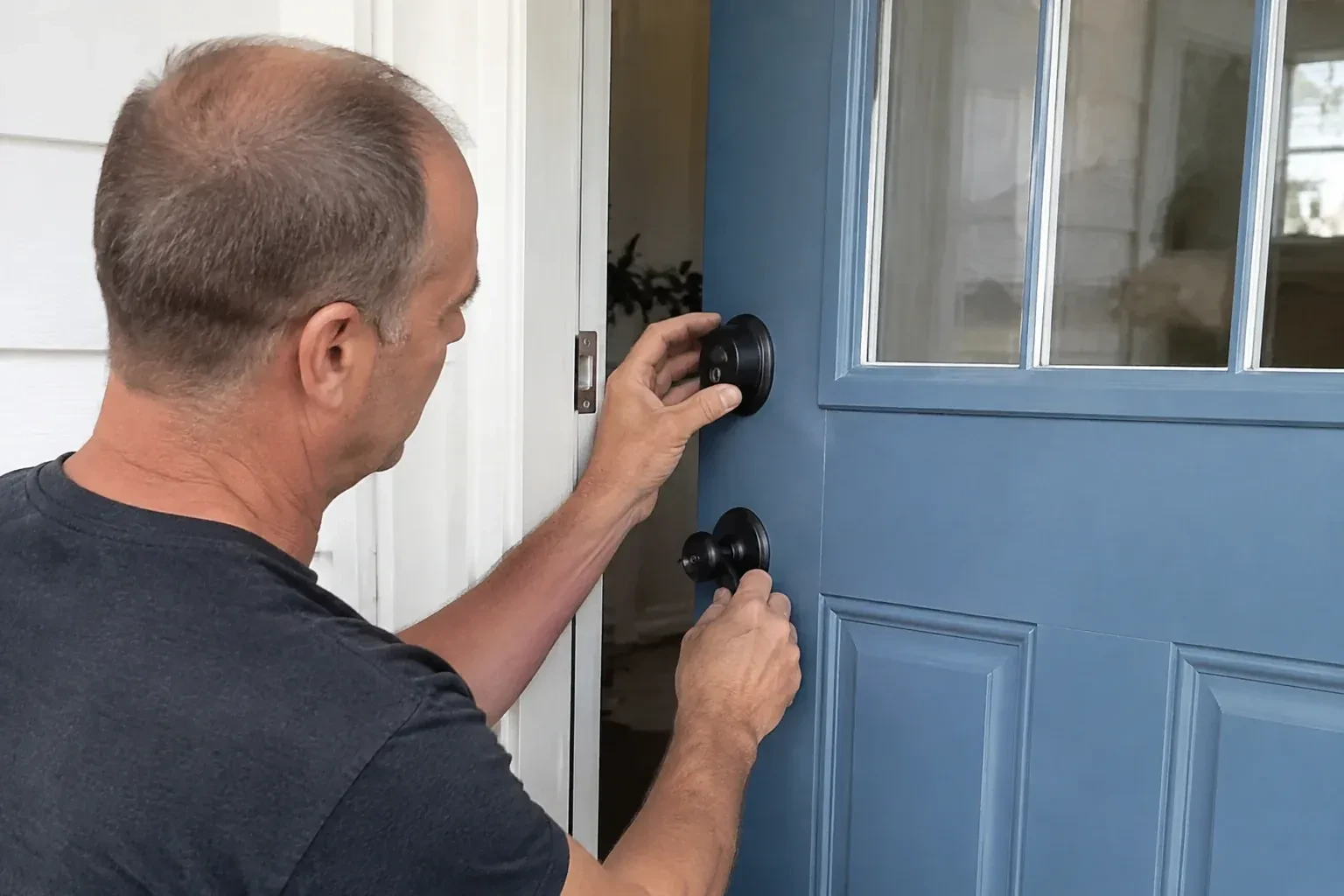
The trim on the door face is the other half of the lock. The knobs ride on a square spindle that passes through the hub of the case, held by small set screws, and the escutcheons cover the spindle and keyholes. Slack in a knob, a knob that pulls off in your hand, or a thumb-turn that spins without moving the bolt usually traces to a worn spindle, a stripped set screw or a hub whose square has rounded. The service replaces spindle and screws, matches a hub or lever from stock or makes one, and fits everything so there is no free play before the latch starts to move.
How the visit goesYou bought a house with its original hardware and a bag of loose keys. Some open interior doors, some fit nothing, and the front door lock has a keyhole shaped for a key you do not have. You would like the original lock kept and made to work.
Vintage Mortise Lock Service
How the visit goes
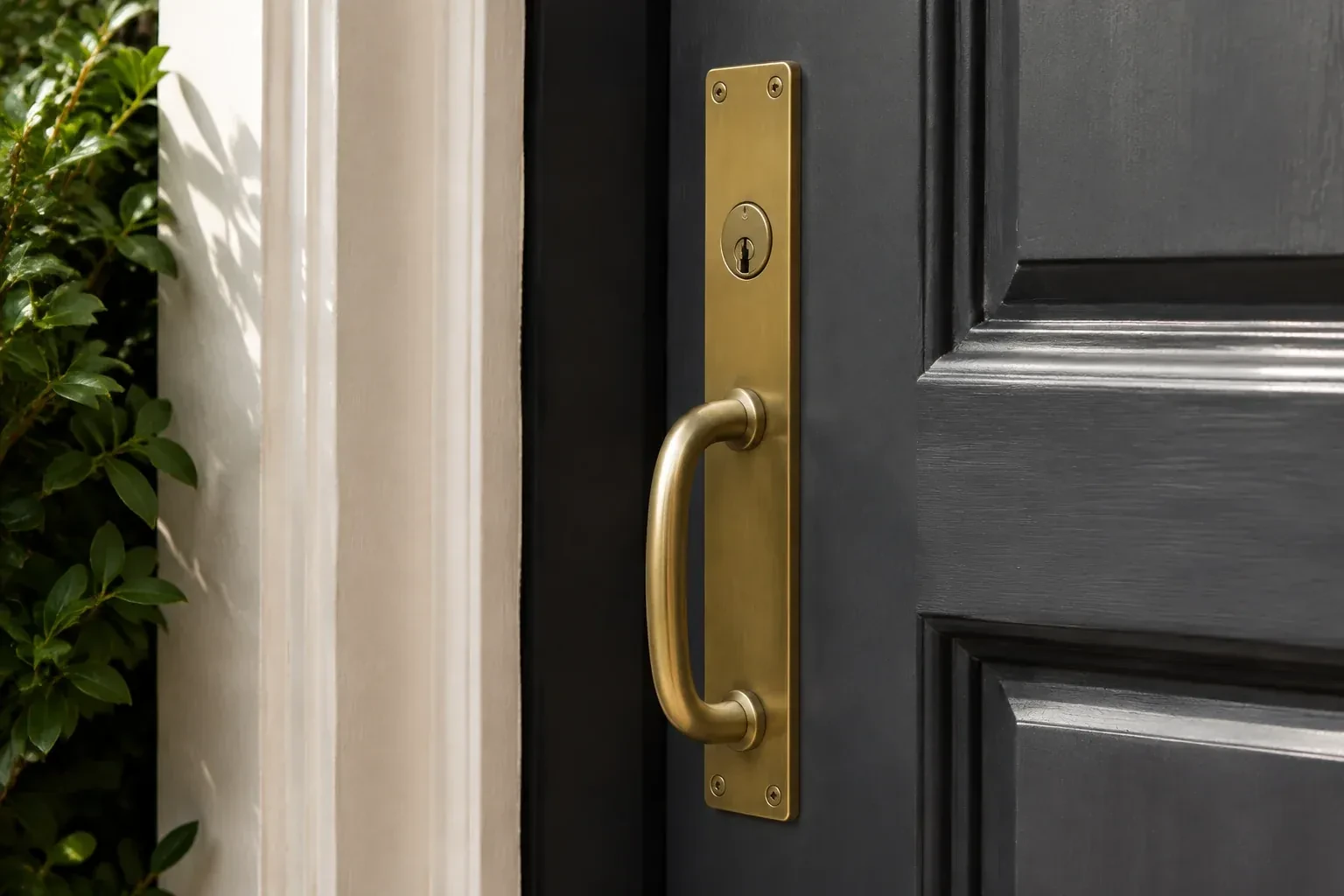
Reading the faceplate
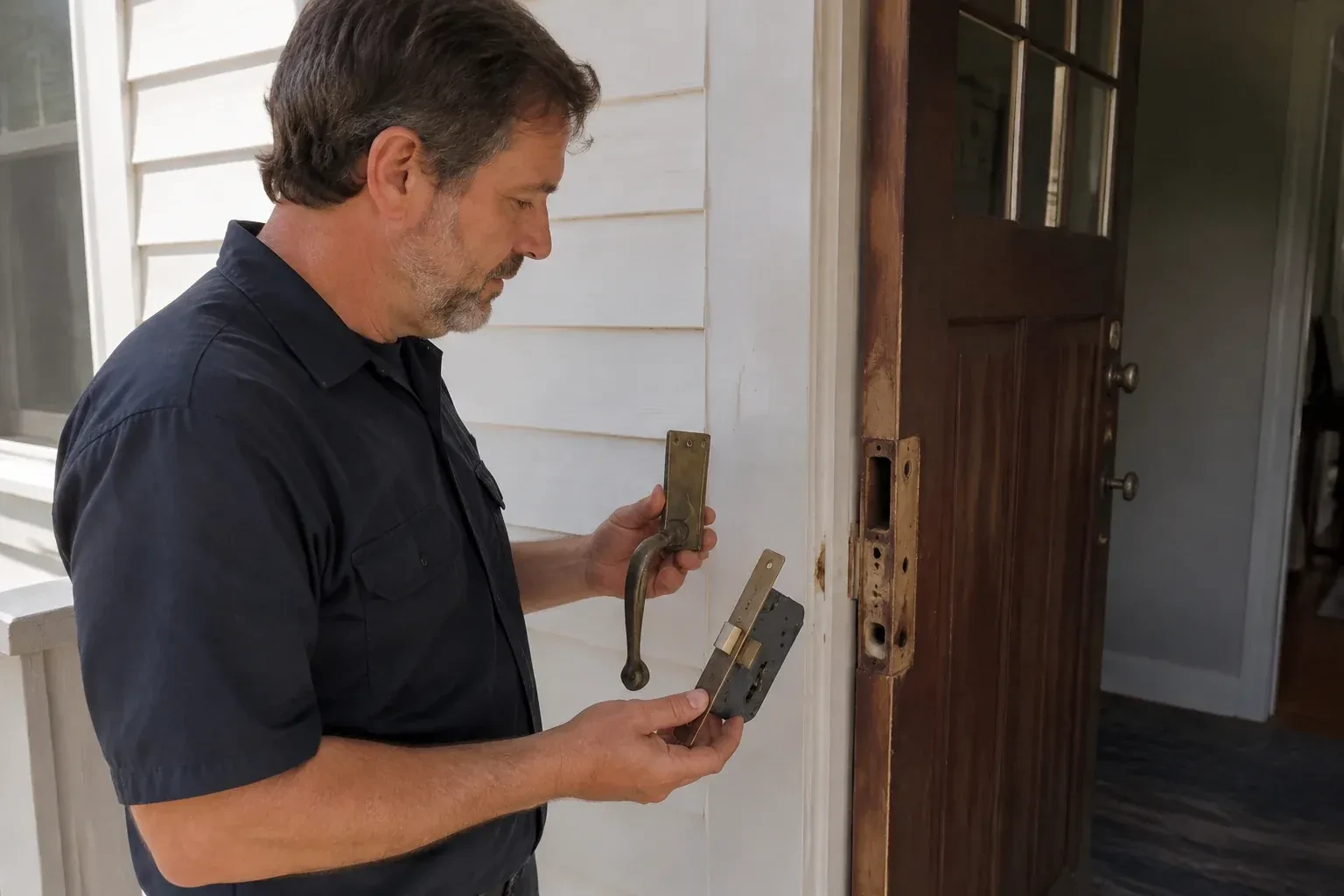
Standing at the open door, the locksmith looks at the narrow brass or steel plate in the door edge. Its height, the spacing of its screws, any maker's stamp, and whether it shows one bolt or two tell a good deal about what is inside: a latch-only case for an interior door, a latch and deadbolt case for an entry, or a privacy function with a turn button. The distance from the door edge to the centre of the knob, the backset, is measured, along with the spindle size. These figures decide which springs, followers and, if it comes to that, which replacement case will fit, so they are written down before the lock is disturbed.
Cutting a bit key to the lock
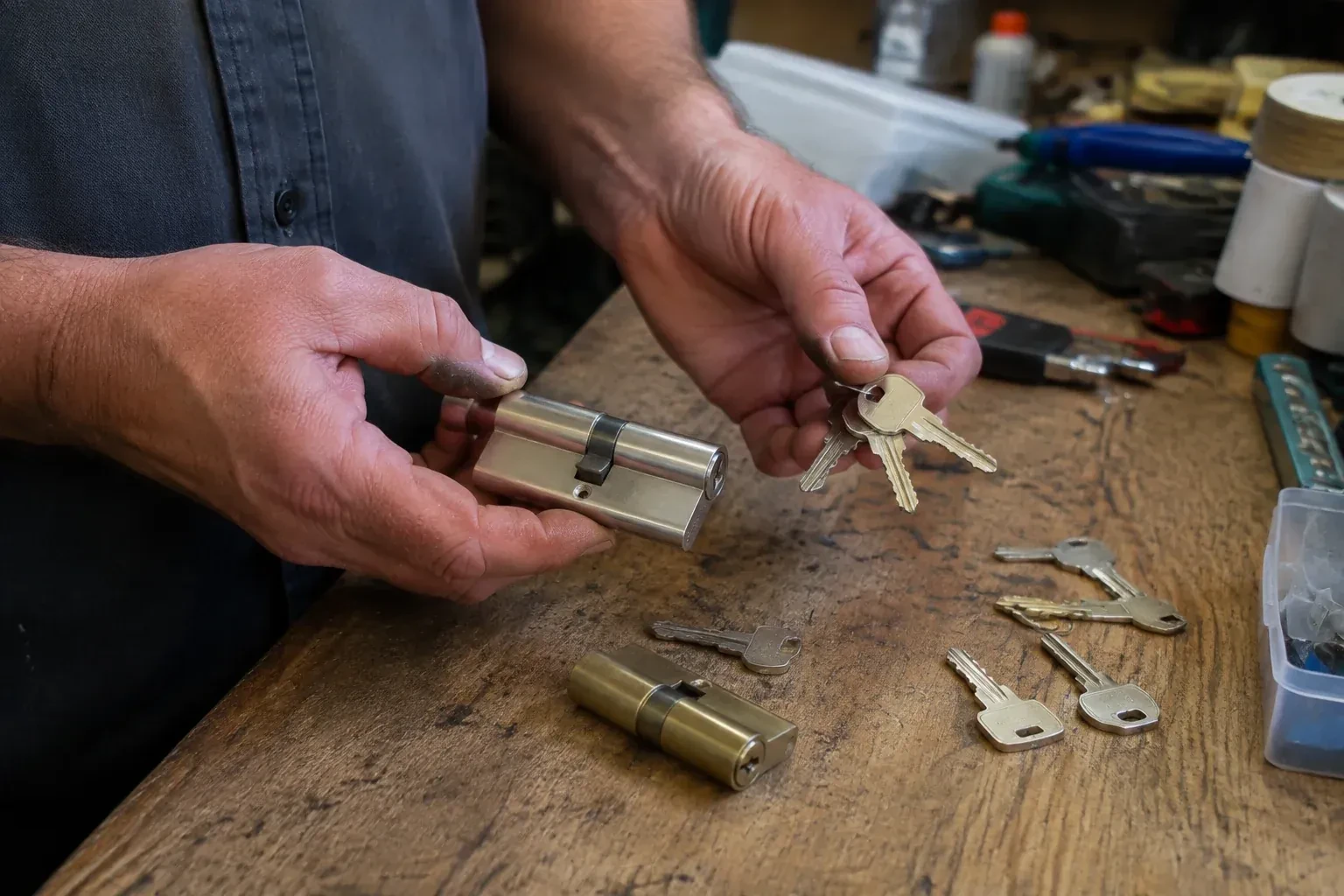
For a bit-key lock, keys are made to the case rather than copied from a pattern. A blank with the right bow, shank and bit size is chosen, then the bit is filed by hand to clear the wards inside the case and to lift each lever to the correct height. The key is tried, marked, filed again and tried again until it turns the bolt cleanly from both sides. A second key is made to match while the first is fresh. Where a working original exists, it is used as a guide and the new key is cut to it, and a worn original can itself be gently restored if the customer wants to keep using it.
Parts, records and the house file
Anything that came out of the lock, a broken spring, a worn lever, the old cylinder, is offered to you rather than thrown away; some owners keep the originals with the house's papers. The locksmith leaves a short account of what was done: the case type and size, what was replaced, whether keys were made or a cylinder rekeyed, and how the strike was adjusted. For a designated heritage property this record shows the original hardware was retained. For everyone else it is simply the sheet you hand to the next locksmith, or the next owner, so nobody has to rediscover what is inside the door.
Vintage Mortise Lock Service
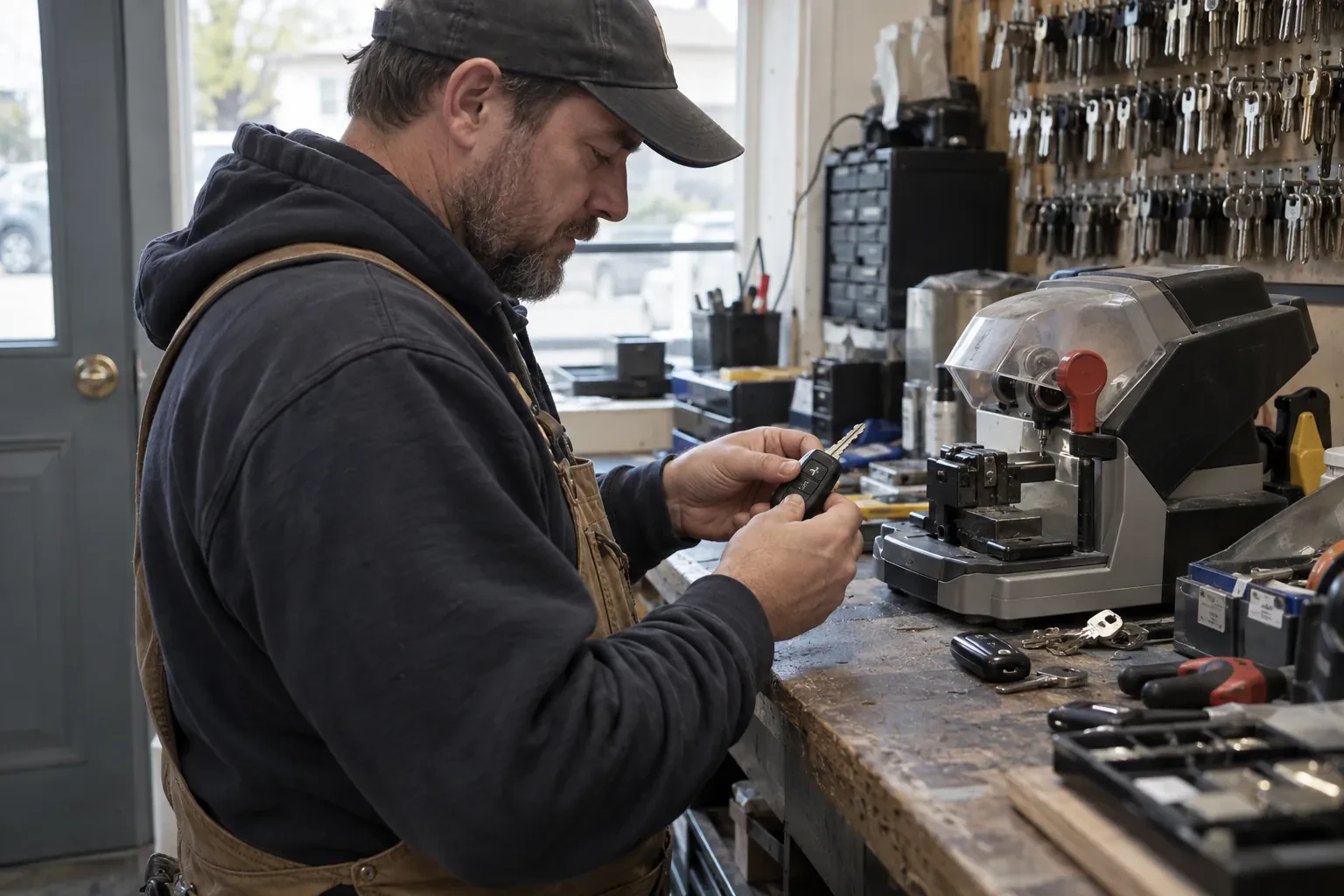
In the van
Bit key blanks
Dry graphite or PTFE lubricant
Warding files
Reproduction mortise case
Mortise cylinder and cam
Vintage Mortise Lock Service
What affects the quote
Making the inside key-free
Fitting a thumb-turn or interior release to a deadbolt that was keyed on both sides is its own small item, and one most owners of an entry door choose to include.
Strike and hinge work
Where the door has dropped or swelled, adjusting or moving the strike and tightening or packing hinges is part of the fix. It is small work but it is listed, so you see what was done to the door.
Number of locks in the visit
One entry lock is the simplest case. A whole floor of interior latches, or the front and back doors together, is a longer visit, and each case is quoted on its own so the total is easy to follow.
What to have ready
- What does the knob do when you turn it: return, sag, or not come back?
- Does the door take a skeleton-style bit key or a flat key in a round cylinder?
- How many doors need attention, and are any of them interior doors?
Vintage Mortise Lock Service: questions
QuestionsCan you make a key for a lock that has none?
Yes. A bit key is cut to the lock rather than copied from another key: the locksmith chooses a blank of the right size and files the bit until it clears the wards and lifts the levers inside your case, testing as they go. A pin-tumbler cylinder on a later lock is decoded or rekeyed and keys cut to it. Bring any loose keys that came with the house, since one may be close enough to serve as a starting pattern.
How should I look after the lock once it is serviced?
A drop of the right lock oil into the latch and bolt once a year is plenty. If the lock has a pin-tumbler cylinder, use whatever lubricant that cylinder's maker specifies, since some take a dry graphite or PTFE product and others a specified liquid one. Try the latch and deadbolt each spring and fall; if the bolt starts to scrape, the strike wants a small adjustment before anything is strained. Keep bit keys out of a pocket where they bend.
Can the work be done with the lock left in the door?
Rarely, and it is not the better route. Almost everything that fails is inside the case, and the case only opens once it is out of the pocket, which takes a few minutes and leaves no mark. Working through the keyhole with an unapproved or over-applied spray tends to wash out what little lubricant should stay and gums the levers later. Removing the case, cleaning it properly and refitting it is the repair that lasts.