Car keys · Langton
Car Key Replacement in Langton
The key snapped at the head while you were turning it in a stiff, frosty door lock.
In plain words
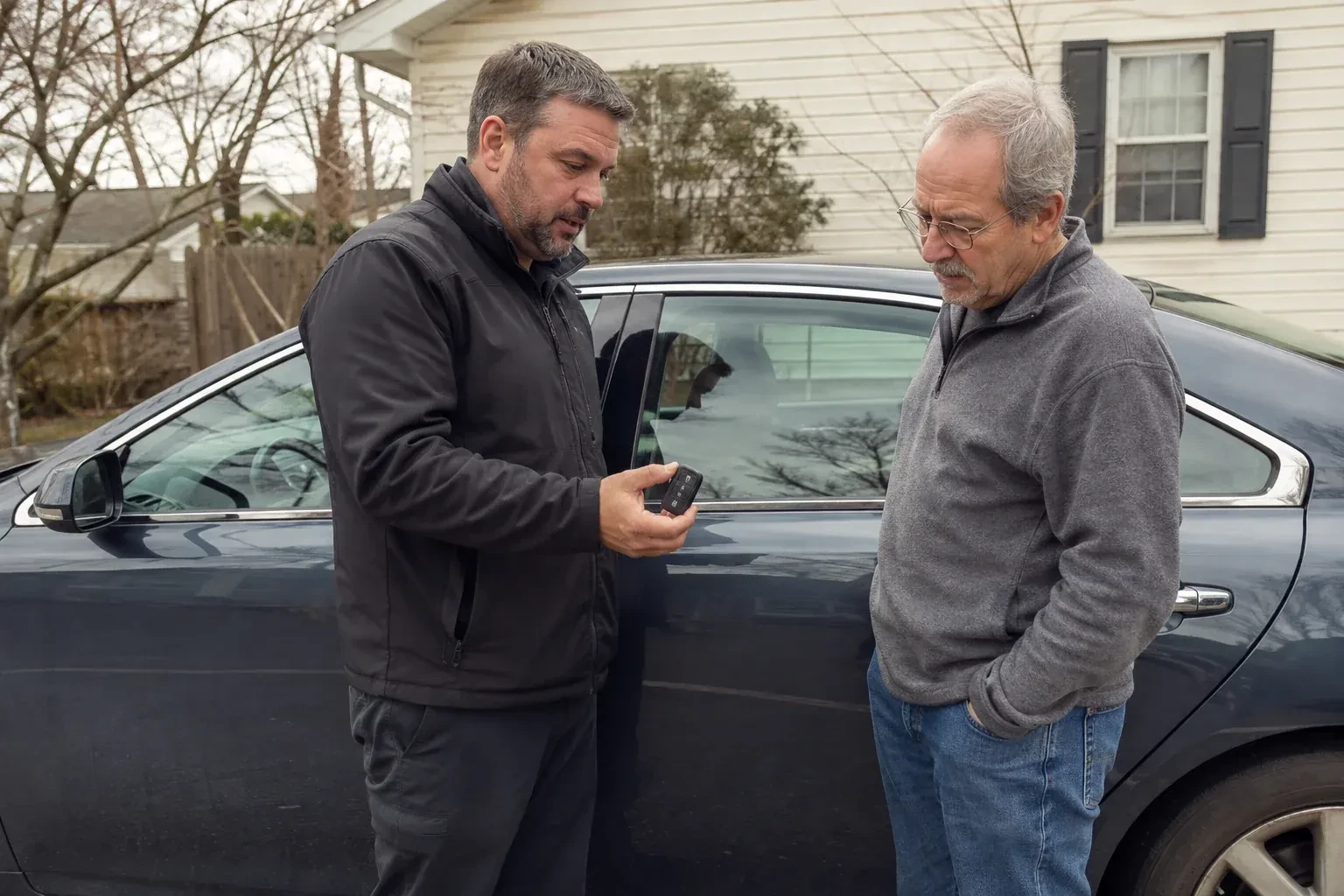
Every replacement key starts with a simple question: is this your car to key? The answer is settled with government photo identification and the vehicle permit, the green ownership issued by ServiceOntario, matched against the VIN on the dash and the door label. A lease agreement, fleet paperwork or a bill of sale covers a company car or a vehicle bought last week. The check takes a minute and it protects you as much as anyone, because the same standard applies to whoever might one day ask for a key to your car. Once it is done, the technical work begins.
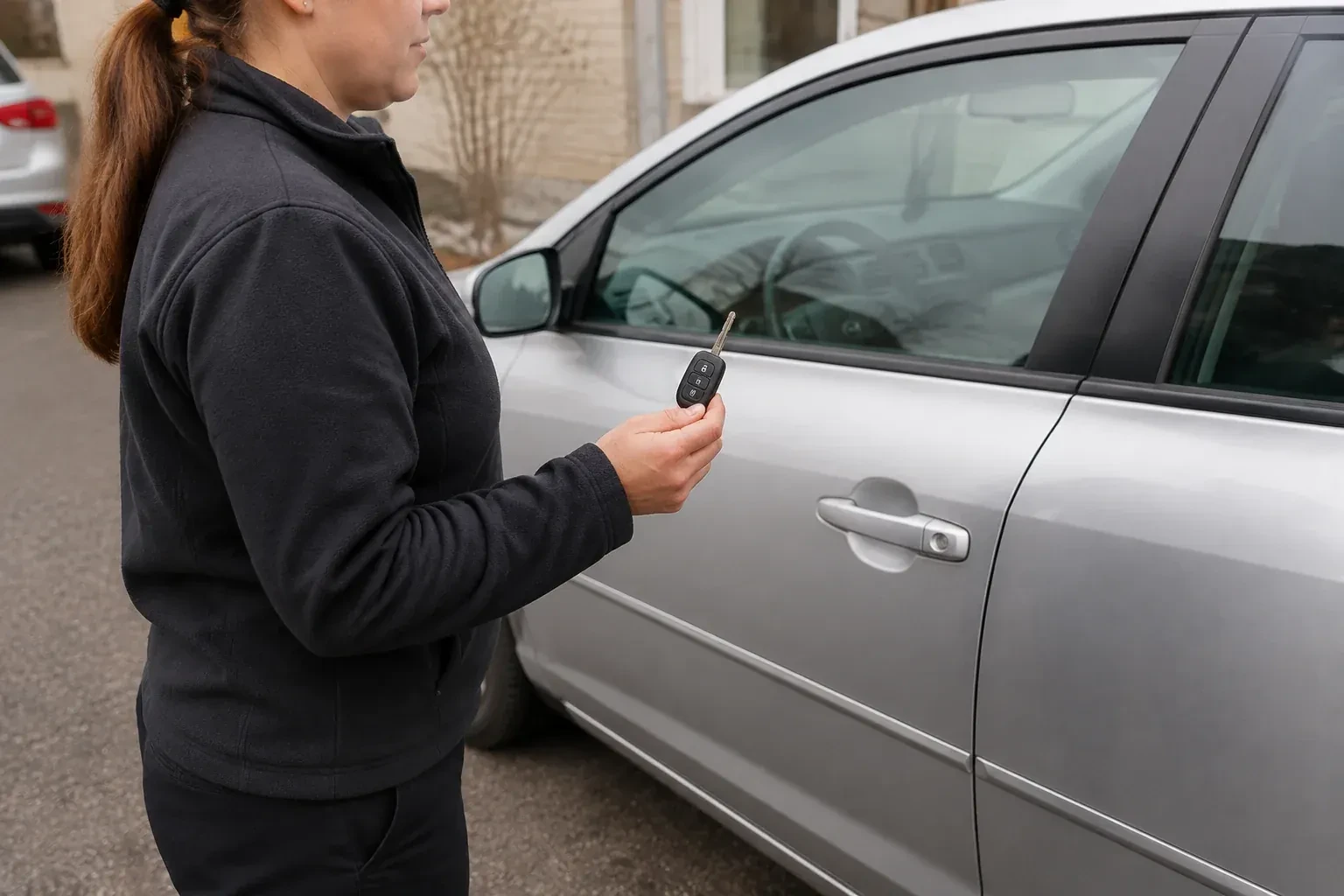
How the visit goesMinus twenty outside, the fob button does nothing, and the door keyhole has a crust of road salt over it because you have not used a metal key in that car since the day you bought it.
Car Key Replacement
How the visit goes
The locks and ignition, not only the key
A new key is only as good as the cylinders it turns, so the check looks at the car too. A door lock that has gone unused for years on a keyless vehicle can be stiff with salt and grit; an ignition that needed a jiggle with the old key has worn wafers that will feel tight with a fresh blade; a previous replacement may have left the doors and ignition on different cuts. Aftermarket alarms and remote starters can also sit between the key and the immobilizer. Spotting these early lets the locksmith bring the right parts and explain what else the car may need so the new key feels right.
Milling a high-security blade
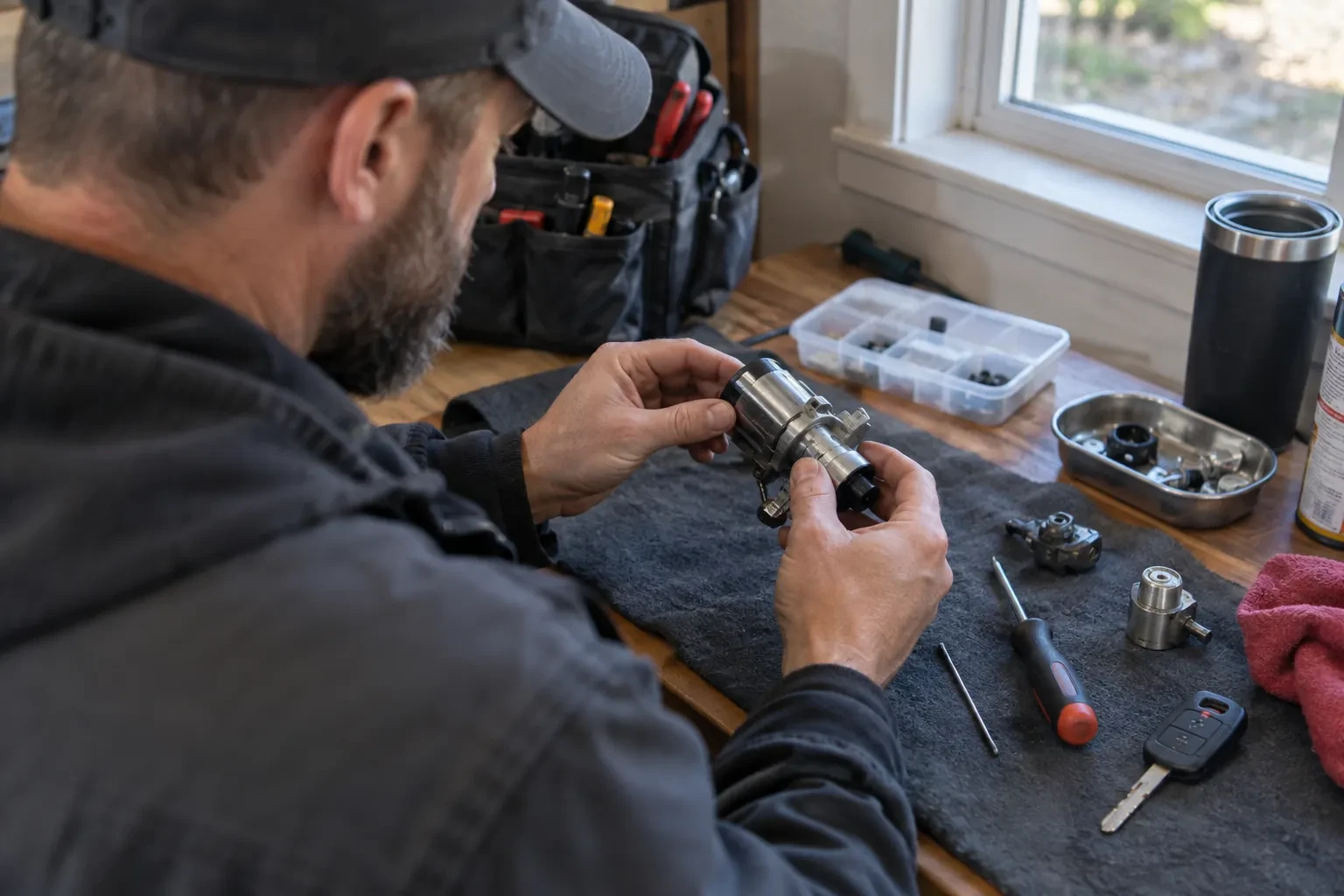
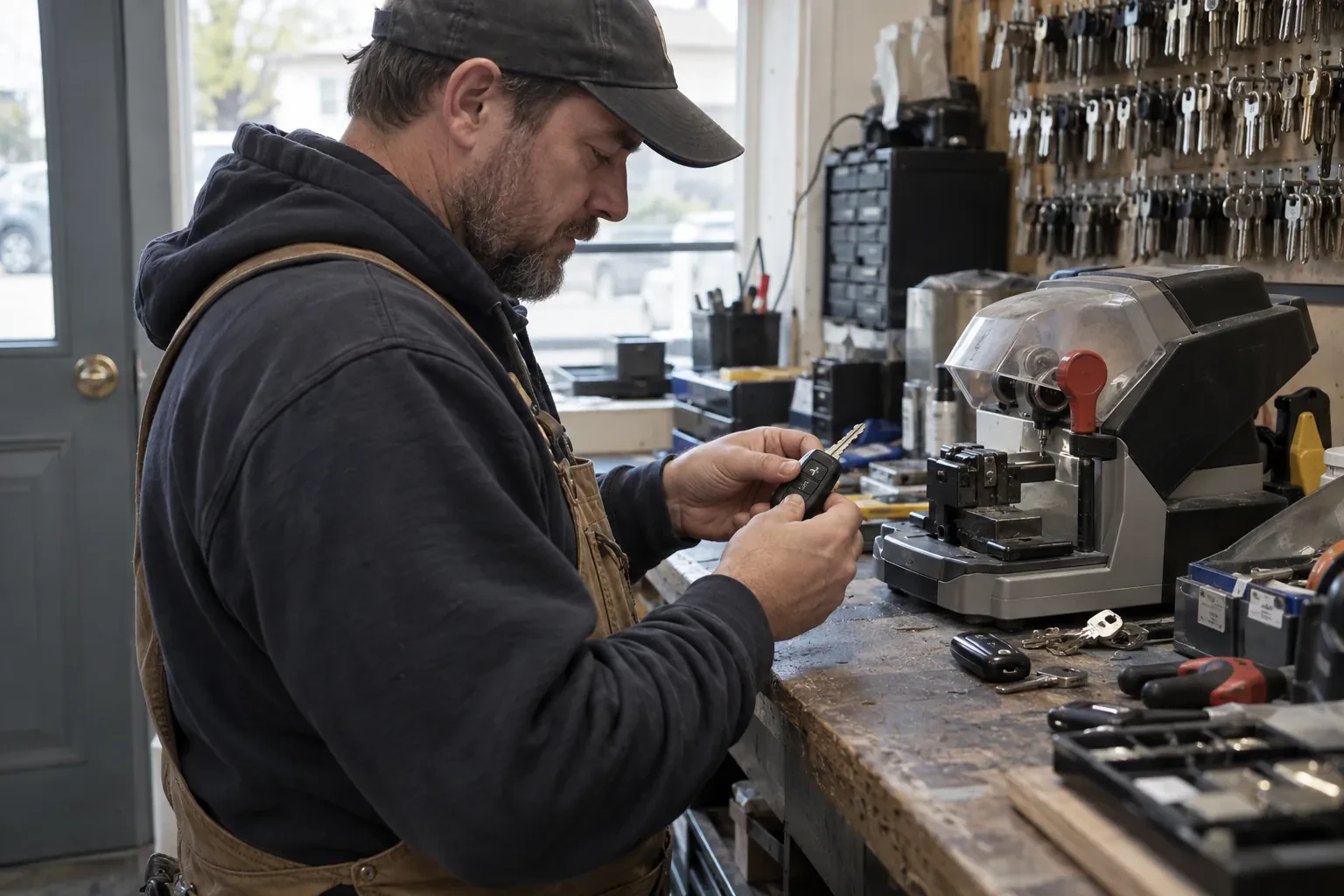
Many vehicles from the last two decades use an internal-cut key, sometimes called a laser-cut or sidewinder key, with a wavy groove milled into the flat of the blade instead of teeth along its edge. These are produced on a milling cutter that follows the code to a fine tolerance, because the wafers in a high-security lock have little forgiveness for an off-depth cut. The blank is clamped, the groove is milled on both sides, the burrs are cleaned off and the blade is checked in the lock for smooth travel. A blade that drags or catches is recut rather than forced.
A record of what your key actually is
A car key has an identity of its own: a blade profile, a transponder type, a remote frequency and a part number, and sometimes a key code printed on a tag. The locksmith notes these for you, along with the count of keys stored in the car, so the next spare can be prepared from the details rather than from scratch. Keep the note with your insurance papers rather than in the car. If the vehicle ever changes hands, the record also lets the new owner have the old keys erased and fresh ones made without guesswork about what the car uses.
Car Key Replacement
In the van
Laser-style milling cutter
Remote frequency tester
Fob coin-cell battery
Decoding pick and lock reader
Remote-head key shell
Car Key Replacement
What affects the quote
Programming route the car allows
Some vehicles accept a new key through an on-board routine, most through the programming tool, and a few only through a dealer procedure. The route determines the time and the data involved, and the quote says which it is.
How many keys you leave with
Each key is a blank, a cut and a programming slot, so the total follows the count. Making the spare during the same visit is usually the sensible time to do it.
Battery and access to the car
A flat vehicle battery needs a maintainer during programming, and a locked car with no key has to be opened before the diagnostic port can be reached. Both are small items that the quote names plainly.
What to have ready
- Is the car registered in your name, leased, or owned by a company?
- Is there an aftermarket alarm or remote starter fitted to the car?
- Do you have any key that still starts the car, or are they all gone?
Car Key Replacement: questions
QuestionsMy copied key opens the doors but the engine cuts out. Why?
The blade was copied but the chip was not. A hardware-store duplicate cut onto a plain blank has the right teeth, so it turns the locks and the ignition, yet the immobilizer hears no answer and shuts the engine off after a moment. The remedy is a proper transponder key: a blank with the correct chip, cut to your blade and programmed to the car, or a chip cloned from a working original.
Does programming a new key affect the keys I already have?
Adding a key leaves the existing keys in place; the car simply learns one more. The exception is a deliberate all-keys-lost reset or an erase you ask for, which clears every stored key and then registers only the ones you present. For that reason the locksmith asks you to bring every key you own to the visit, so each one can be re-registered and tested rather than left behind and forgotten by the car.
Can you make a key for a car with push-button start?
On many vehicles, yes: a proximity fob is registered to the vehicle through the diagnostic port in much the same way as a transponder key, and then tested for passive entry at the handles and for starting with the fob in a pocket. Other systems pair a proximity fob through onboard, app-based or dealer-only steps instead. The emergency blade tucked inside the fob is cut to the door lock so you have a mechanical way in, and the VIN check reveals in advance which route a given vehicle needs.
Related services
- Spare Car Key DuplicationA lockout last month ended with a locksmith opening the door and going home, and the same single key has been carried ever since with nothing behind it.
- Key Fob ProgrammingA new driver has joined the household, and the one existing fob is the only key anyone has ever had cut for this vehicle.
- Transponder Key ProgrammingEvery key that ever opened the car is gone at once, one taken with a stolen bag, the spare misplaced months ago and never replaced.