Car keys · Long Point
Transponder Key Programming in Long Point
Every key that ever opened the car is gone at once, one taken with a stolen bag, the spare misplaced months ago and never replaced.
In plain words
Not every transponder chip is built the same way. Early systems used a fixed code that repeated every time, while current vehicles increasingly use encrypted challenge-response chips that answer a different, unpredictable exchange with the immobilizer on every start. Identifying which generation a given vehicle uses tells the locksmith which programming approach and which chip family the new key needs, since a chip from the wrong family will not answer that system at all.
How the visit goesThe car came with a single key when the sale went through, and that key is the only thing standing between the household and being stranded. A second one has been on the list for weeks, quietly moved down every time something more urgent came up.
Transponder Key Programming
How the visit goes
Counting the keys that still work
The next question is not about the lock but about the keys: how many currently work, whether one was lost or stolen, and whether every key for the vehicle is genuinely gone. A single missing key changes little beyond adding a spare and clearing its old identity. All keys lost changes the whole visit, since there is nothing left to prove the system already trusts, and the work has to start by re-establishing that trust before a single new key can be written.
Programming through the diagnostic port
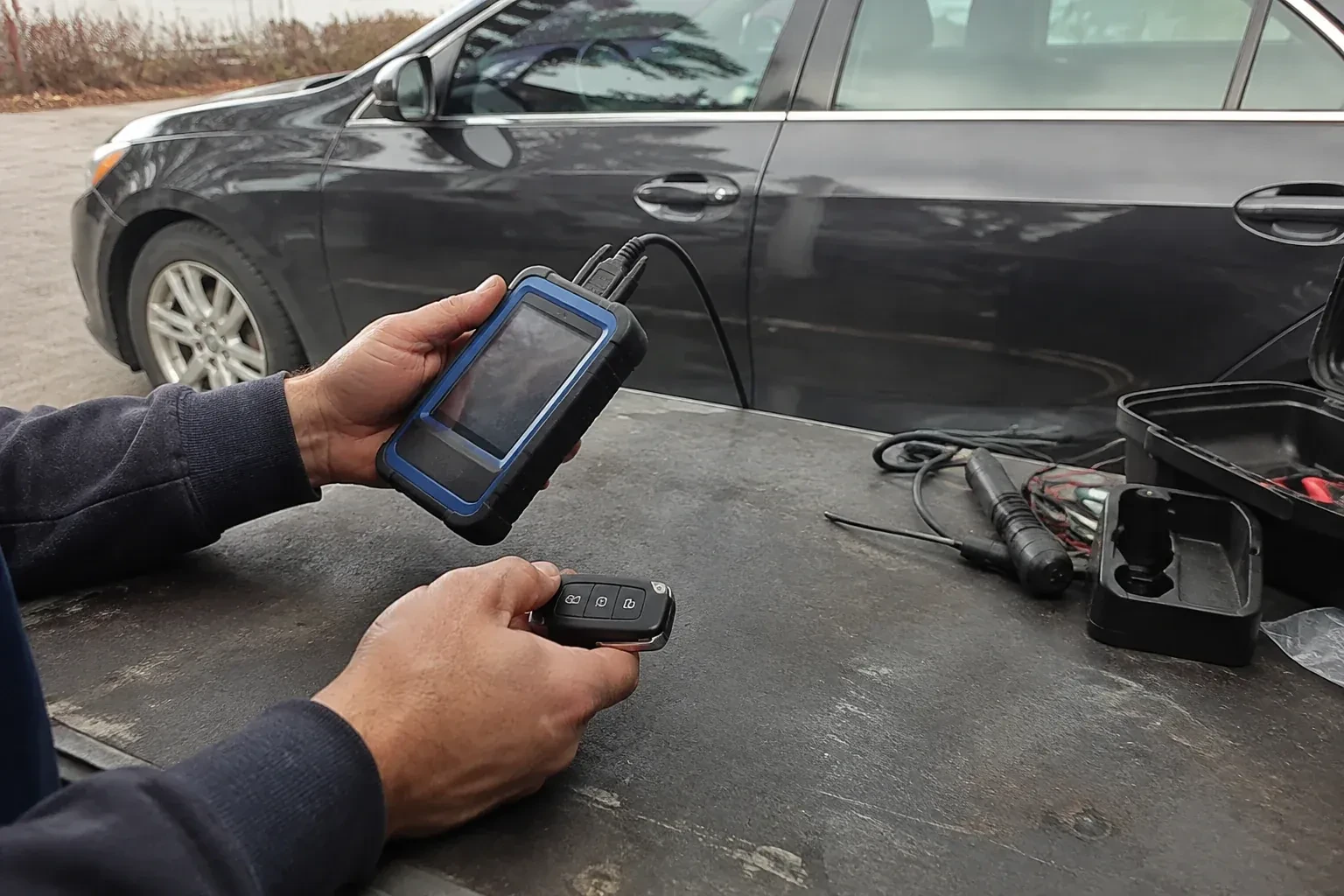
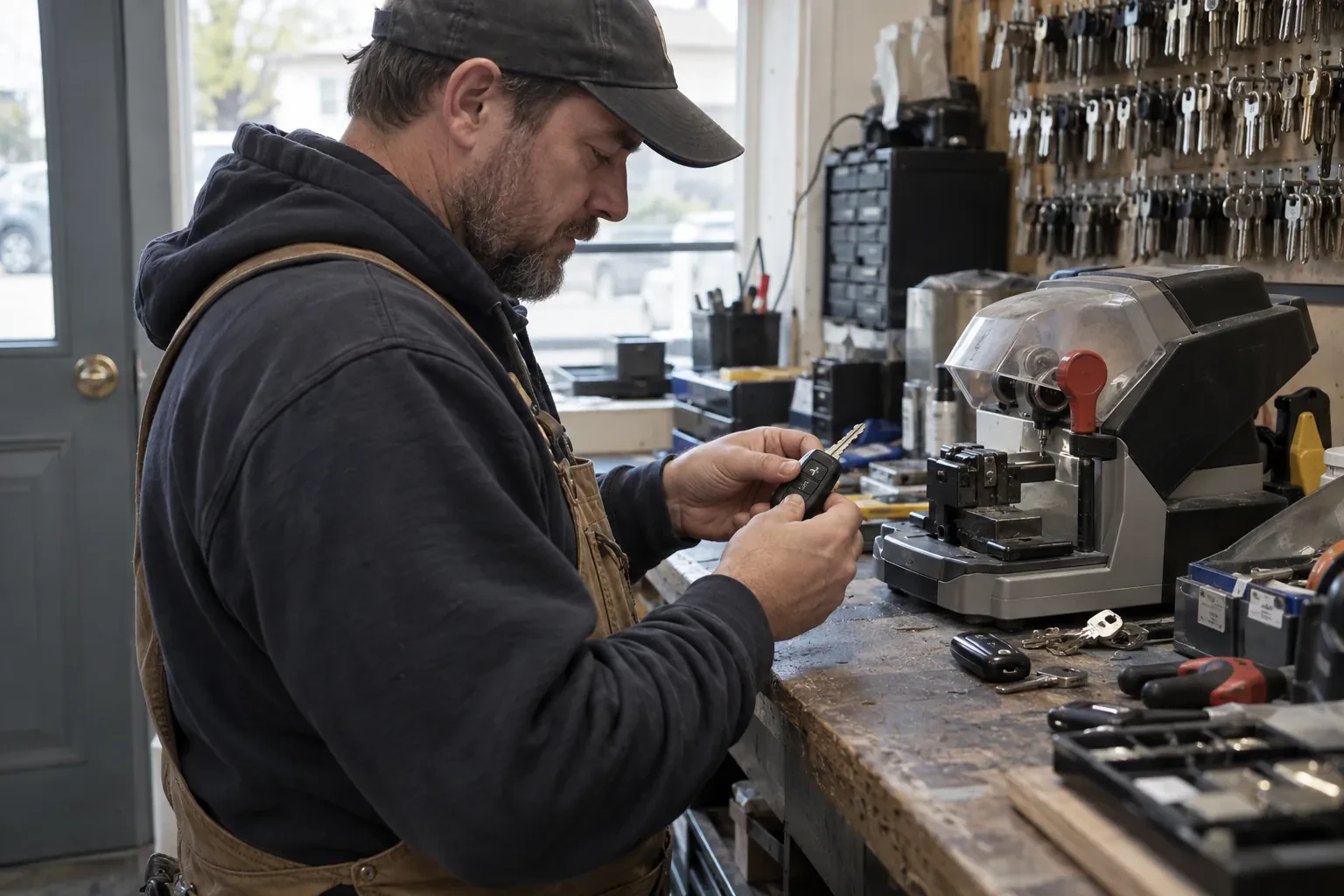
On most vehicles, the new chip's identity is written into the immobilizer through the onboard diagnostic port using equipment built for that vehicle's own protocol. The programmer talks to the vehicle's module in its own language, adds the new key without erasing the others unless asked, and confirms the write was accepted before the tool disconnects. This is the routine path for a spare, an extra key, or a straightforward replacement where at least one working key is still available to authorize the addition.
Room for the next driver
Most vehicles can hold more than one or two keys in memory, so adding a second household member later is usually a smaller job than the first visit was, provided at least one working key remains to authorize the addition. Knowing that in advance changes how a household treats an existing key: less like the only copy in the world, more like the first of what could reasonably become several, each one traceable to the same visit that started the list.
Transponder Key Programming
In the van
Replacement remote-head fob
Emergency insert blade
Frequency test reader
Proximity smart key
Fob battery
Transponder Key Programming
What affects the quote
Whether ownership documents are ready at the visit
Having a vehicle permit or registration and photo identification ready when the locksmith arrives keeps the visit moving directly into the vehicle work, rather than pausing partway through to confirm authorization.
Type of key: blade, remote-head or proximity
A basic transponder blade, a remote-head key with buttons, and a push-button proximity key each involve a different amount of pairing beyond the immobilizer chip itself, which affects both the parts involved and the time the visit takes.
Any extra function added to the new key
Pairing remote entry, trunk release, or proximity walk-up functions onto a new key is additional work beyond the immobilizer chip alone, and each function is confirmed working before the visit is considered finished.
What to have ready
- Do you have photo identification available?
- How many keys currently work?
- Was a spare ever cut without being programmed?
Transponder Key Programming: questions
QuestionsDo I need paperwork from the dealer, or a code from them?
Not usually. Programming equipment reads and writes the vehicle's key list directly in most cases, without needing anything from the dealer. Many recent vehicles gate that access behind a manufacturer-level security session instead, which the locksmith handles as part of the visit rather than asking the owner to obtain anything in advance.
What happens if every key for my car is gone?
All-keys-lost work starts by re-establishing secure access to the vehicle's own immobilizer module, since there is no existing key left to vouch for a new one. Once that access is confirmed, a fresh key is cut and its chip is written into the vehicle the same way any key would be, and the visit finishes with the usual start-up test across a few ignition cycles.
My key turns and the engine cranks, but it won't start. Is that this?
That pattern, the starter turning the engine over without it catching, often points to the key or immobilizer rather than a fuel or ignition-timing fault. A flashing security light on the dashboard while this happens adds to that picture. A diagnosis, checking whether the vehicle actually recognizes the key's chip, is what confirms which one it is before any programming begins.
Related services
- Car Key ReplacementThe key snapped at the head while you were turning it in a stiff, frosty door lock.
- Spare Car Key DuplicationA lockout last month ended with a locksmith opening the door and going home, and the same single key has been carried ever since with nothing behind it.
- Key Fob ProgrammingA new driver has joined the household, and the one existing fob is the only key anyone has ever had cut for this vehicle.