Change or rekey · Delhi
Gate & Building Entry Locks in Delhi
The gate to the side yard used to close with a satisfying click.
In plain words
A building outlives its tenants, and every move-out that skips a rekey leaves one more key in circulation that nobody living there today can account for. This service treats that turnover as routine business: the shared entry's cylinder is rekeyed to a fresh combination, new keys are cut for everyone who currently needs one, and any gate on the same property that should share that key is brought along to match. What used to be an open question about who can get in becomes a short, current list.
How the visit goesA visitor buzzes from the panel downstairs, someone presses the button by the door, and nothing happens. The electric strike on the lobby door used to click open on cue; now it stays silent, and residents are propping the entry with a folded flyer instead.
Gate & Building Entry Locks
How the visit goes
Looking for prior damage or an attempted entry
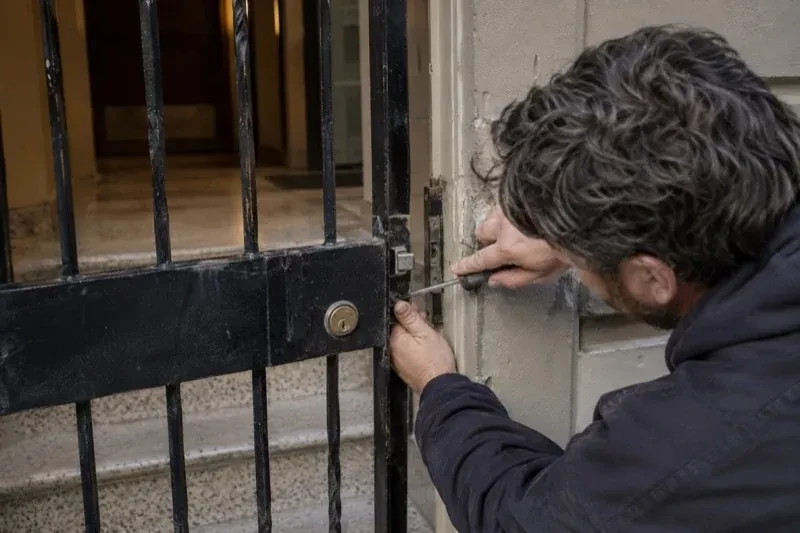
Before any work begins, the locksmith looks for signs that something has already been tried on the gate or door: pry marks near the strike, a scratched or spun cylinder, a bent hasp, or a padlock shackle that has been cut and replaced. Noting this clearly, before touching anything, means the property owner knows exactly what was there beforehand and what the visit actually changed. It also flags whether the surrounding frame or post absorbed damage that needs attention alongside the lock itself.
Working on the cylinder itself
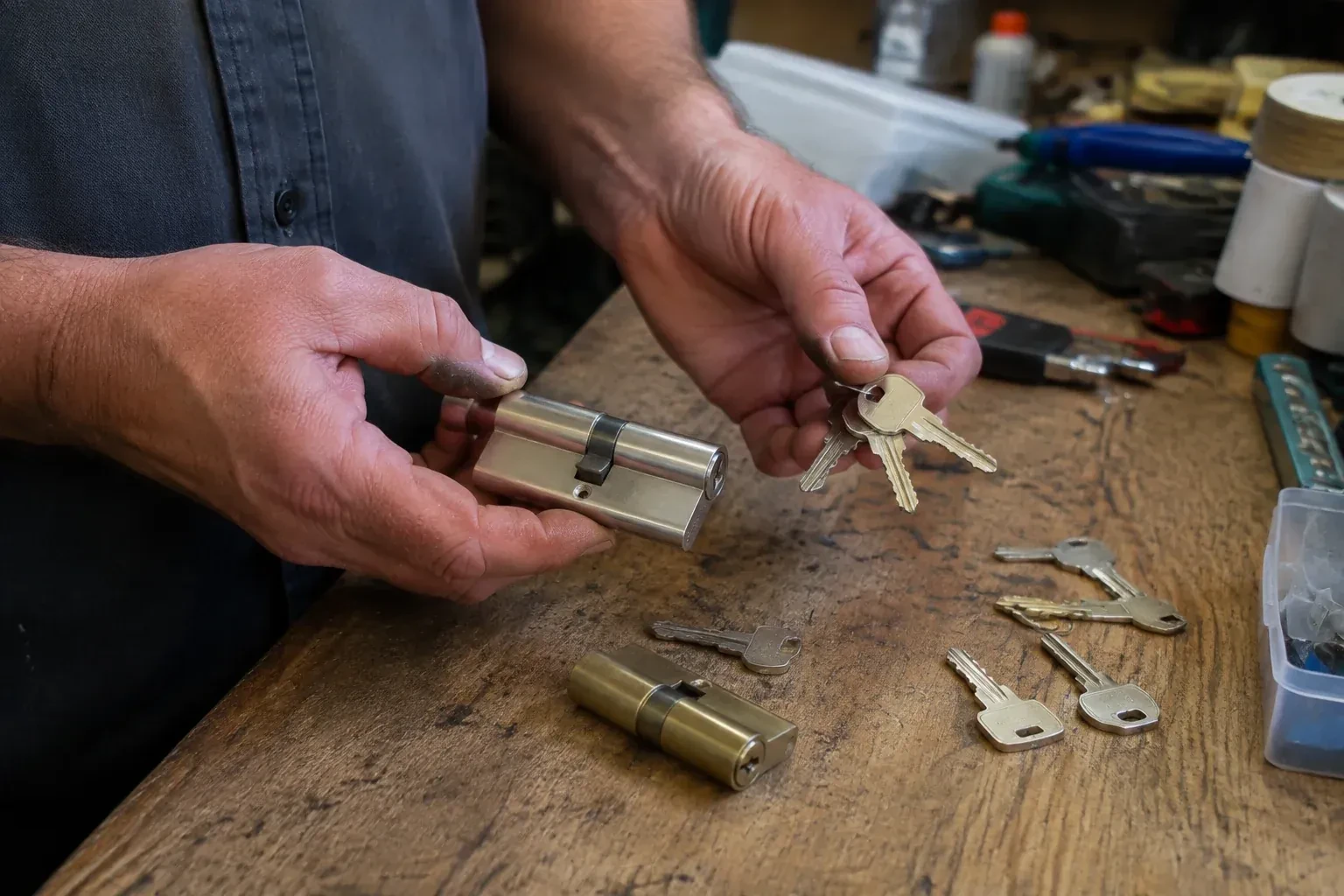
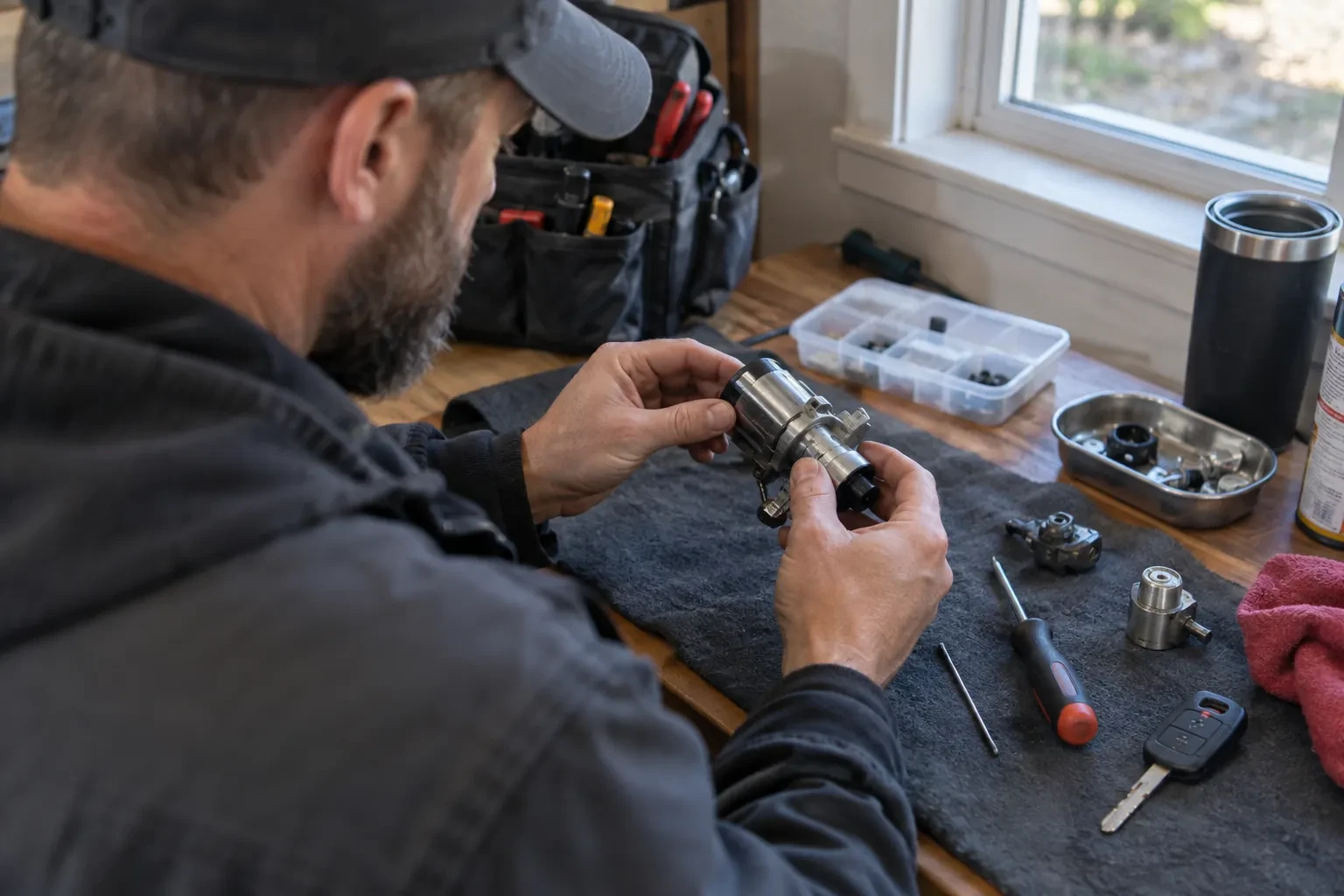
Depending on what the assessment found, the cylinder is either rekeyed, replaced with a weather-rated unit, or decoded so a fresh key can be cut to match it. Rekeying removes the existing pin combination and sets a new one, so old keys stop working while the same housing stays on the gate. A full replacement suits a housing that is worn, pitted or the wrong grade for outdoor use. Either way, the new or updated cylinder is cycled repeatedly with the new key, from both sides where the hardware has two, before it is considered finished.
A seasonal habit worth keeping
A gate or shared entry that was serviced once benefits from a short look each season afterward, particularly heading into winter: cycling the gate to check the closer still settles it into the latch, glancing at the cylinder for the first signs of pitting, and confirming hinge or post hardware has not worked loose. Catching a stiff cylinder or a slow closer in the fall is a smaller job than reaching the same gate once it is genuinely frozen or has sagged further over a winter of neglect.
Gate & Building Entry Locks
In the van
Voltage tester for electric strikes
Plug follower and repinning kit
Corrosion-resistant fasteners
Hinges, pivots and shims
Gate and door closers

Gate & Building Entry Locks
What affects the quote
Access to the gate or entry
A ground-level gate on an easy driveway is straightforward. A shared building entry behind a locked lobby, a gate at the far end of a long property, or awkward scaffolding around the hardware adds time the quote takes into account.
Any upgrade chosen while the locksmith is already there
Some property owners use the visit to move to a heavier closer, an electric strike, a master key system or additional padlocks for other gates. None of this is required to address the original problem; each option is priced as a separate line.
Electronic components on the entry
A buzzer, keypad, electric strike or maglock adds its own diagnostic and testing time beyond the mechanical lock itself, and any electronic part that needs repair or replacement is priced as its own line.
What to have ready
- Do you manage this property, or should someone else be involved in the decision?
- Which gate or door is giving you trouble?
- Is there any sign the gate or lock was recently forced?
Gate & Building Entry Locks: questions
QuestionsA tenant moved out of our building. Do we need to rekey the shared entry?
It is worth doing, since a move-out is exactly the situation a rekey is meant to cover: a former tenant's key still operates the same lock everyone currently living there relies on. Rekeying resets the cylinder to a fresh combination and issues new keys to current residents, without requiring a whole new lock in most cases. Bringing any other gates or doors that share that key along at the same time keeps the whole property on one current combination.
What is the difference between a gate lock and a regular door lock?
A gate lock is built to work outdoors, so it usually pairs a latch or bolt with a closer that swings the gate shut on its own using its own spring, rather than relying on a person to push it home. The cylinder tends to be weather-rated, and the whole assembly fits a gate frame or post rather than a conventional door jamb. A building entry door, by contrast, often combines this outdoor hardware with an interior-style latch or an electric strike.
What makes a cylinder weather-rated, and does it matter?
A weather-rated cylinder is built with materials and seals meant to resist water, salt and temperature swings better than a standard indoor cylinder, which matters a great deal for anything mounted on an exterior gate or a street-facing door. Without that rating, a cylinder exposed to rain, road spray and freeze-thaw cycles tends to pit, stiffen or seize well before an equivalent indoor lock would show any wear. Choosing the rated version at the outset is usually simpler than replacing a corroded one a season or two later.
Related services
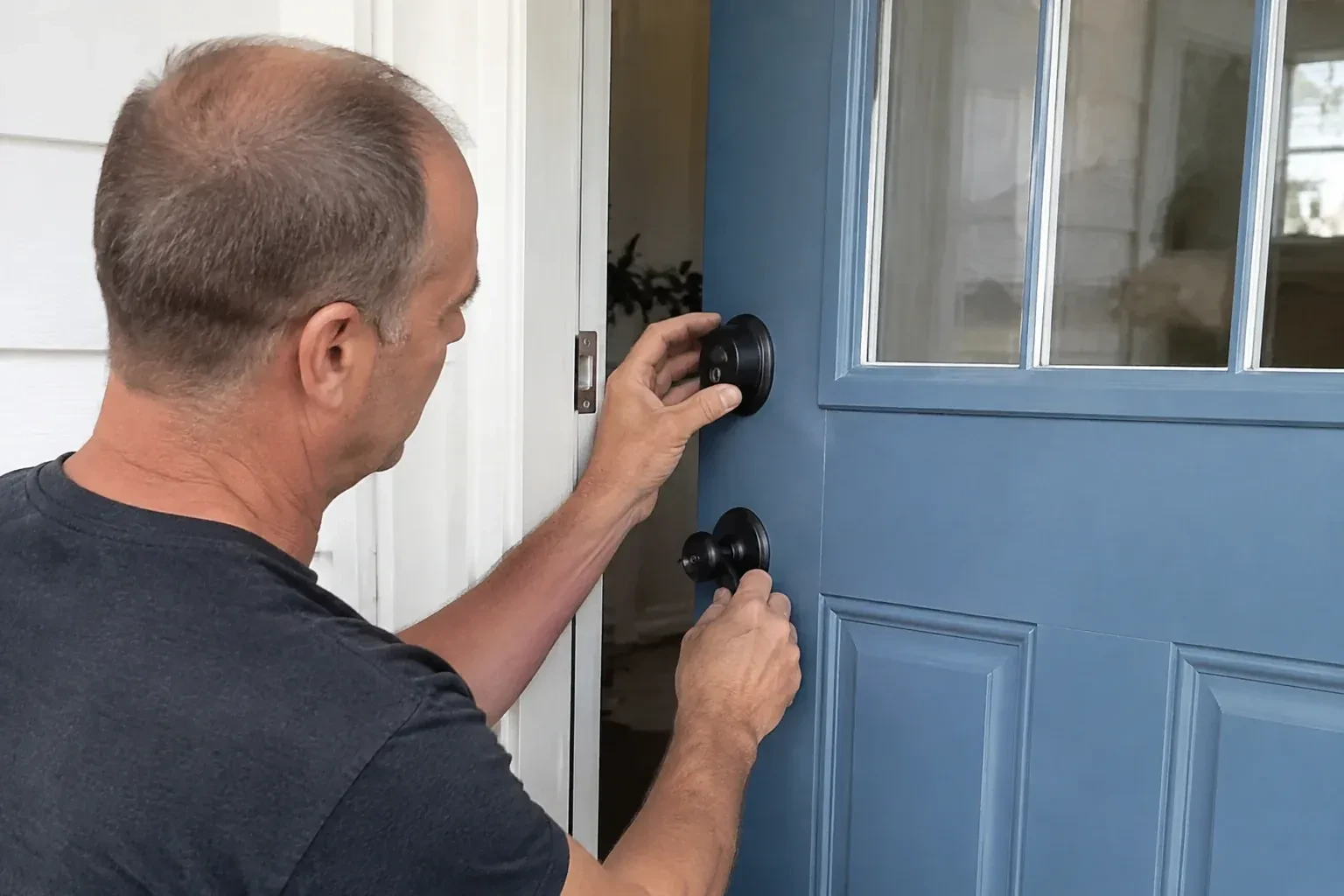
- Deadbolt InstallationThe old deadbolt has grown lazy.
- Lock Replacement & UpgradeThe lever on the side door droops toward the floor and rattles in your hand.
- Vintage Mortise Lock ServiceThe old skeleton key still fits the keyhole, but it now needs a jiggle, a lean on the door and a little luck before the bolt moves.