Commercial · Glenridge
Commercial Rekeying in Glenridge
A key turned up in the parking lot with the shop's name on its fob.
In plain words
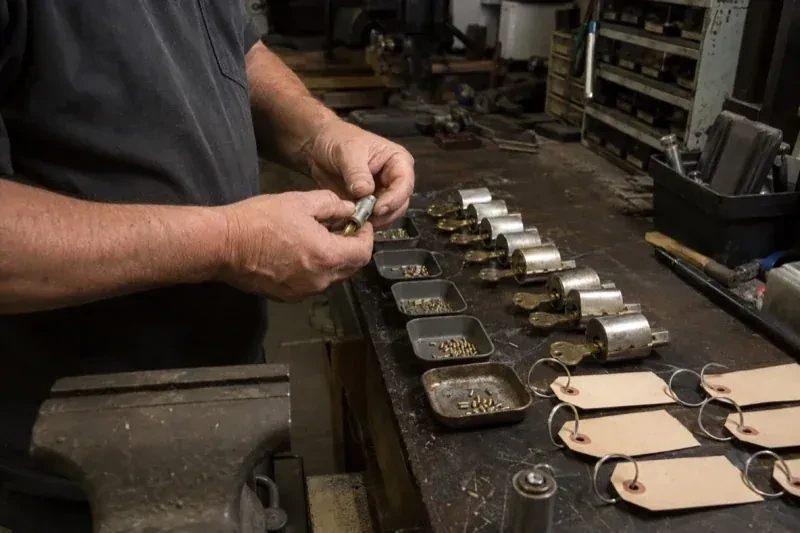
Losing a master key exposes every door it opened, and a commercial rekey brings that exposure back to zero. The locksmith first works out which level the missing key sat at: a single change key affects one or two cylinders, while a master reaches every lock in its group. Only the affected cylinders are repinned, which keeps the rest of the system intact and the response proportionate. Where a keying chart exists the work is precise; where the chart has been lost, the visit begins by reading and recording the existing cylinders so the new plan starts from facts rather than memory.
How the visit goesThe drawer behind the counter holds a tangle of keys with tape labels: front old, side, Dave. Some open things, some open nothing, and the hardware-store copies mean the true count drifted long ago past anything written down.
Commercial Rekeying
How the visit goes
Cores and restricted keys already on site
Some businesses already have more key control than they realize. Figure-eight shaped cores in the levers point to an interchangeable core system, which means a control key somewhere removes the core without unscrewing anything; finding out who holds that control key, or whether it left with a former manager, shapes the whole job. Keys with an unusual profile or a stamped number may belong to a restricted keyway whose blanks are only supplied against a signed letter of authorization, and the locksmith asks who the signatories are. Knowing what is already in place lets the new plan build on it rather than replace it, and flags any control that has quietly lapsed.
Repinning a standard cylinder
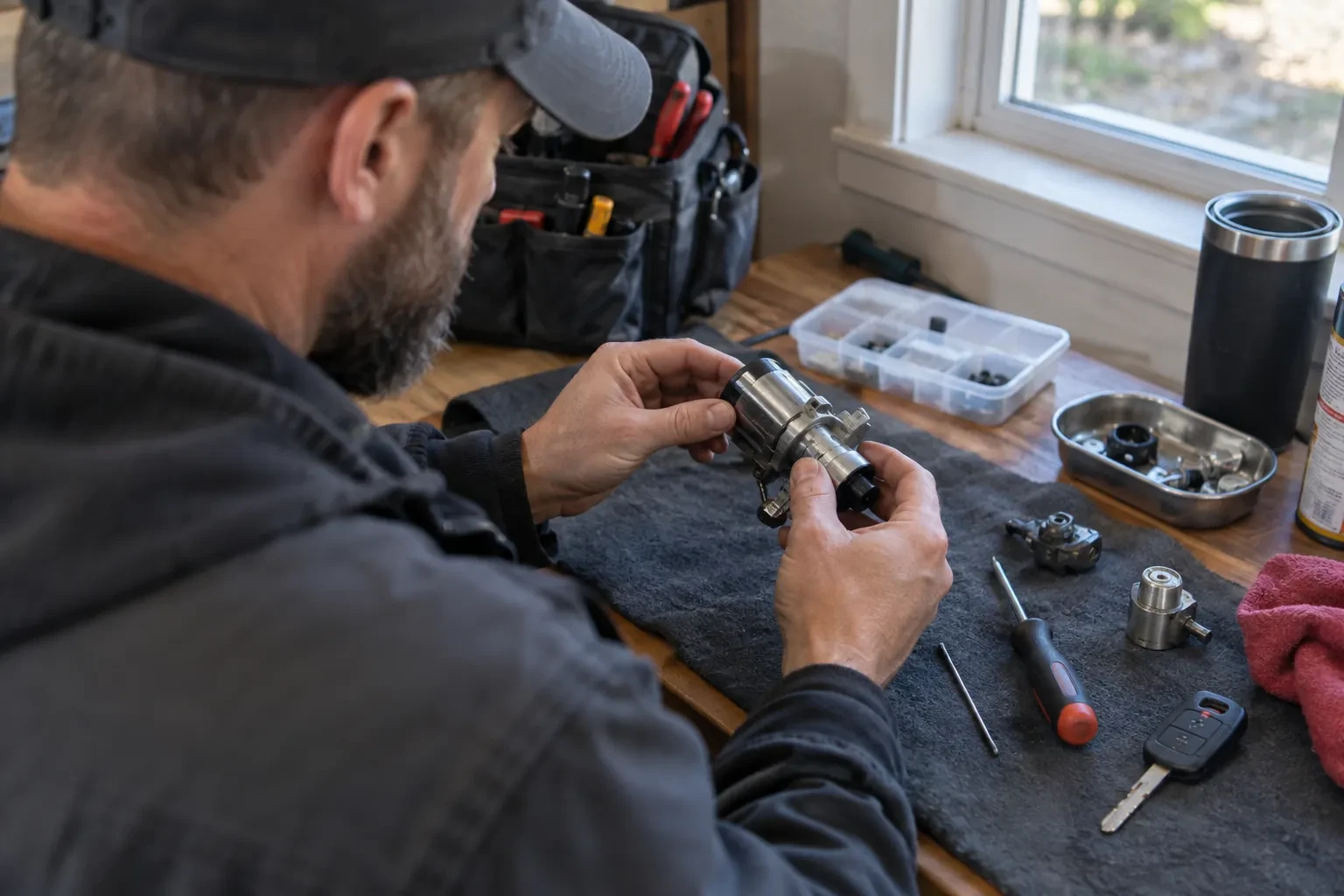
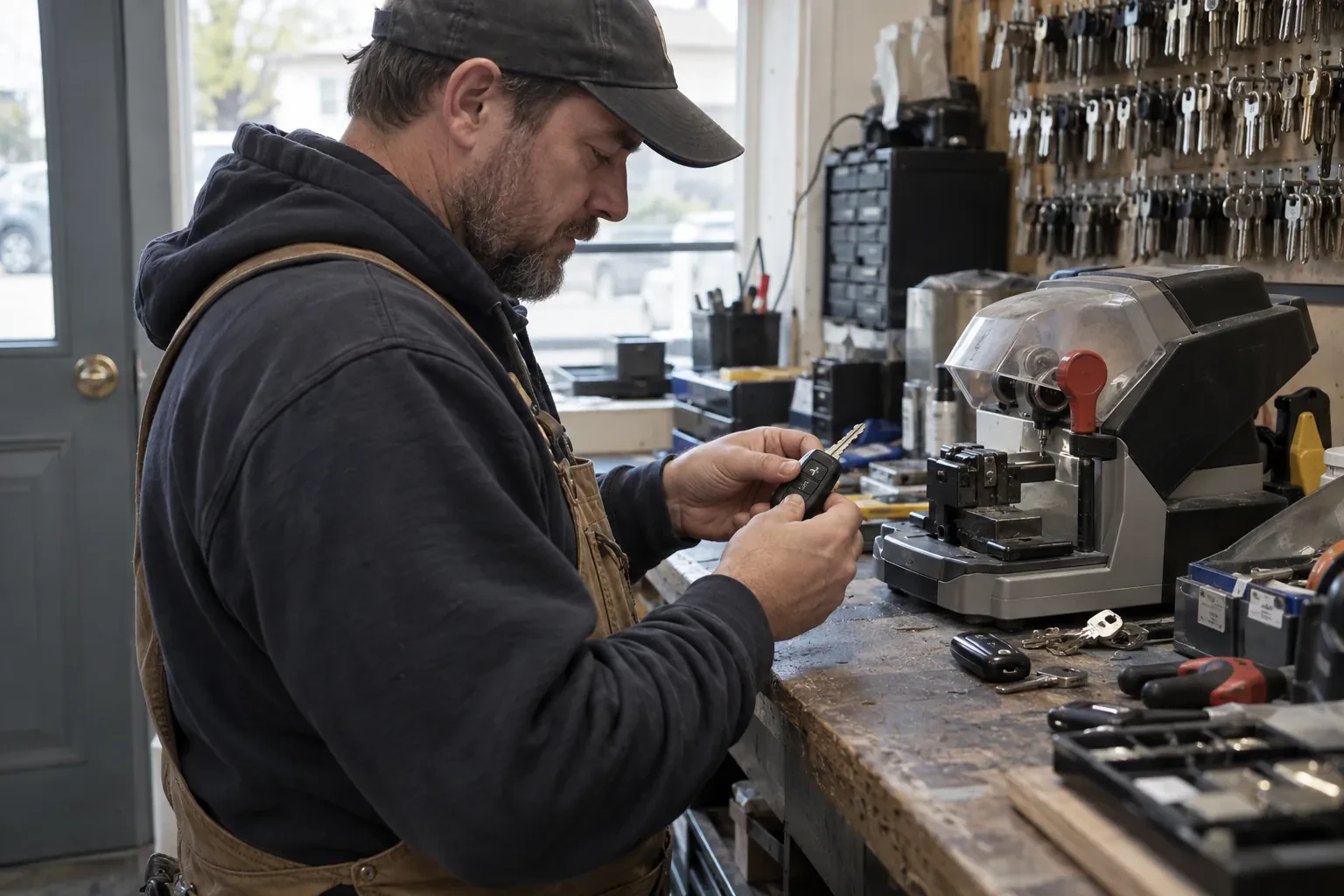
The cylinder is taken off the door and its plug is slid out with a follower, a small tube that holds the top pins and springs in place so nothing scatters. The old bottom pins are tipped out, and a new combination is chosen from the pinning records so it does not collide with any other key in the plan. Fresh pins of the matching depths are dropped into each chamber, the plug goes back in, and the new key is tried: it should turn as smoothly as if the lock were new, and the old key should stop dead. The cylinder is then refitted and adjusted so the cam or tailpiece throws the bolt fully.
A keying chart in plain language
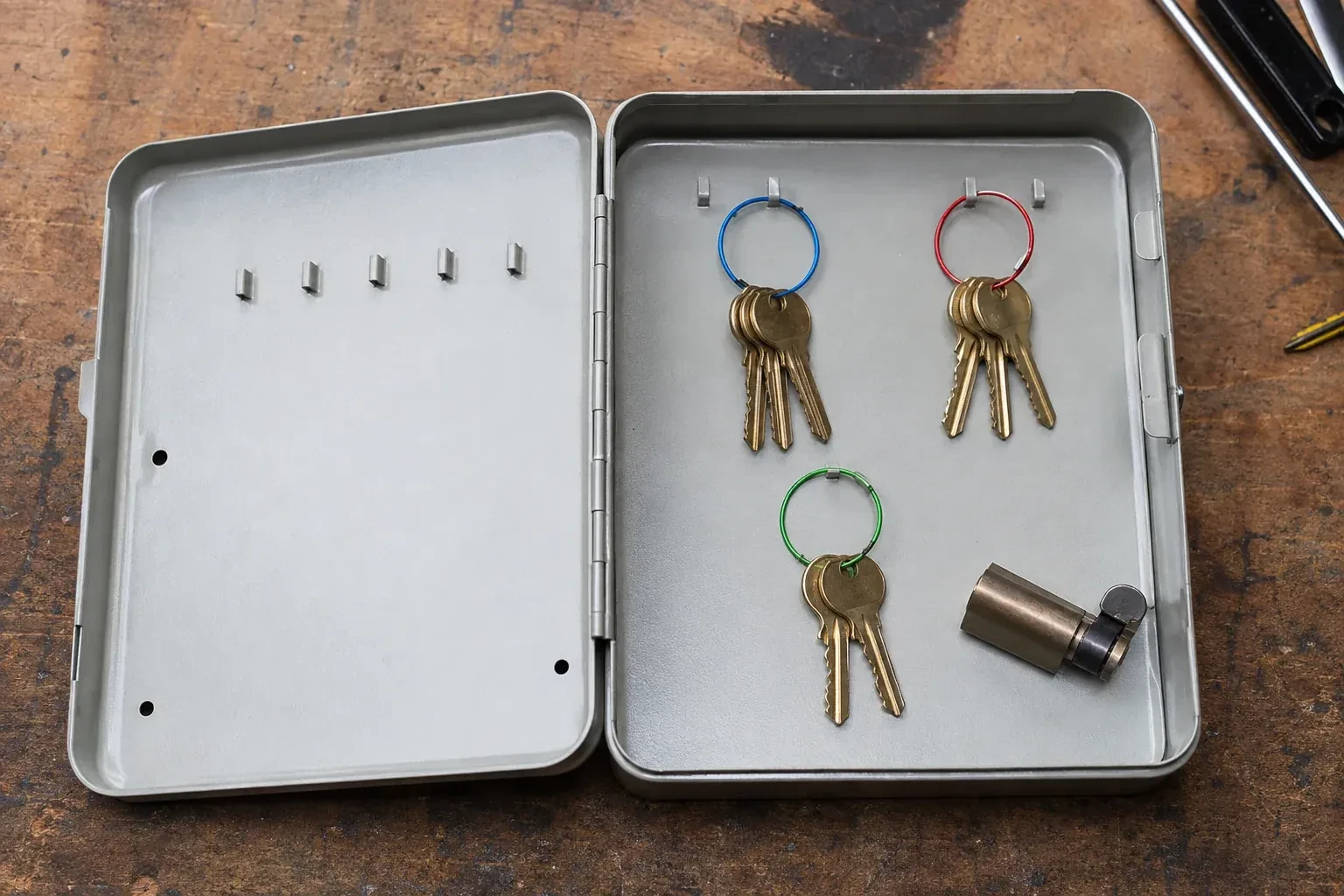
You leave the visit with a one-page chart that lists every opening by name, the key group it belongs to, the code stamped on that group's keys and how many were cut. It is written for the manager, not the locksmith: the stockroom is called the stockroom, and a glance shows that key group B opens the office and the cash room and nothing else. The bitting details that a locksmith needs to add a cylinder later are kept separately and securely. Pin the chart inside the manager's cupboard, keep a copy off site, and it becomes the reference every future key question is answered from.
Commercial Rekeying
In the van
Rekeyable padlocks
Master pins
Interchangeable cores and control key
Commercial pin kit
Cylinder removal and spanner tools
Commercial Rekeying
What affects the quote
Landlord and base-building coordination
Suite doors that must accept both your key and the landlord's master, or work that needs the property manager on site, add coordination the quote allows for.
Distance to the premises
Travel to the site is part of the call-out, and a unit in a downtown plaza and one at the end of a rural industrial road are different trips.
A master key plan
Pinning cylinders to accept both a change key and a master, and designing the chart so no key opens a door it should not, is more work per cylinder than keying everything alike.
What to have ready
- How many keys do you need cut, and for whom?
- Do you have a current list of who holds keys?
- Who at the business has the authority to approve changing the locks?
Commercial Rekeying: questions
QuestionsWhat happens with our fire exit doors and panic bars?
The outside cylinder on an exit door controls entry only, and it can be rekeyed like any other. The inside stays as it must: one push or one turn, no key, no special knowledge, on the exit door itself and on any door on the way to it. A locksmith will not add a keyed device to the inside of an exit, and will point out one if it already exists.
How do you confirm I am allowed to have the locks changed?
For a business the locksmith looks for someone with standing: the owner, a director, or a manager who can show written authority from one of them. A lease, a business registration or a letter on company paper usually settles it, along with photo identification. Where doors belong to a landlord, the property manager's approval is asked for as well. This is a short step and it protects the business from having its own locks changed by the wrong person.
We lost a master key. Does the whole building need doing?
Only the cylinders that master opened, which the keying chart identifies. If the lost key was the top master, that is every lock in the system; if it was a departmental master, it is that department's doors. Where no chart exists, the locksmith reads the cylinders first to establish what the key reached. The remaining doors, and any keys that never opened them, are left exactly as they are.
Related services
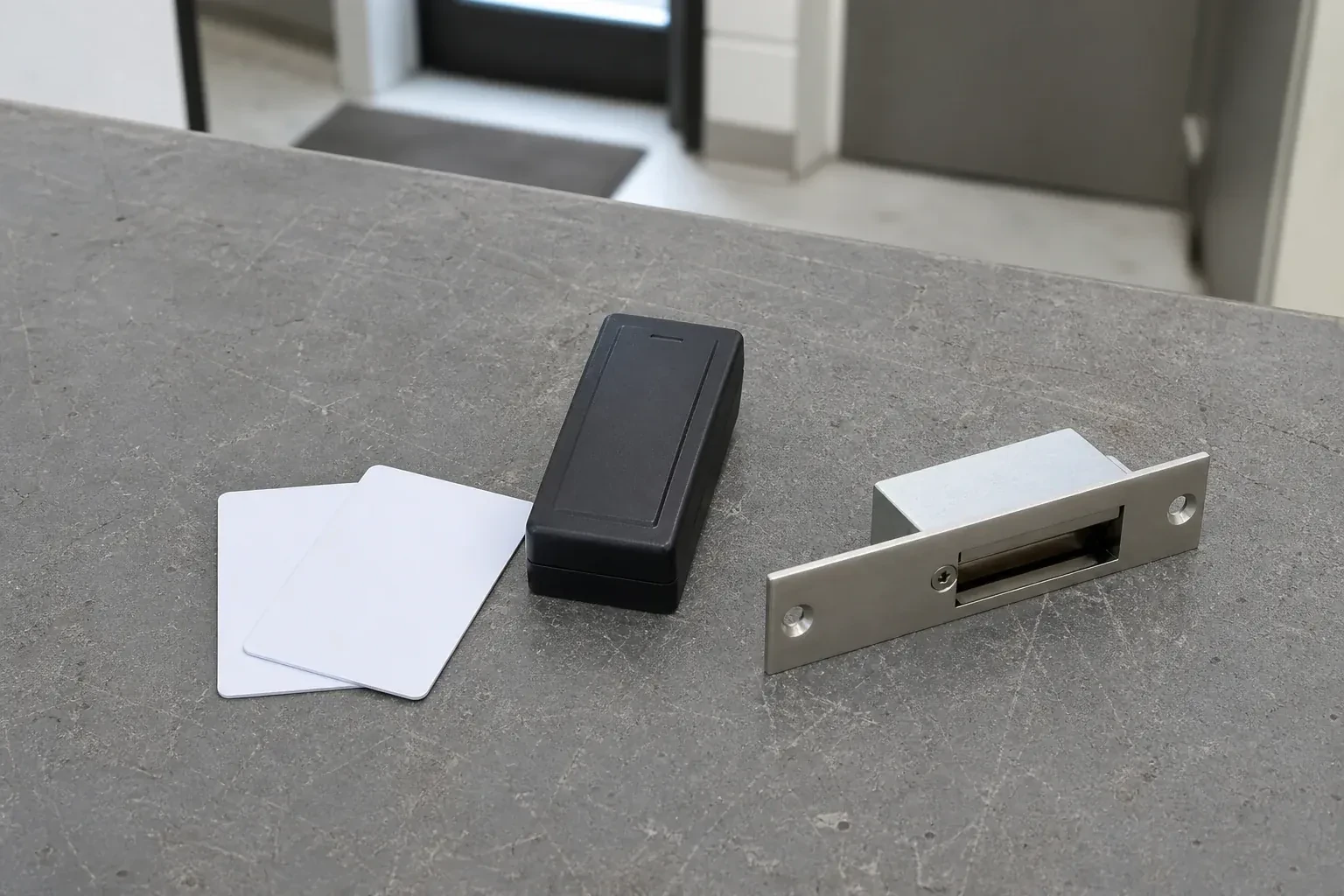
- Access Control InstallationHead office wants a record of who opens the branch and when, tied to an actual name rather than a shared code scrawled on a sticky note taped under the till.
- Panic & Exit HardwareAfter the fit-out, the gym floor now holds more people than the old office space ever did, and the exit door at the back still has the same turn-lock it had when the room held desks.
- Commercial-Grade Lock ReplacementAt closing time the hookbolt on the storefront door catches the keeper only on the second or third try, and one employee has started giving the door a shoulder to force it home.