Commercial · Norfolk County
Commercial Rekeying in Norfolk County
A key turned up in the parking lot with the shop's name on its fob.
In plain words
Rekeying is also a chance to decide how the keys should work, not simply to change them. Most businesses settle on a small number of key groups: one key for the doors every employee uses, another for the office, cash room or server closet that only managers open, and perhaps a single master for the owner that opens everything. The locksmith maps this out on a keying chart before touching a cylinder, then pins each lock so the plan holds true on the door. Staff carry one key instead of a ring, managers carry two, and the chart tells you at a glance who can open what.
How the visit goesThe manager's key ring went missing somewhere between the bank and the car, and the master on it opened every door in the building. Until the cylinders are changed, whoever finds it is holding the run of the place.
Commercial Rekeying
How the visit goes
Cores and restricted keys already on site
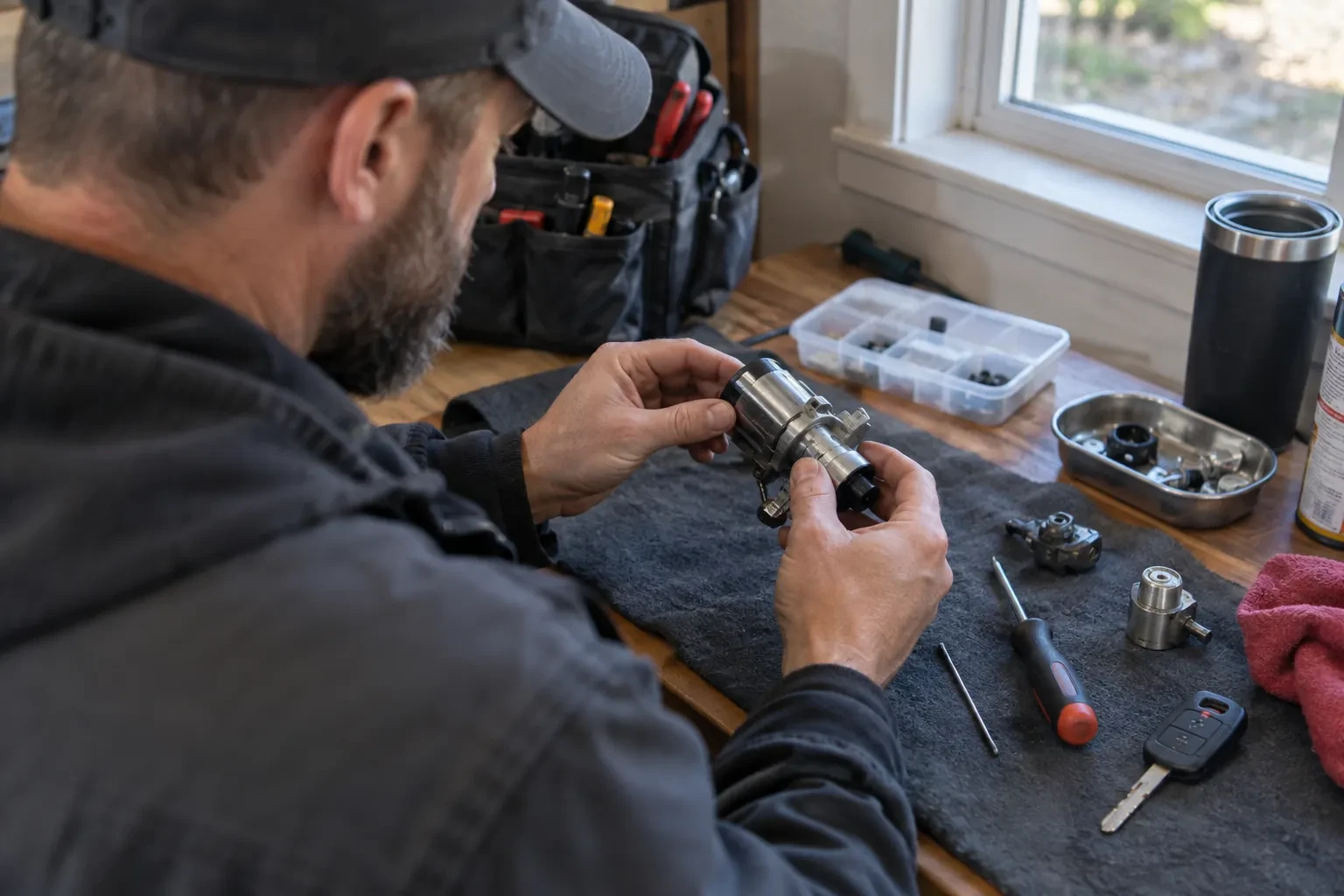
Some businesses already have more key control than they realize. Figure-eight shaped cores in the levers point to an interchangeable core system, which means a control key somewhere removes the core without unscrewing anything; finding out who holds that control key, or whether it left with a former manager, shapes the whole job. Keys with an unusual profile or a stamped number may belong to a restricted keyway whose blanks are only supplied against a signed letter of authorization, and the locksmith asks who the signatories are. Knowing what is already in place lets the new plan build on it rather than replace it, and flags any control that has quietly lapsed.
Cutting and marking the new keys
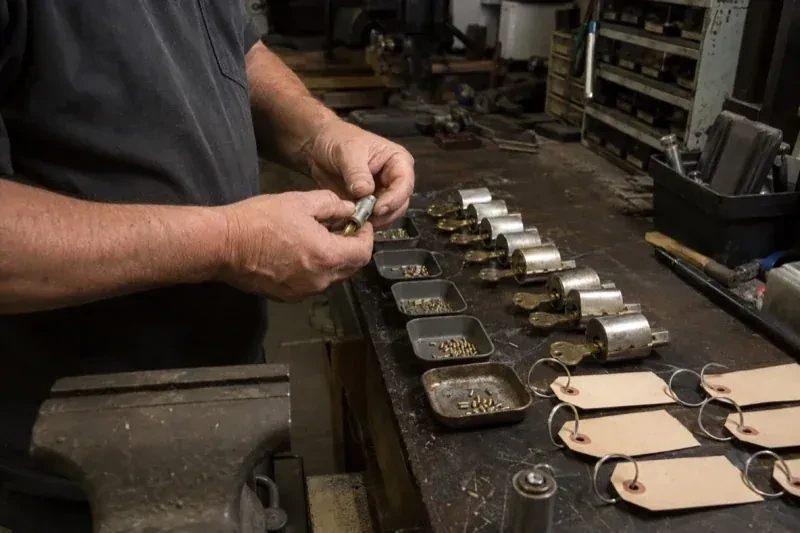
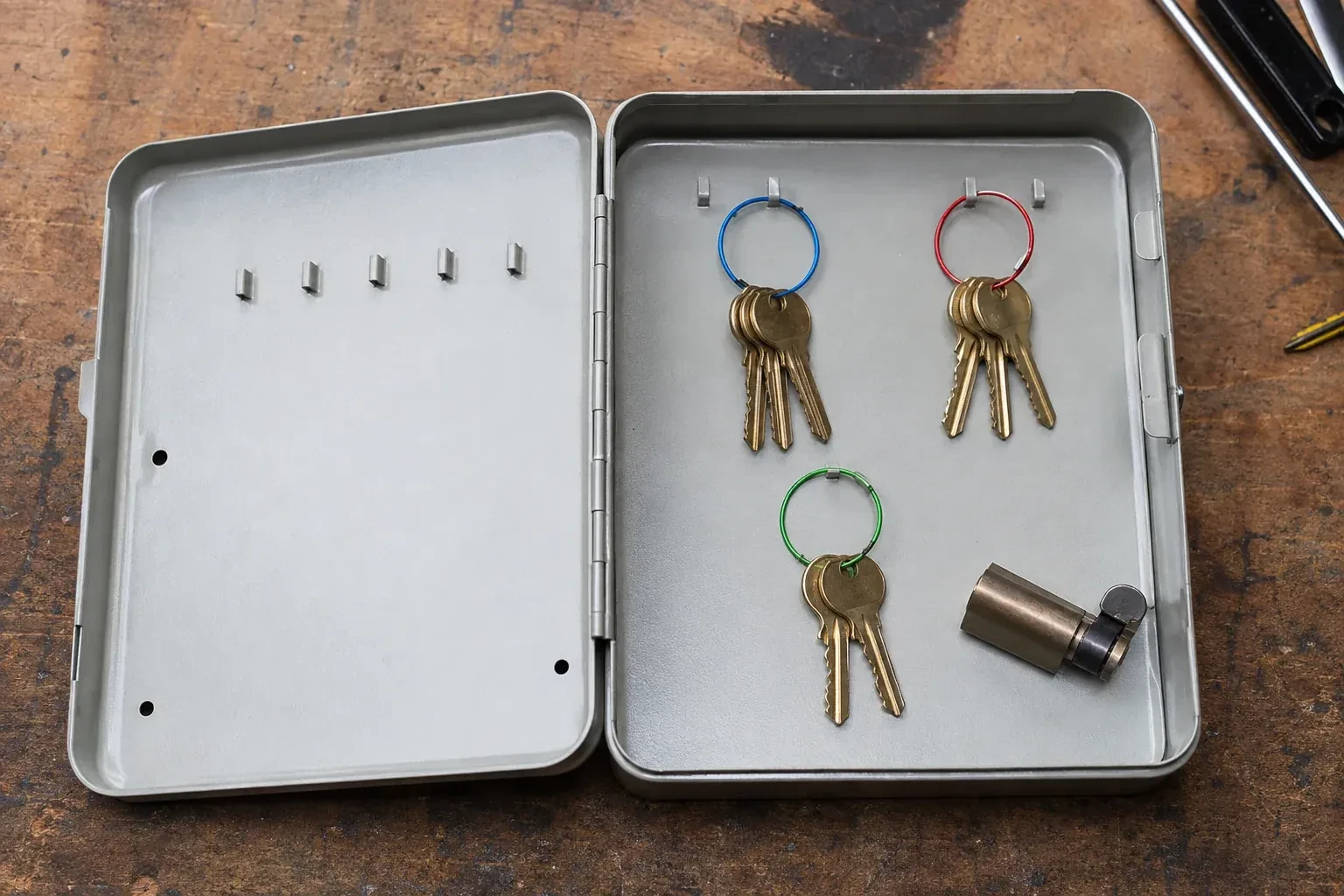
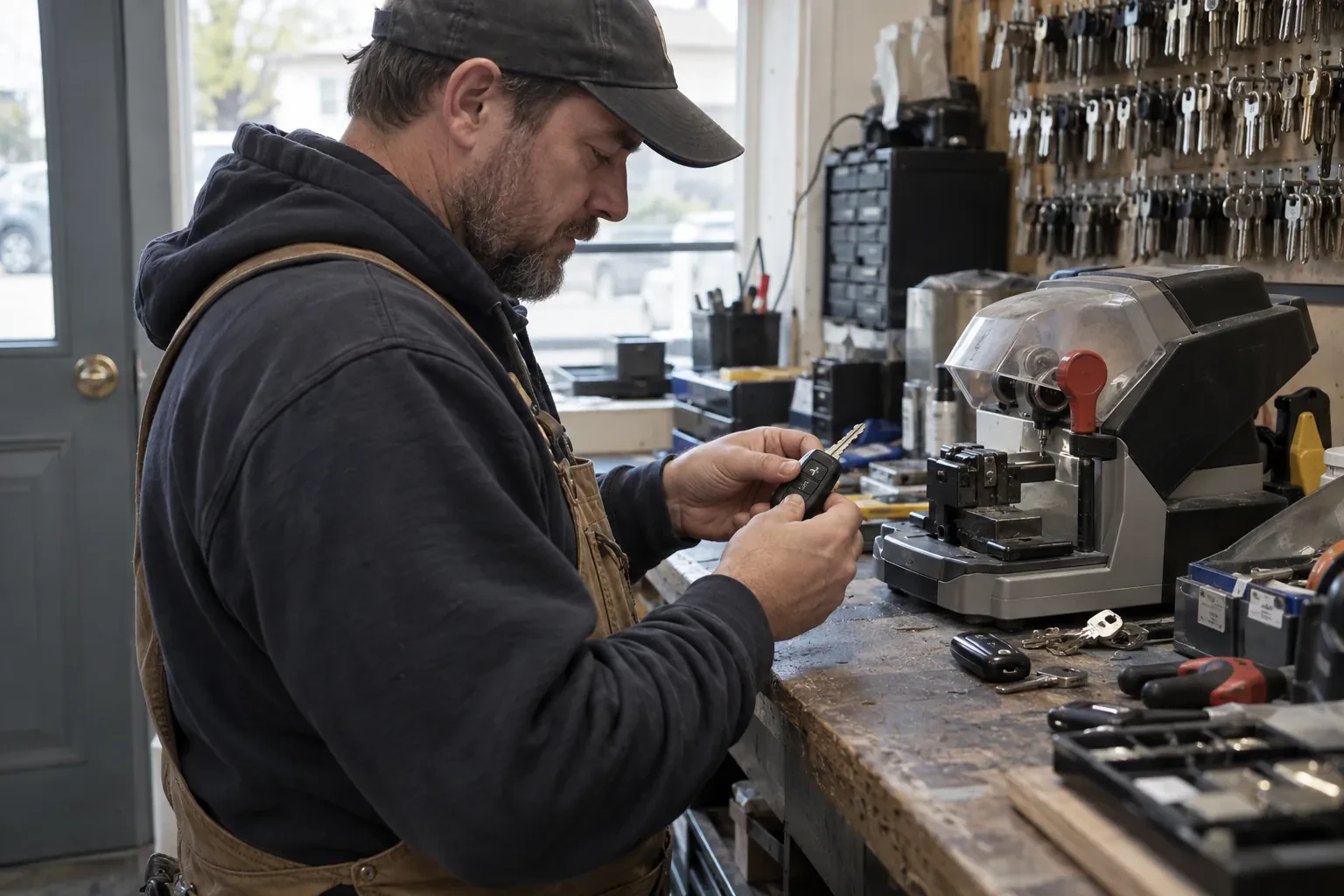
Keys are cut to the new combinations on a code machine rather than traced from another key, so every copy is exact and the tenth key fits as cleanly as the first. Each key is stamped with a short code that means something only on the keying chart; the business name, the address and the word for the door it opens stay off the metal, so a lost key gives nothing away. Keys are counted out by group, tagged, and listed against the names of the people who will carry them. Where the plan uses a restricted keyway, the blanks are drawn against the authorization letter, and that letter is filed with the chart for future orders.
Keys counted into named hands
Alongside the chart comes a key register: each key's stamped code, the person it was issued to, the date, and a line for the date it comes back. Filling it in as keys are handed out on the first morning takes ten minutes and pays off at every departure afterwards, because the question becomes 'return key A-07' rather than 'did she have a key?'. Spare keys are counted too and kept somewhere locked rather than in the drawer where the old tangle lived. When the register and the chart agree with the keys on the hook, the business knows exactly who can open it, which is the whole point of the exercise.
Commercial Rekeying
In the van
Rekeyable padlocks
Master pins
Interchangeable cores and control key
Commercial pin kit
Cylinder removal and spanner tools
Commercial Rekeying
What affects the quote
How many keys are cut
Each key cut to code and stamped is counted into the quote. Two per door group for a small shop and forty for a warehouse shift are different numbers.
Doors out of alignment
A door whose cam, strike or closer needs adjusting so the freshly rekeyed cylinder throws the bolt fully is corrected during the visit, and that adjustment is a separate item.
Number of cylinders
The count of openings drives the quote more than anything else: each cylinder is removed, repinned, refitted and tested individually, so a three-door shop and a twelve-office suite are very different jobs.
What to have ready
- Who at the business has the authority to approve changing the locks?
- Do you have a current list of who holds keys?
- Are any cylinders stiff, loose or hard to turn at the moment?
Commercial Rekeying: questions
QuestionsWhat happens with our fire exit doors and panic bars?
The outside cylinder on an exit door controls entry only, and it can be rekeyed like any other. The inside stays as it must: one push or one turn, no key, no special knowledge, on the exit door itself and on any door on the way to it. A locksmith will not add a keyed device to the inside of an exit, and will point out one if it already exists.
How do you confirm I am allowed to have the locks changed?
For a business the locksmith looks for someone with standing: the owner, a director, or a manager who can show written authority from one of them. A lease, a business registration or a letter on company paper usually settles it, along with photo identification. Where doors belong to a landlord, the property manager's approval is asked for as well. This is a short step and it protects the business from having its own locks changed by the wrong person.
We lost a master key. Does the whole building need doing?
Only the cylinders that master opened, which the keying chart identifies. If the lost key was the top master, that is every lock in the system; if it was a departmental master, it is that department's doors. Where no chart exists, the locksmith reads the cylinders first to establish what the key reached. The remaining doors, and any keys that never opened them, are left exactly as they are.
Related services
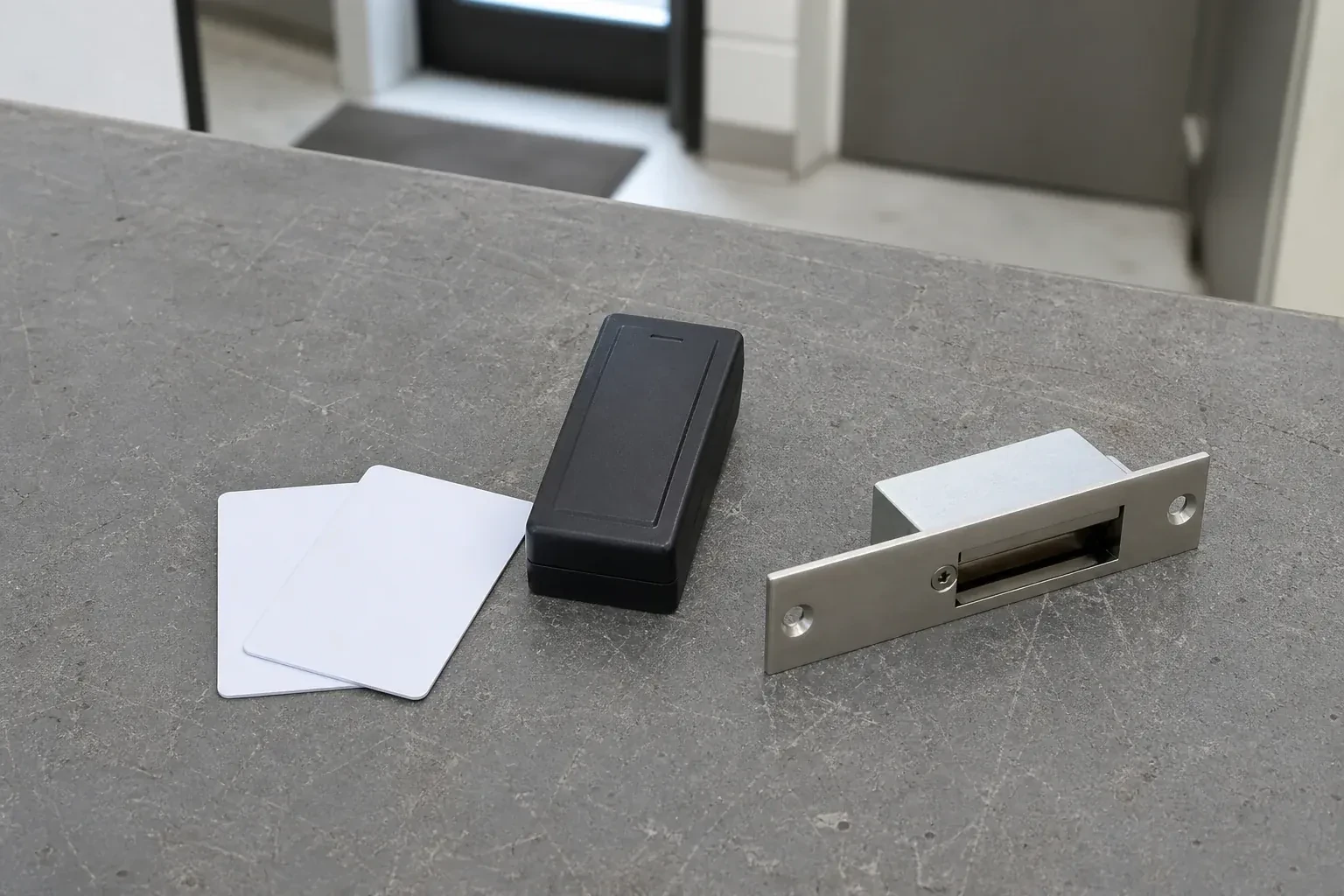
- Access Control InstallationHead office wants a record of who opens the branch and when, tied to an actual name rather than a shared code scrawled on a sticky note taped under the till.
- Panic & Exit HardwareAfter the fit-out, the gym floor now holds more people than the old office space ever did, and the exit door at the back still has the same turn-lock it had when the room held desks.
- Commercial-Grade Lock ReplacementAt closing time the hookbolt on the storefront door catches the keeper only on the second or third try, and one employee has started giving the door a shoulder to force it home.