Car keys · Norfolk County
Vehicle Lock Repair in Norfolk County
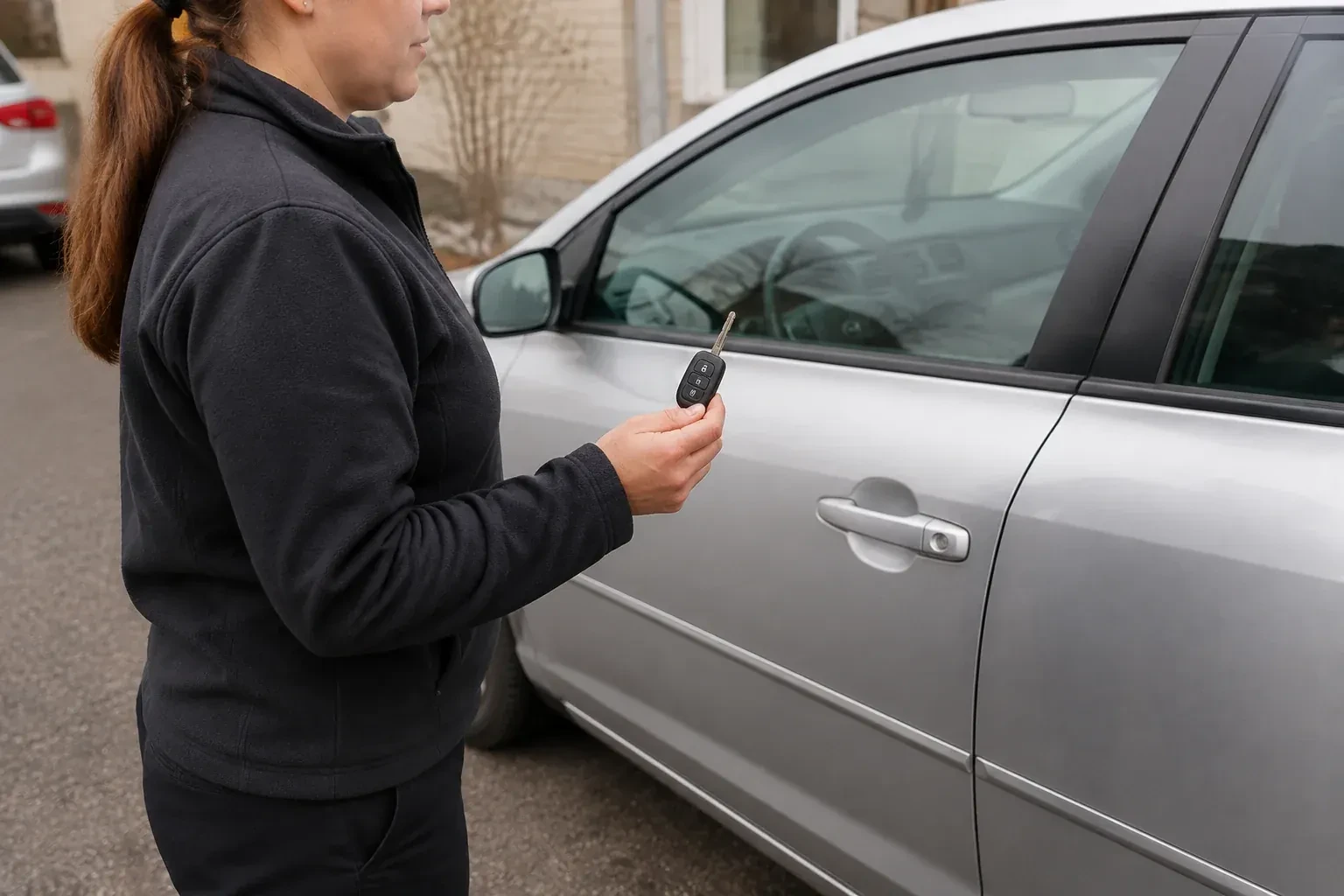
Every door drops into place together when the fob is pressed, except the driver's door, which stays unlocked while the rest click shut around it.
In plain words
Weather leaves its mark on vehicle locks over the years. Worn weatherstripping lets rain and winter brine reach the cylinder, the linkage and the wiring boot at the door hinge, and what starts as a slightly stiff key can turn into a lock that stops responding altogether. Vehicle Lock Repair looks at the seal around the affected door as part of the same visit, since a repaired lock behind a perished seal is likely to face the same moisture again unless the seal is addressed too.
How the visit goesEvery door drops into place together when the fob is pressed, except the driver's door, which stays unlocked while the rest click shut around it. A twist of the key still locks that door by hand, so the mechanism inside is clearly still working.
Vehicle Lock Repair
How the visit goes
Opening the panel to see the linkage and actuator
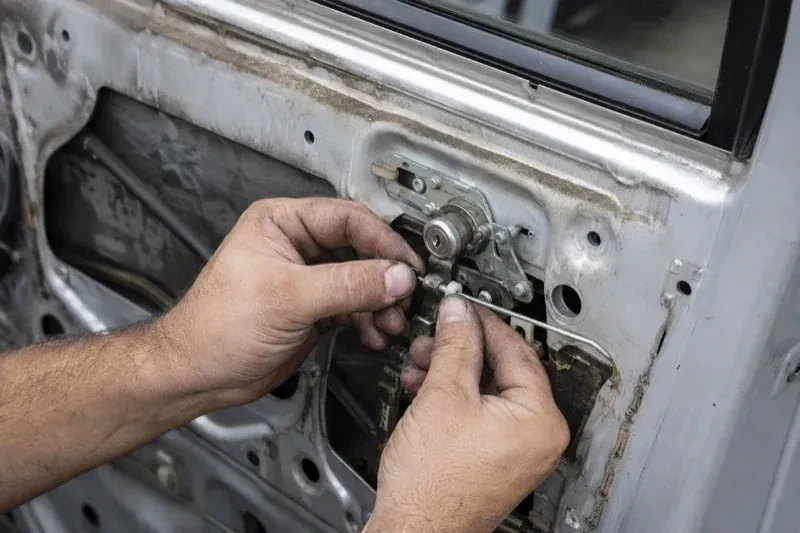
Reaching the actual mechanism means removing the interior trim panel behind the affected lock. With it off, the locksmith can often see whether the linkage rod is still clipped to the back of the cylinder, whether the power actuator moves when the switch or remote is used, and whether corrosion or a cracked wiring boot at the hinge has reached the connector, though on some doors a carrier plate, water shield or window guide still has to come away first to reach these parts. This is where a spinning key or an unresponsive remote usually gets its explanation.
Replacing a power lock actuator
A door that answers the key but ignores the remote is checked before any part is named: partial manual-lock position, door fit, cable routing, connectors and harness continuity can restore it without a new part, and only once those are clear does a worn power lock actuator, the small motor that pulls the linkage, become the answer. The locksmith removes the failed unit, connects the replacement to the existing wiring and linkage, and tests it through several full cycles before the panel is closed up, confirming both the switch inside the car and the remote outside it move the lock the same way.
A door and lock ready for winter
Once a cylinder has been freed or replaced, a dry lubricant helps it shrug off the meltwater and road salt that a winter climate puts into an exposed keyway. Clearing snow and ice from the door sill before forcing a key, and giving the weatherstripping a wipe as the season turns, both reduce the chance of the same lock freezing solid on the next cold morning.
Vehicle Lock Repair
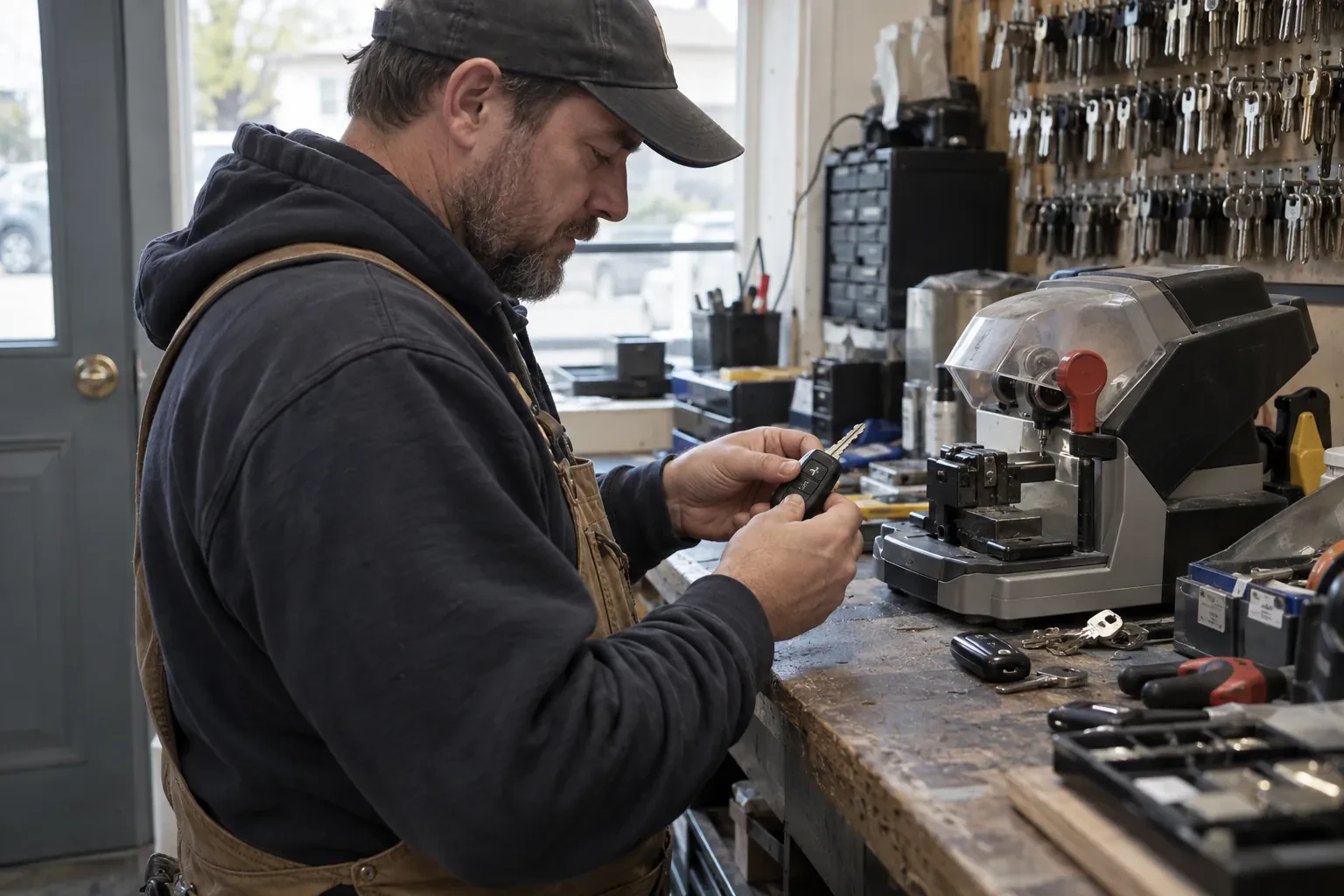
In the van
Power door lock actuator
Transponder chips
Key blanks cut to code
Trim panel removal tools
Linkage rods and clips
Vehicle Lock Repair
What affects the quote
Mechanical or electronic fault
A worn cylinder or a slipped linkage rod is generally simpler work than a failed power actuator or a wiring fault reaching back to the hinge, and the quote reflects which side of the lock has failed.
Getting to the vehicle
A vehicle parked in an accessible driveway is straightforward. One in an underground garage, a gated lot or a location with limited parking adds time that the quote takes into account.
Damage from a previous repair attempt
A linkage bent by an earlier attempt, a scratched cylinder face, or trim clips already broken before the locksmith arrives may need repair or replacement in addition to the original fault, and this is pointed out before quoting.
What to have ready
- Do all the other doors and the trunk lock and unlock normally?
- Has the lock been getting stiffer gradually, or did it stop suddenly?
- Would you like a spare key or fob cut during the same visit?
Vehicle Lock Repair: questions
QuestionsIs it normal for only the trunk or hatch lock to fail while the doors are fine?
Yes, this happens fairly often because a trunk or hatch lock gets used far less than the door locks and can seize from disuse, dust or corrosion, or spin freely if its own linkage has come loose over time.
Can a damaged weatherstrip really affect the lock itself?
Yes. A perished or torn seal around a door or hatch lets rain and winter brine reach the cylinder, the linkage and the wiring behind the panel, and repeated exposure is one of the more common reasons a lock that used to work smoothly starts sticking or failing.
What should I do before calling about a vehicle lock problem?
Note which lock is affected, whether the key turns without effect or resists turning, and whether the remote behaves differently from the mechanical key on that same door. That description helps the locksmith bring the right parts for the specific fault.
Related services
- Car Key ReplacementThe key snapped at the head while you were turning it in a stiff, frosty door lock.
- Spare Car Key DuplicationA lockout last month ended with a locksmith opening the door and going home, and the same single key has been carried ever since with nothing behind it.
- Key Fob ProgrammingA new driver has joined the household, and the one existing fob is the only key anyone has ever had cut for this vehicle.