Lockouts · Norfolk County
Broken Key Extraction in Norfolk County
Overnight the deadbolt froze, and this morning the key would only turn partway.
In plain words
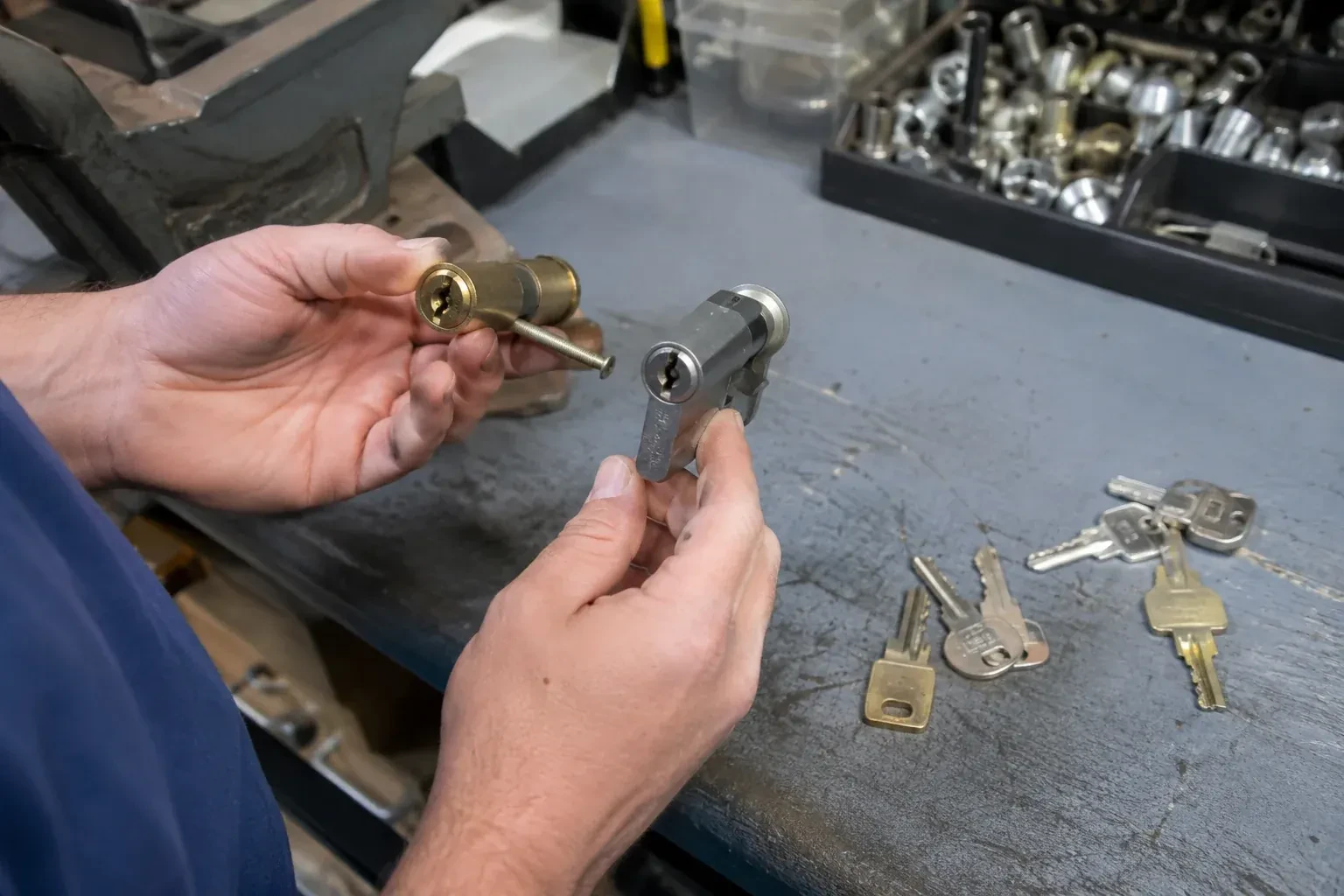
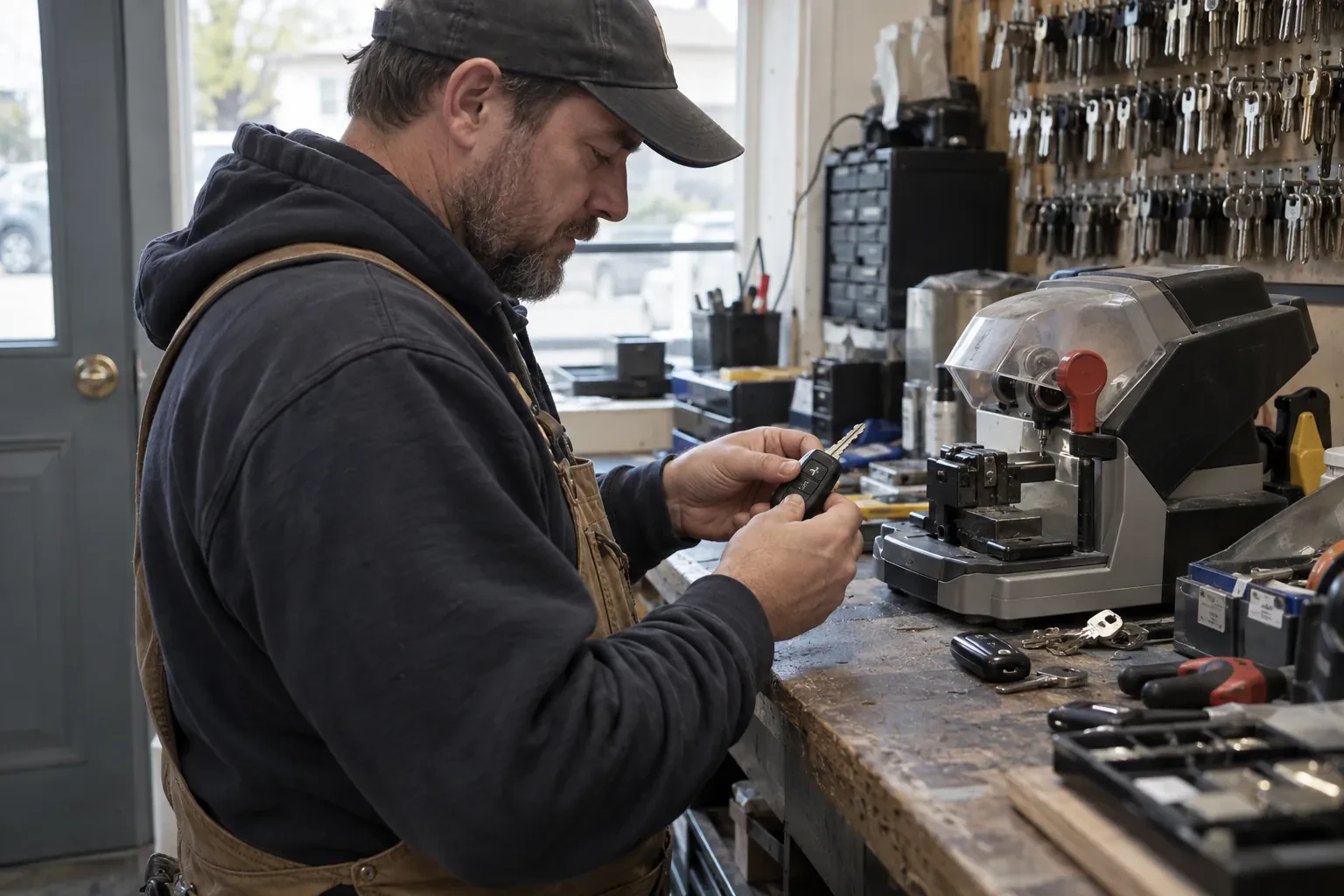
The tools are simple and precise. A hook extractor is a thin strip of spring steel with a barb at the tip; it slides along the groove of the keyway above or below the fragment, snags one of the cuts, and walks it out. A spiral extractor works like a tiny screw, threading into the ridges of the cuts and gripping as it turns. Fine-tipped extractor pliers handle a piece that shows above the face. A tension tool brings a turned plug back to rest. None of these push inward, which is the whole point: the piece comes out the way it went in and the cylinder stays whole.
How the visit goesOvernight the deadbolt froze, and this morning the key would only turn partway. One more push and it sheared off flush with the face of the cylinder. There is nothing left to grip, and the cold is not helping.
Broken Key Extraction
How the visit goes
What happened in the second before it broke
Your account of the break is evidence. A key that snapped while you were turning against resistance points to ice, a binding bolt or a swollen door. One that broke as you pushed it in suggests grit or a damaged pin in the keyway. A key that had been sticking for weeks and finally gave up hints at worn pins or a loose cylinder cap. A key that simply cracked at a deep cut with no drama was probably fatigued metal. Each story leads to a different check after the piece is out, so a few honest sentences about the moment save guesswork later.
The spiral extractor for a stubborn piece
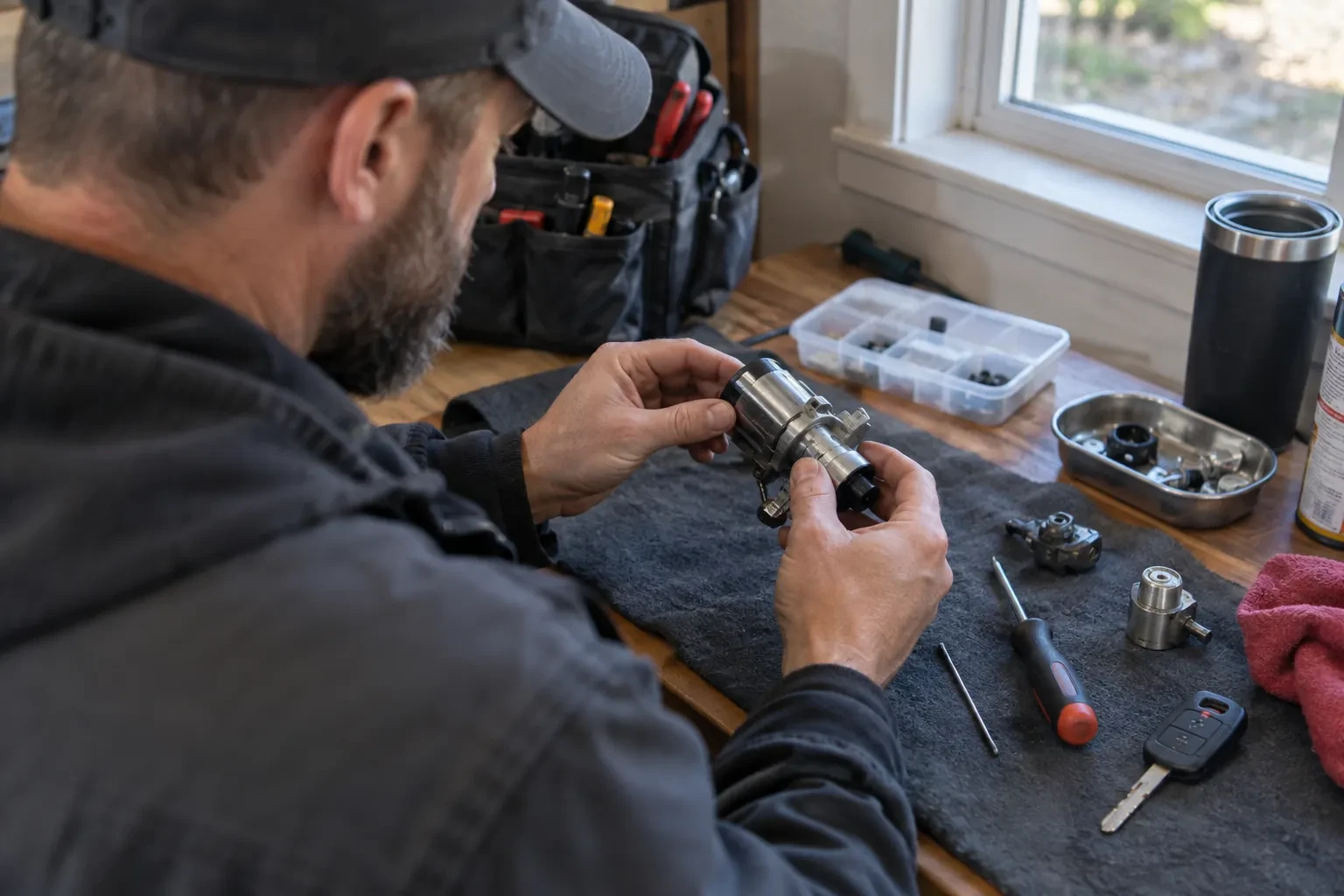
When a fragment sits flat in the keyway with its cuts facing the pins and nothing for a hook to catch, a spiral extractor is the tool. It looks like a very fine screw on a handle. Slid alongside the blade and turned gently, its threads bite into the ridges of the key cuts and grip them. The locksmith then pulls straight back, and the fragment comes with it. A second spiral from the other side of the blade is sometimes used to steady the piece. It is slow and careful work, and it leaves the pins and springs exactly where they were.
A door that no longer fights the key
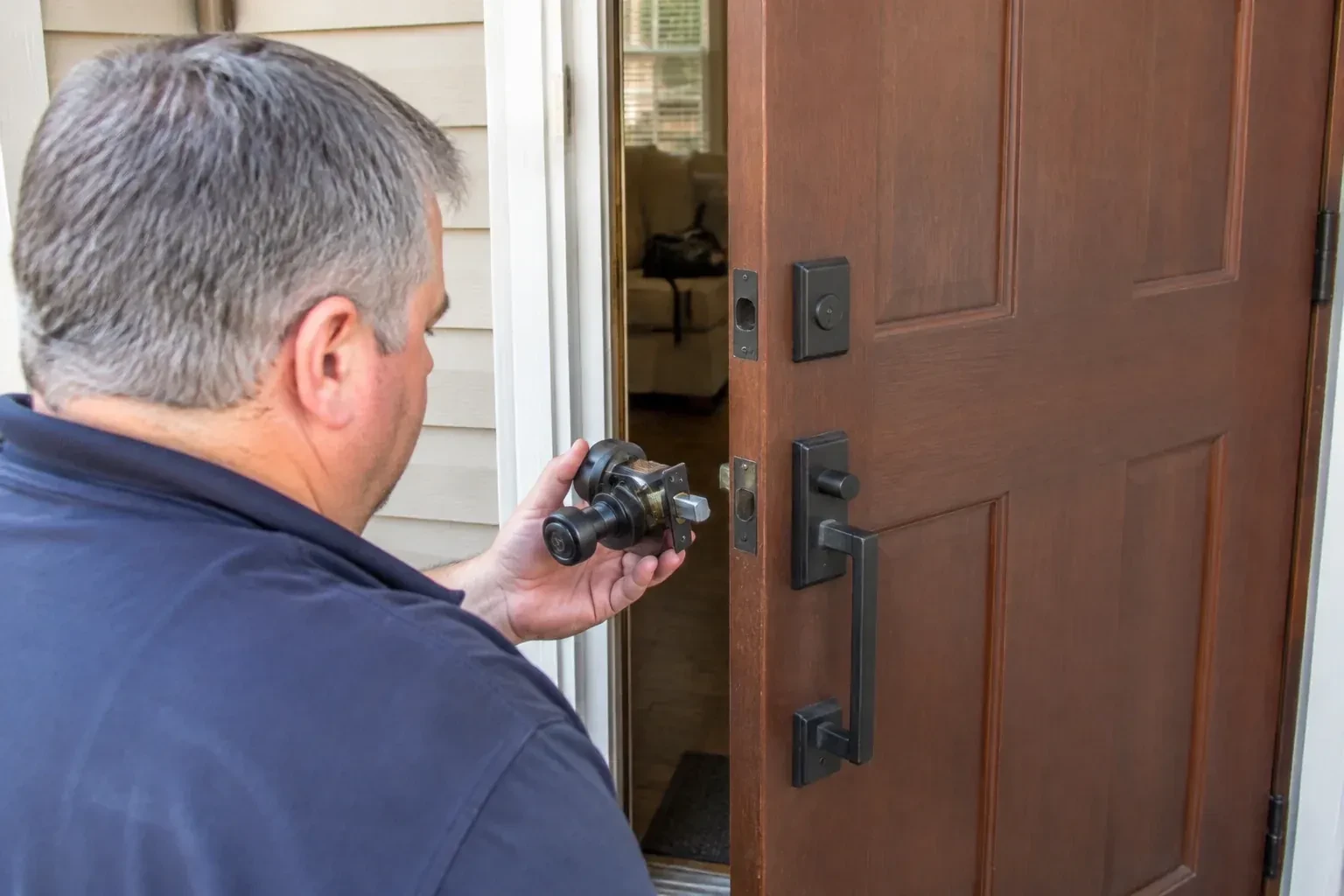
If the bolt had been dragging in its strike, that is corrected while the locksmith is there, because a bolt that binds turns every key into a lever. Dropped hinges get longer screws driven into the framing; a strike pocket that pinches the bolt is filed or shifted; a weatherstrip that was pushing the door off square is pared back. The test is simple: the thumb-turn should throw the bolt with one finger and no push on the door. Since wood swells in humid summers and shrinks in dry winter air, a seasonal glance at the screws keeps the key from taking the strain again.
Broken Key Extraction
In the van
Plug follower and cap tool
Key blanks and code cutter
Manufacturer-approved cylinder lubricant
Lock de-icer
Replacement cylinder or deadbolt
Broken Key Extraction
What affects the quote
Locked or unlocked door
If the door is locked, the extraction is followed by opening it, which is quoted as its own part of the visit. If the door is open, the work is extraction and securing.
Anything added since the break
Glue, a second key or marks from a screwdriver mean clearing and sometimes repair before extraction can start, and that added time is named in the quote.
Drilling and a replacement cylinder
On the rare occasion a cylinder must be sacrificed, the price includes the new cylinder or complete deadbolt plus fitting it, and that is agreed with you before the drill is picked up.
What to have ready
- Had the key been needing extra force or a wiggle lately?
- Is the door or vehicle locked or unlocked right now?
- Would you like extra keys cut while the locksmith is there?
Broken Key Extraction: questions
QuestionsIs a broken key a sign the whole lock is worn out?
Sometimes, and the visit answers it. A key that failed from its own fatigue in a clean, smooth cylinder says nothing against the lock. A key that broke because the pins were worn flat, the cap had loosened or the keyway was full of grit says the cylinder needs a service or a rekey. One that broke in a corroded, pitted plug is telling you the lock is due for replacement.
Do you need my spare key?
It helps if there is one. A crisp spare is the ideal pattern for the replacement, better than the broken halves and far better than a worn copy. It also lets the locksmith test the cylinder the moment the fragment is out, which shows whether the pins and springs are sound. If the spare is itself bent or worn, mention that too; it is a candidate for retirement rather than a pattern.
Should I rekey or replace the lock afterwards?
Only if the inspection finds a reason. A clean cylinder with sound pins goes straight back to work with a new key. Rekeying makes sense when the pins are worn and sticking, or when a lost or unaccounted key shares the same cut. Replacement is for a cylinder that is corroded, cracked or of a grade that will keep eating keys. Each is offered as its own decision, not bundled in.
Related services

- Business Lockout ServiceA cook stepped into the alley with the recycling and the rear door swung shut behind him.
- Break-In Damage Lock RepairSomeone smashed the little window beside the door, reached in and turned the thumb-turn.
- Seized & Jammed Lock OpeningEvery time you pull the key out of the side door it comes away gritty.