Lockouts · Norfolk County
Break-In Damage Lock Repair in Norfolk County
Someone smashed the little window beside the door, reached in and turned the thumb-turn.
In plain words
In a rental or condo the repair involves more than one set of hands. A tenant reports the break-in to the landlord or property manager, who normally arranges the work, because landlords are responsible for repairs and both sides have rules about changing locks and sharing keys. The locksmith secures the door on an authorized instruction, keeps the suite door openable from inside, uses hardware suited to a fire-rated corridor door where that applies, and leaves a clear note of what was done so keys can be handed over properly. Tenants and owners each end up with a working, lockable door and a record they can pass along.
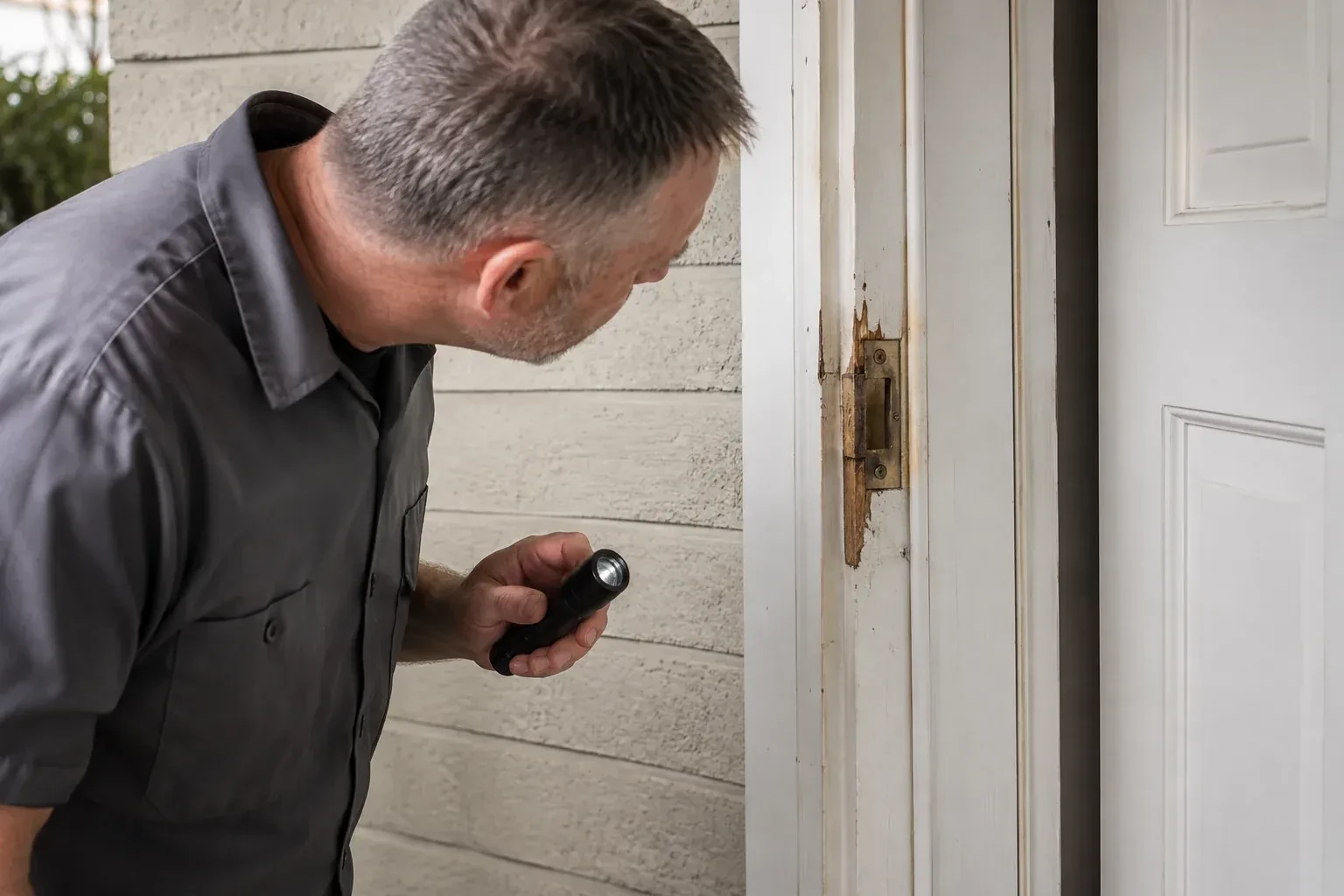
How the visit goesThe back door looks closed until you touch it. The edge is crushed where a bar went in, the latch is bent sideways, and the door swings free with a gentle push no matter how you turn the key.
Break-In Damage Lock Repair
How the visit goes
How the door was attacked
The damage tells the story of the attack, and the story decides the repair. A kick leaves the strike torn out and the jamb split along the grain, often with the deadbolt still thrown and intact. A pry bar leaves a crushed door edge, a bent latch and marks in the weatherstrip gap. A wrench attack twists the cylinder out of its housing and may shear the tailpiece, leaving a bolt stuck in the frame. Broken glass beside the door means the lock was never defeated at all; an arm simply reached the thumb-turn. Each pattern points to a different weak point, so identifying it first keeps the repair aimed at what actually gave way.
Rekeying what a taken key fits
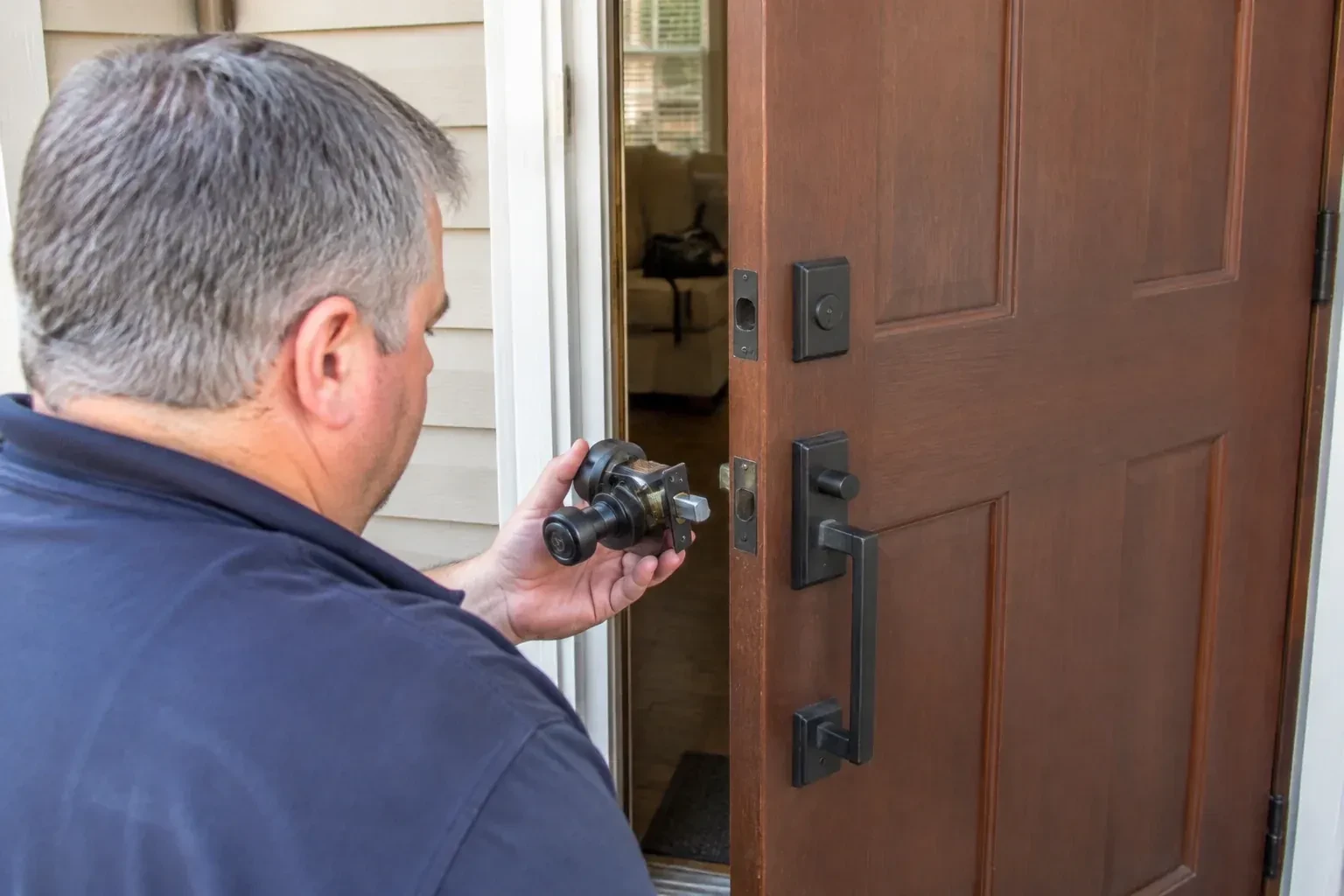
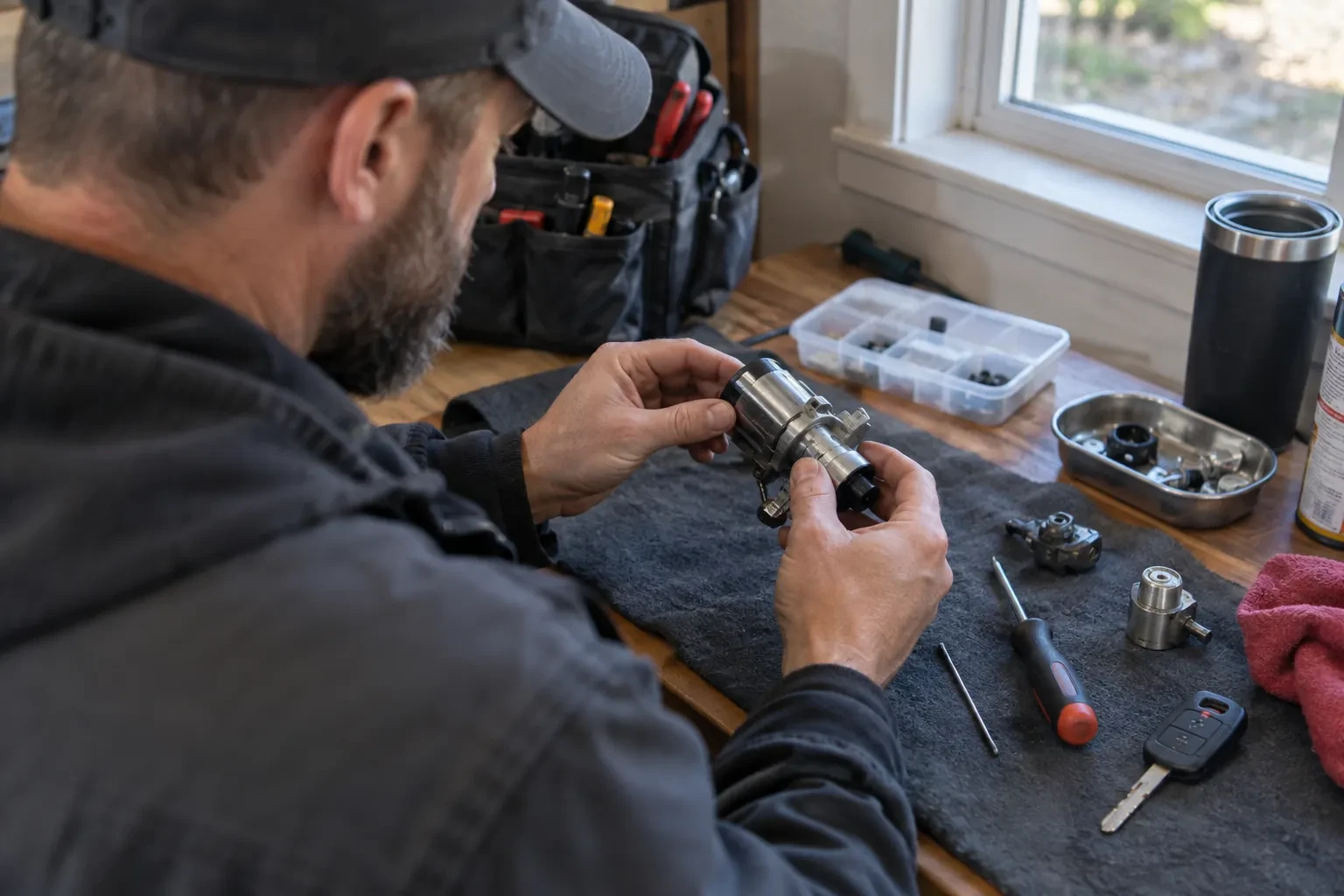
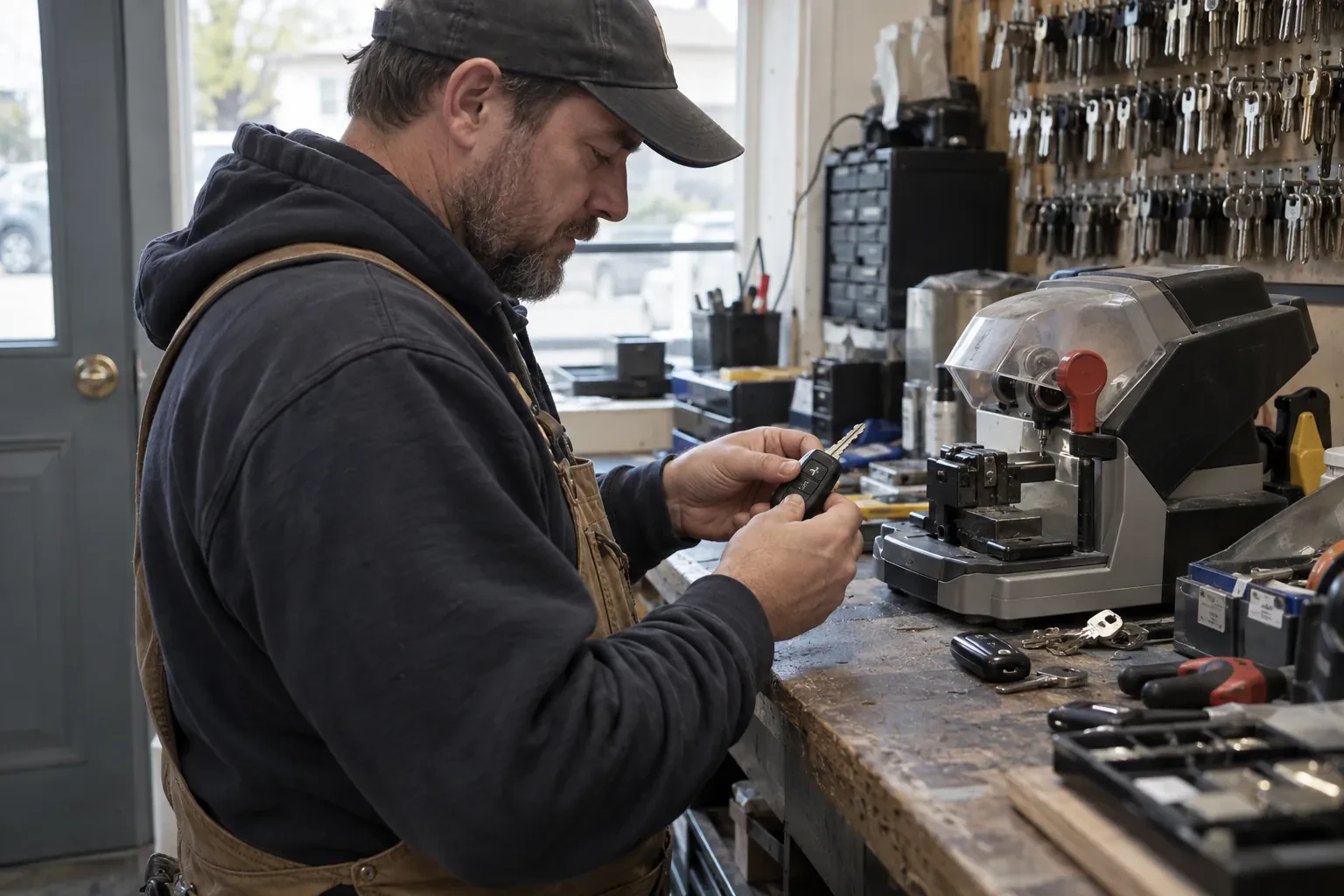
Every cylinder that a missing key could open is rekeyed or replaced before the locksmith leaves. On a serviceable pin-tumbler cylinder, the plug is slid free with a follower so the springs stay put, the bottom pins are exchanged for a new combination and a fresh key is cut; a cylinder that cannot be rekeyed this way is replaced instead. Front, back, side and garage doors are brought onto one new key where their keyways and systems allow it, and the mailbox and padlocks are handled too. Remotes for a garage opener that left in a stolen car are erased from the opener and a new one programmed. The old key still fits the keyway; it simply turns nothing anymore.
Stronger than it was before
A repaired door is usually the strongest door in the house, because the parts that failed have been replaced with the parts that should have been there. The bolt now sits in a boxed strike anchored to the stud by long screws, the hinge side is fixed to framing rather than trim, the door edge is sleeved in steel where it was soft, and a full-throw deadbolt with a hardened insert has replaced the light one. None of this shows from the street. What changes is that a repeat attempt meets resistance at every point the first one found weak, and the noise and time that demands is exactly what intruders avoid.
Break-In Damage Lock Repair
In the van
Anti-lift blocks and foot bolt
Plywood and cleats for boarding
Wrap-around door edge reinforcer
Two-part wood epoxy and shims
Security strike box
Break-In Damage Lock Repair
What affects the quote
Keys cut
New keys are cut from the fresh pinning and counted separately: enough for each adult, the dog walker and a trusted neighbour, however many you decide you need.
Securing now versus repairing fully
Some households want the door locked tonight and the permanent repair booked later; others want both done at once. The quote separates the two so you can choose either order without surprises.
Lock failure or frame failure
Replacing a lock is hardware and fitting time. Rebuilding a strike side with a boxed strike, epoxy and long screws into the stud is carpentry as well, and is quoted as its own line.
What to have ready
- Do you own the property, rent it or manage it for someone else?
- Is there glass beside the door or in it?
- Is everyone safe, and is the property clear of anyone who should not be there?
Break-In Damage Lock Repair: questions
QuestionsDo longer screws really make a difference?
A large one. Factory strike and hinge screws are usually short enough to grip only the jamb, a piece of trim about an inch thick. Three-inch screws pass through the jamb and the gap behind it into the stud, so a blow has to move the wall rather than the trim. Lock manufacturers supply reinforcement plates with three-inch screws for exactly this reason, and note that a door beside a sidelight needs a different arrangement because glass sits where the stud would be.
Is a smart lock a good replacement after a break-in?
It can be, with the same reinforcement behind it. A keypad or app-controlled deadbolt eases the problem of stolen keys, since codes are changed in seconds and a lost phone is unpaired rather than rekeyed. Its bolt still needs a boxed strike and long screws, because the frame is what failed; a keyed override should be rekeyed too, with any spare left with a trusted person, not hidden outside; a cylinder-free model needs no override key. Choose one with a full-throw bolt and fit it to a reinforced door edge.
They did not get in. Does the door still need attention?
It does, because the force went somewhere. A lock that held against a kick or a bar often leaves a bent strike plate, loosened screws, a gouged door edge and a bolt that now binds where it met the strike under load. Each of those makes the next attempt easier. The visit checks every part that took strain, replaces what bent, reinforces the strike and hinges with long screws, and confirms the bolt throws cleanly, so the door is stronger than the one that was tested.
Related services
- Business Lockout ServiceA cook stepped into the alley with the recycling and the rear door swung shut behind him.
- Broken Key ExtractionOvernight the deadbolt froze, and this morning the key would only turn partway.
- Seized & Jammed Lock OpeningEvery time you pull the key out of the side door it comes away gritty.