Commercial · Normandale
Master Key System Design in Normandale
The new wing was built with its own brand of cylinder, so the two-year-old keys from the original building do not open a single door in the addition.
In plain words
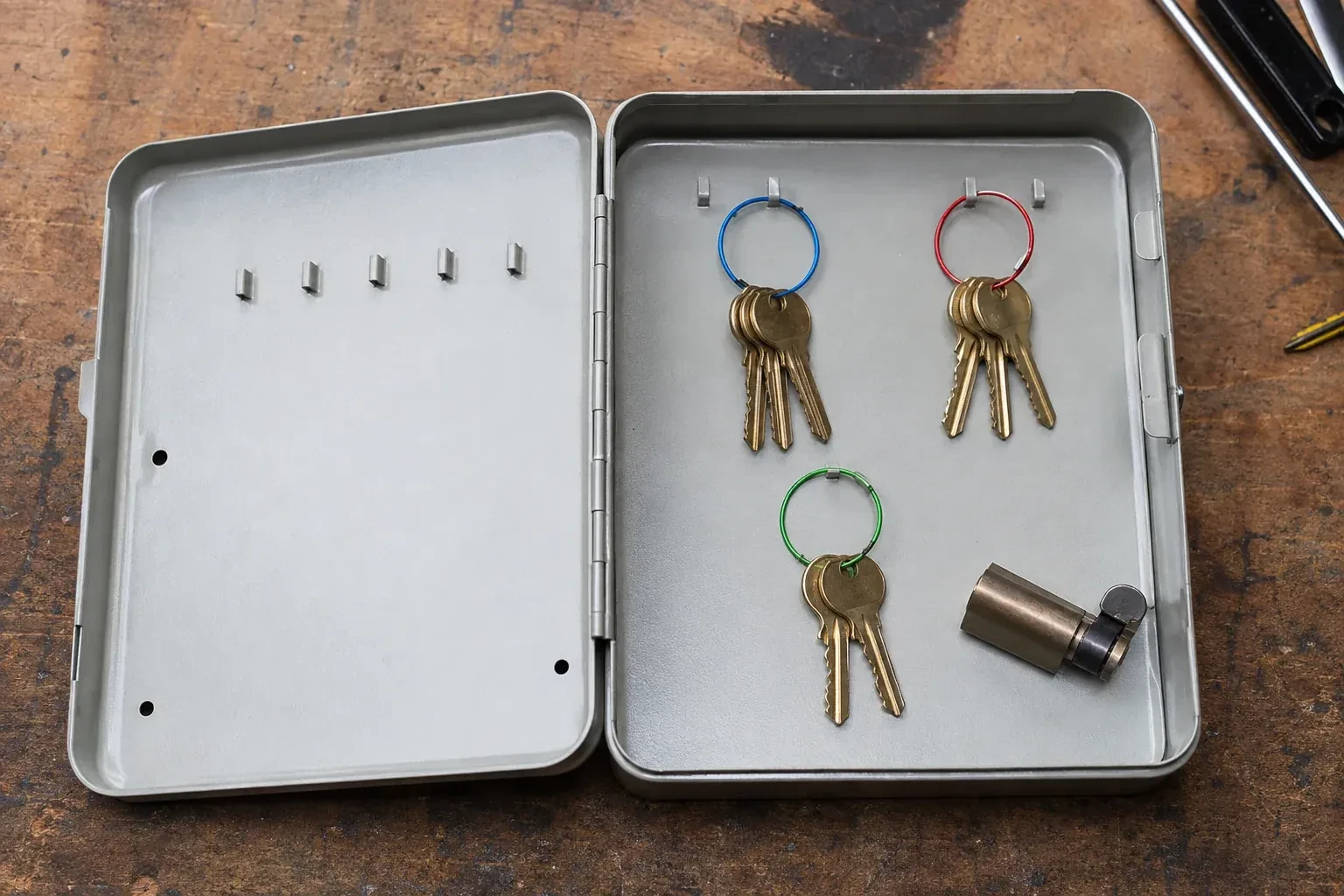
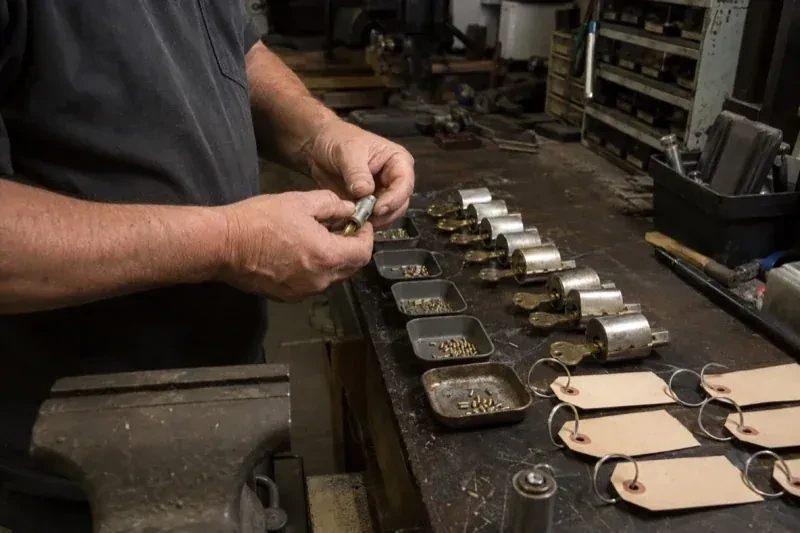
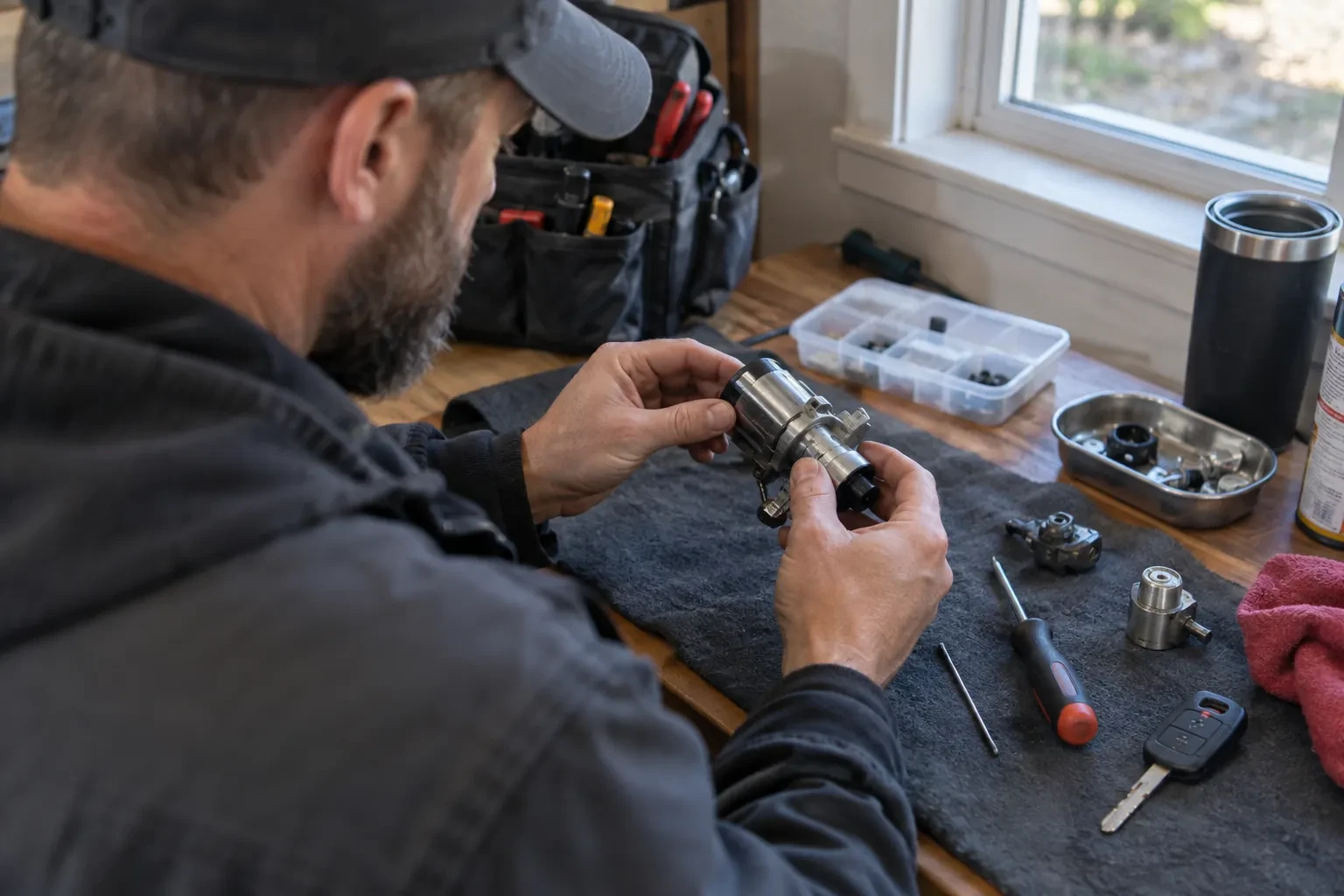
The process behind a master key system runs from conversation to chart. First comes a walk-through of every door and a conversation about who needs to open what, now and as the business grows. Next comes the design itself: grouping doors into change-key sets, deciding where sub-masters belong, and reserving a top-level master for a short list of people. Then the cylinders are pinned, cut and tested individually before any key is handed over. What the owner receives at the end is not just keys but a working hierarchy matched to compatible hardware and documented in a chart they control.
How the visit goesA new hire at the shop gets handed whatever spare key happens to be in the drawer, and it turns out to open the stockroom, the back office and the safe room all at once. The owner realizes nobody actually decided who should open what.
Master Key System Design
How the visit goes
Where a sub-master genuinely earns its place
Not every group of doors needs its own level. The assessment looks for places where a sub-master is a real convenience, such as a department, a floor, or a set of storage rooms used by the same small team, rather than adding levels for their own sake. A hierarchy with more levels than the business actually uses is harder to manage and easier to get wrong later, so this stage is as much about deciding what not to build as it is about what to include, before any pins are cut or any key blanks are ordered.
Handling a lost key discovered mid-project
If a key turns up missing or unaccounted for while the assessment is underway, the affected level is dealt with before the rest of the design continues: the doors that key can reach are identified from existing records or, where none exist, from a physical walk of the property, and those cylinders are prioritized for repinning ahead of the rest of the schedule. Folding this into the same visit avoids a second project later to close a gap that was already known about.
Keys that say less if they go missing
The keys handed over are marked by role or level, not by door or address, so a key that is lost or set down somewhere it should not be tells whoever finds it very little about what it actually opens. Combined with a restricted keyway where one was chosen, this cuts the odds of an unauthorized copy, though the chart still shows that a lost top-level master reaches every cylinder it was cut to operate, which is why that level gets watched most closely.
Master Key System Design
In the van
Restricted or standard key blanks
Key cutting machine
Compatible replacement cylinders
Bench test fixture
Key marking tools

Master Key System Design
What affects the quote
Whether hardware needs replacing for accessibility
Doors on a barrier-free path of travel need lever or paddle-style hardware rather than round knobs, so a property with several such doors that currently have incompatible hardware has more replacement work folded into the project than one already fitted with compliant hardware.
Working around an occupied, operating property
Rekeying doors in a planned sequence so a business keeps operating throughout, rather than all at once, takes coordination with the owner's schedule. Properties that need this staged approach, with interim arrangements for doors mid-conversion, add planning time beyond a straightforward, all-at-once installation.
Collecting and retiring old keys
Gathering up old keys that are being replaced, confirming they no longer operate any cylinder, and retiring them from circulation is a small additional step some businesses want included, separate from the core design and cutting work.
What to have ready
- Are there any doors you want left outside the master system entirely?
- Do any existing keys already open more than one door?
- Are any doors part of a shared or condominium-controlled building system?
Master Key System Design: questions
QuestionsCan my existing locks be used, or do I need all new hardware?
Many existing cylinders can join a new hierarchy as they are, once their keyway and condition are confirmed compatible. Others, particularly older or mismatched hardware, are replaced so the whole system pins cleanly without cross-keying. The assessment identifies which doors fall into each group before any work begins, so the plan reflects what is actually on the property rather than assuming everything needs to change.
What records should I keep once the system is installed?
The keying chart itself, a log of which key or fob was issued to which person or role, and receipts signed when keys change hands. Together these let the business answer, at any point, who currently holds which level and when it was issued, rather than relying on memory once the locksmith who built the system is no longer involved.
How is accountability maintained when several people hold different levels of keys?
Through the chart and issuance log rather than memory. Each level is tied to named roles or people, each key is marked to reflect its level rather than the door it opens, and any change of hands is recorded with a signed receipt. That record names every authorized holder for a door, though it can only account for a key that was never copied, loaned or picked up by someone outside that list.
Related services
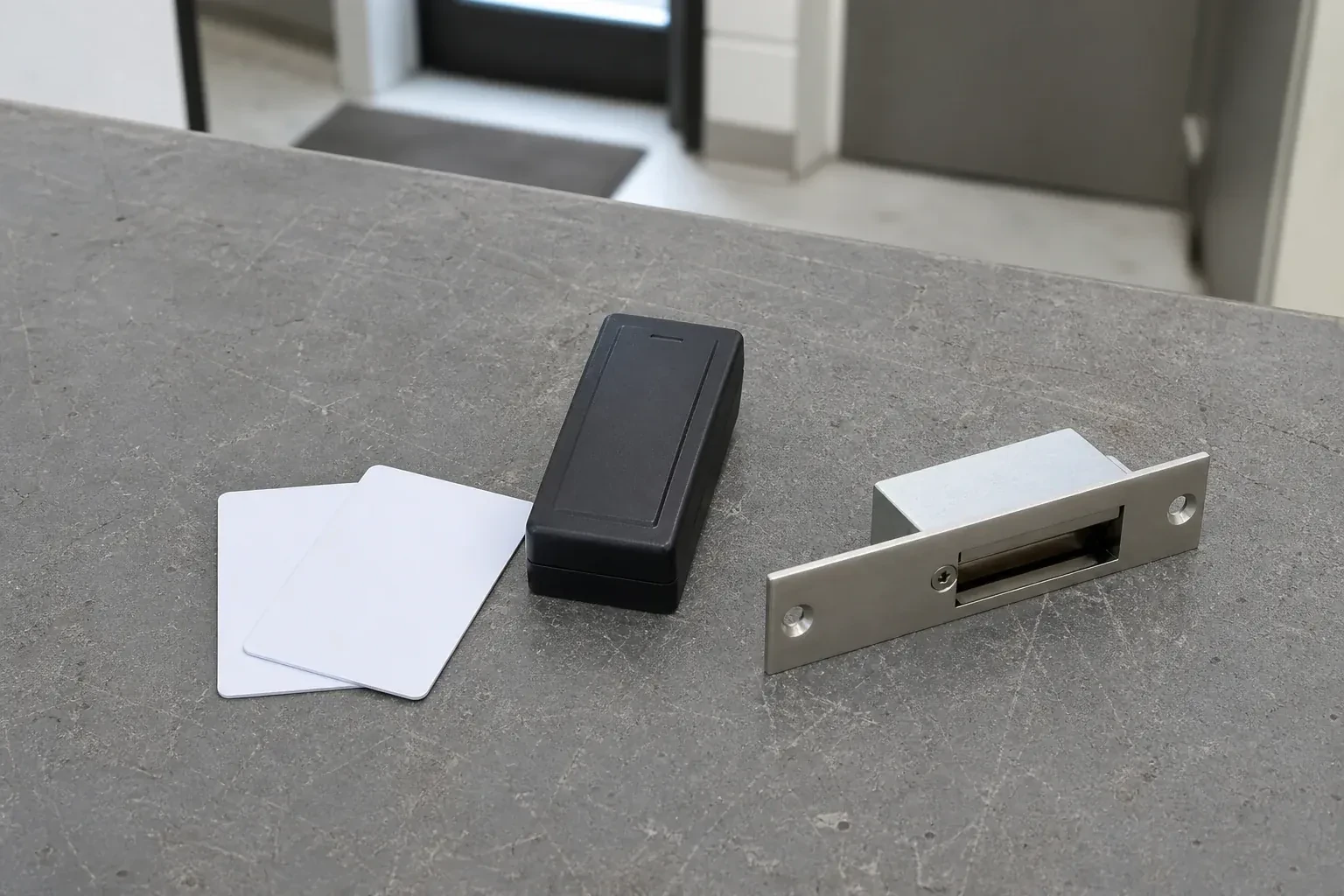
- Access Control InstallationHead office wants a record of who opens the branch and when, tied to an actual name rather than a shared code scrawled on a sticky note taped under the till.
- Panic & Exit HardwareAfter the fit-out, the gym floor now holds more people than the old office space ever did, and the exit door at the back still has the same turn-lock it had when the room held desks.
- Commercial-Grade Lock ReplacementAt closing time the hookbolt on the storefront door catches the keeper only on the second or third try, and one employee has started giving the door a shoulder to force it home.