Commercial · Westmount
Commercial-Grade Lock Replacement in Westmount
At closing time the hookbolt on the storefront door catches the keeper only on the second or third try, and one employee has started giving the door a shoulder to force it home.
In plain words
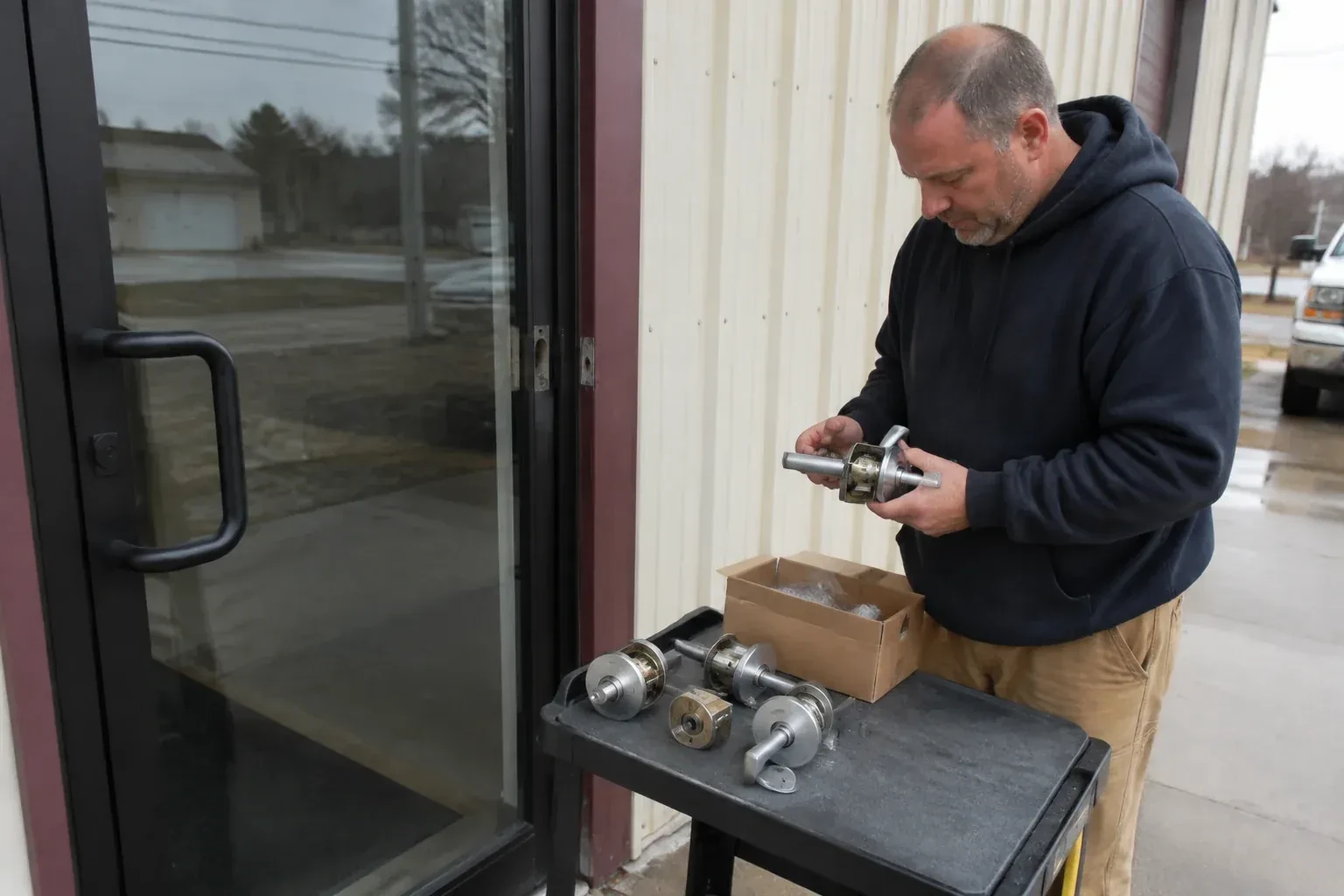
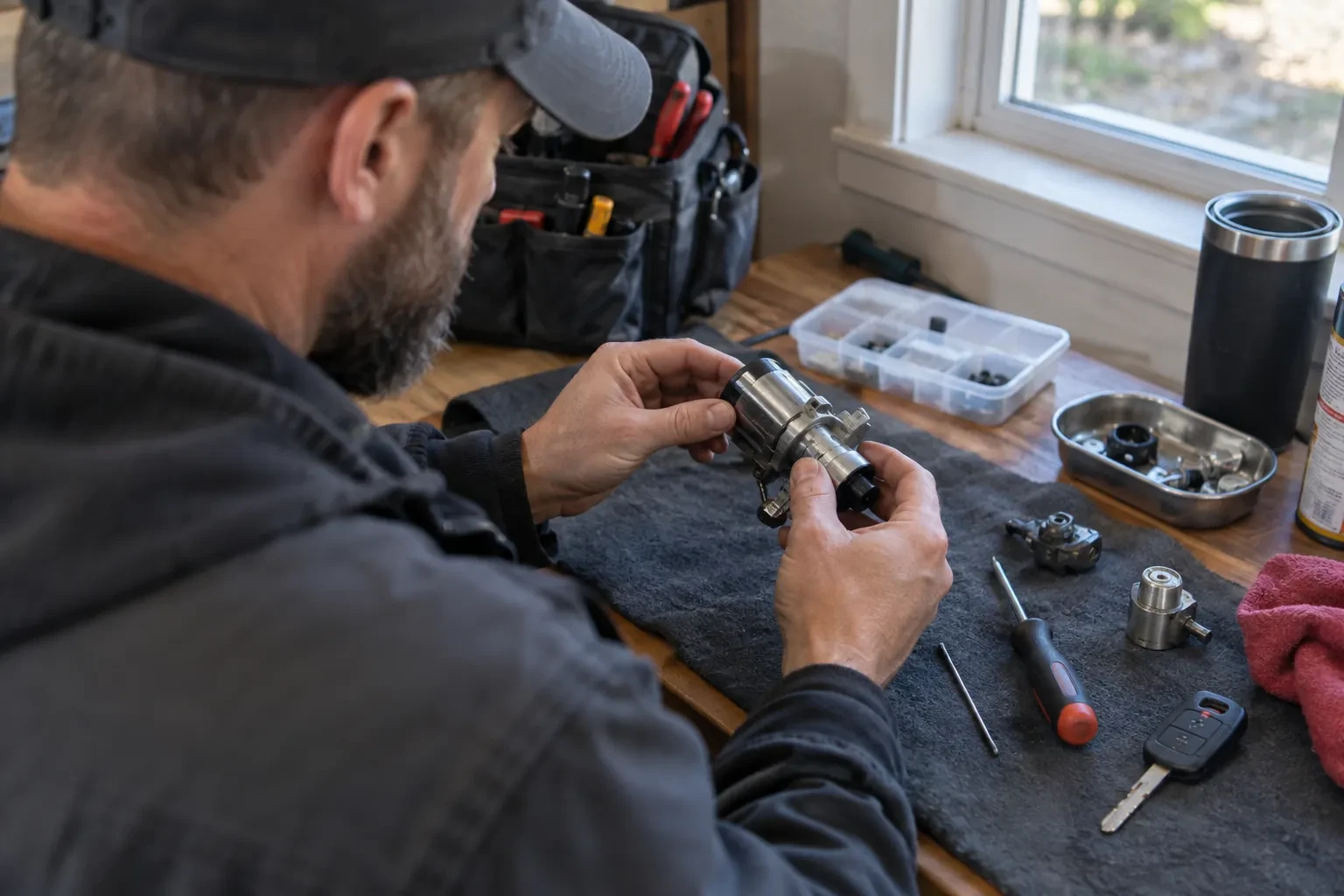
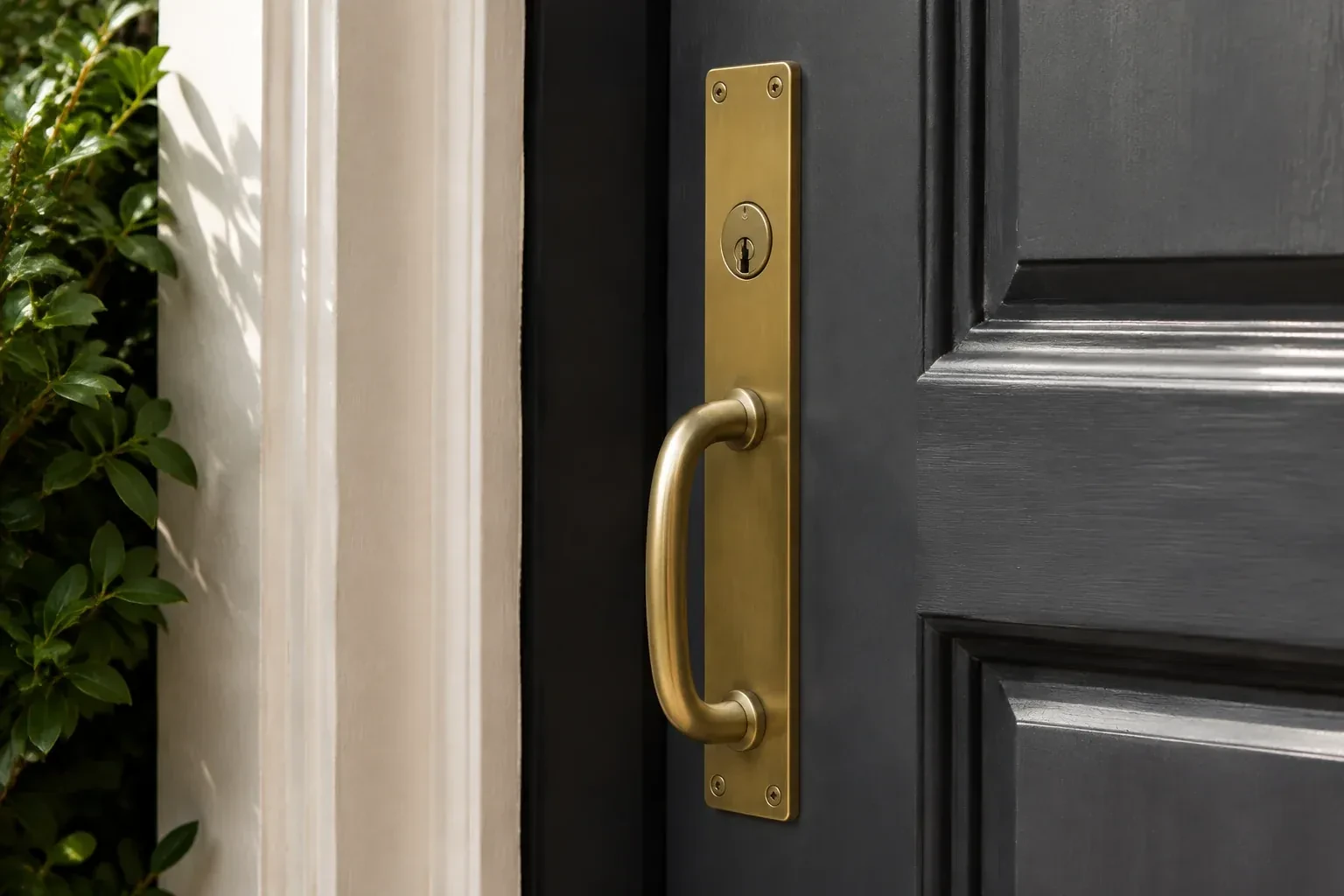
A great deal of what happens during this service is choosing the right category of hardware before a single screw comes out. Storefront glass and aluminum doors call for a narrow-stile lock or a hookbolt rather than the mortise body a solid wood or hollow-metal door would take, and a door serving a busy exit route may need listed exit hardware regardless of what was on it before. The locksmith identifies which category the opening belongs to, sources hardware built for it, installs it to the door's existing preparation, and confirms the finished lock operates correctly from both the public and the staff side.
How the visit goesOvernight someone forced the back door, and the cylinder face is scarred, the metal around the strike has pulled loose from the frame, and the latch no longer sits flush.
Commercial-Grade Lock Replacement
How the visit goes
Confirming who can authorize the work
Before any hardware is opened up, the locksmith confirms who is speaking for the business: an owner, a property manager, or a staff member the account recognizes as authorized to order and pay for the work. On a multi-tenant building this also means confirming which doors belong to which lease. This step exists for the same reason a home lockout starts with identification: a business's security is only as good as its record of who was allowed to change it, and a clear authorization at the start keeps that record clean.
Cutting keys and updating the record
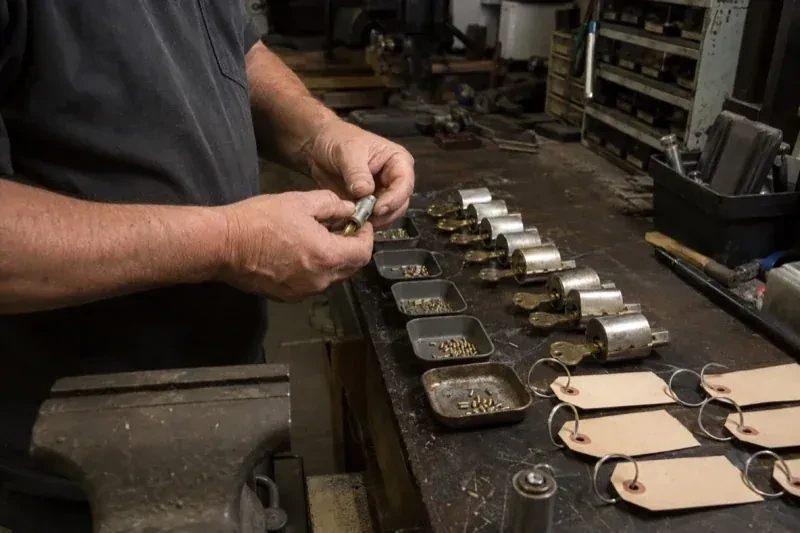
New keys are cut to the agreed system and tested in every door they are meant to open before anyone leaves the site. Where a master or interchangeable-core system is involved, the locksmith updates the business's key-control log with what was issued, what was retired, and which doors now share which key, so the paper record matches the metal. Any key that was reported lost or held by someone no longer with the business is confirmed as no longer functional on the new hardware.
Fire and exit requirements satisfied, not just noted
Where the door forms part of a fire separation or a required exit route, the new hardware is listed for that use and the door has been tested to confirm it still closes and latches on its own. Any push-type release hardware installed to meet an occupant-load threshold has been checked across the whole route it serves, not just at the one door where the call started. The business leaves with an opening that satisfies the condition that triggered the work, rather than a lock that merely looks similar to what was there before.
Commercial-Grade Lock Replacement
In the van
Interchangeable-core cylinder
Heavy-duty cylindrical lockset
Mortise lock body
Hookbolt and deadlatch hardware
Key-control log and tags
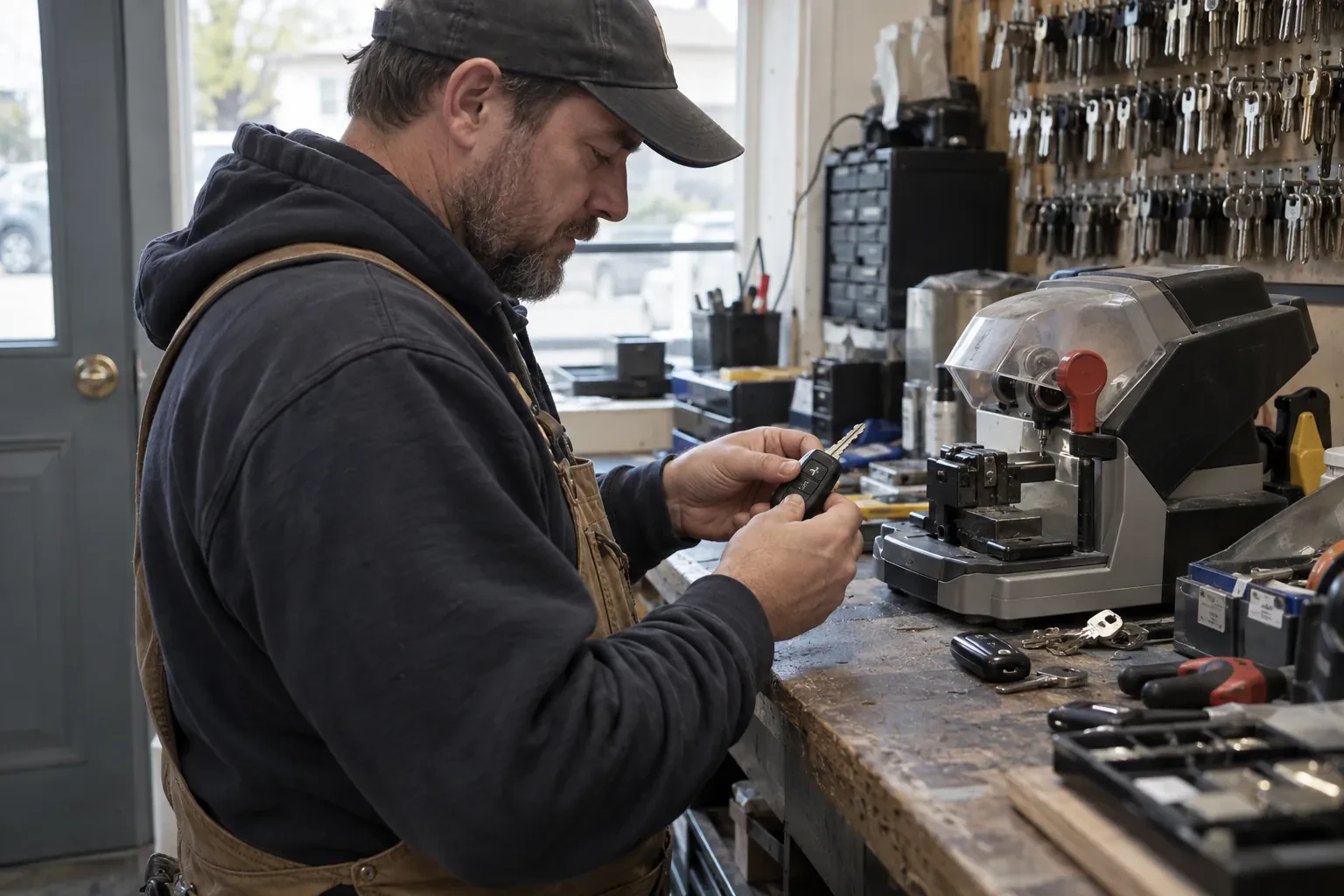
Commercial-Grade Lock Replacement
What affects the quote
Timing relative to a lease or renovation
Work scheduled around a tenant turnover, a renovation, or a building-wide upgrade across several units can be planned and quoted as a coordinated project rather than a series of separate calls.
Panic or exit hardware
Listed exit devices cost more than a standard lockset and are quoted per opening, since a route requiring this hardware often needs it consistently across more than one door along that path.
Coordination with other trades or systems
Where a door closer, an alarm panel or a building-wide access-control platform is involved, coordinating the lock replacement with whoever manages those systems can add planning time that the quote reflects.
What to have ready
- Roughly how many times a day does this door open?
- Do other doors on the property share a key with this one?
- Has the door recently been forced, damaged, or shown signs of a break-in?
Commercial-Grade Lock Replacement: questions
QuestionsHow does this service differ from a home lockout or residential rekey?
A home lockout or residential rekey is usually about one door and one household's keys. Commercial-grade lock replacement more often involves a system, several doors, a master key structure, and sometimes a fire or exit rule the door has to satisfy, so the assessment, the hardware selected and the record kept at the end are all built around managing that wider structure rather than a single lock.
Why would my business need panic or exit hardware?
Once a space holds enough people, or handles a high enough hazard, its exit doors need to open with a single motion and no key, which is what panic or exit hardware provides. It is not a preference; it is a function tied to how many people the space is built to hold and what is happening in it.
How long does commercial-grade lock hardware typically last under heavy use?
It depends heavily on cycle count and how the door is treated day to day, but hardware graded for commercial duty is built to outlast the internal wear that sinks a residential lock on the same door. A delivery door opened hundreds of times a shift will still wear its hardware faster than a quiet office entrance, so grade and use should be matched from the start rather than assumed.
Related services
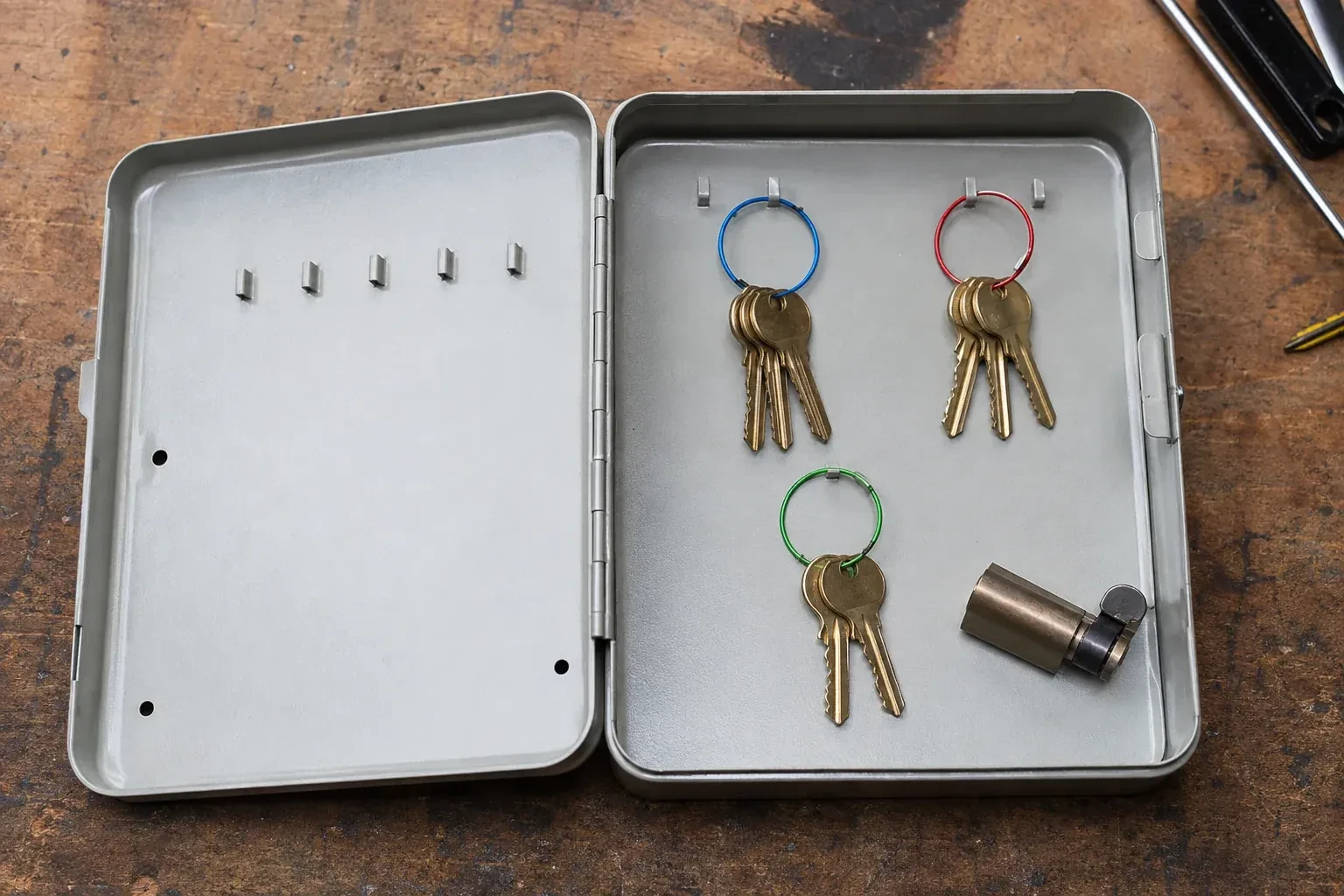
- Master Key System DesignThe new wing was built with its own brand of cylinder, so the two-year-old keys from the original building do not open a single door in the addition.
- Access Control InstallationHead office wants a record of who opens the branch and when, tied to an actual name rather than a shared code scrawled on a sticky note taped under the till.
- Panic & Exit HardwareAfter the fit-out, the gym floor now holds more people than the old office space ever did, and the exit door at the back still has the same turn-lock it had when the room held desks.