Change or rekey · Otterville
Vintage Mortise Lock Service in Otterville
The old skeleton key still fits the keyhole, but it now needs a jiggle, a lean on the door and a little luck before the bolt moves.
In plain words
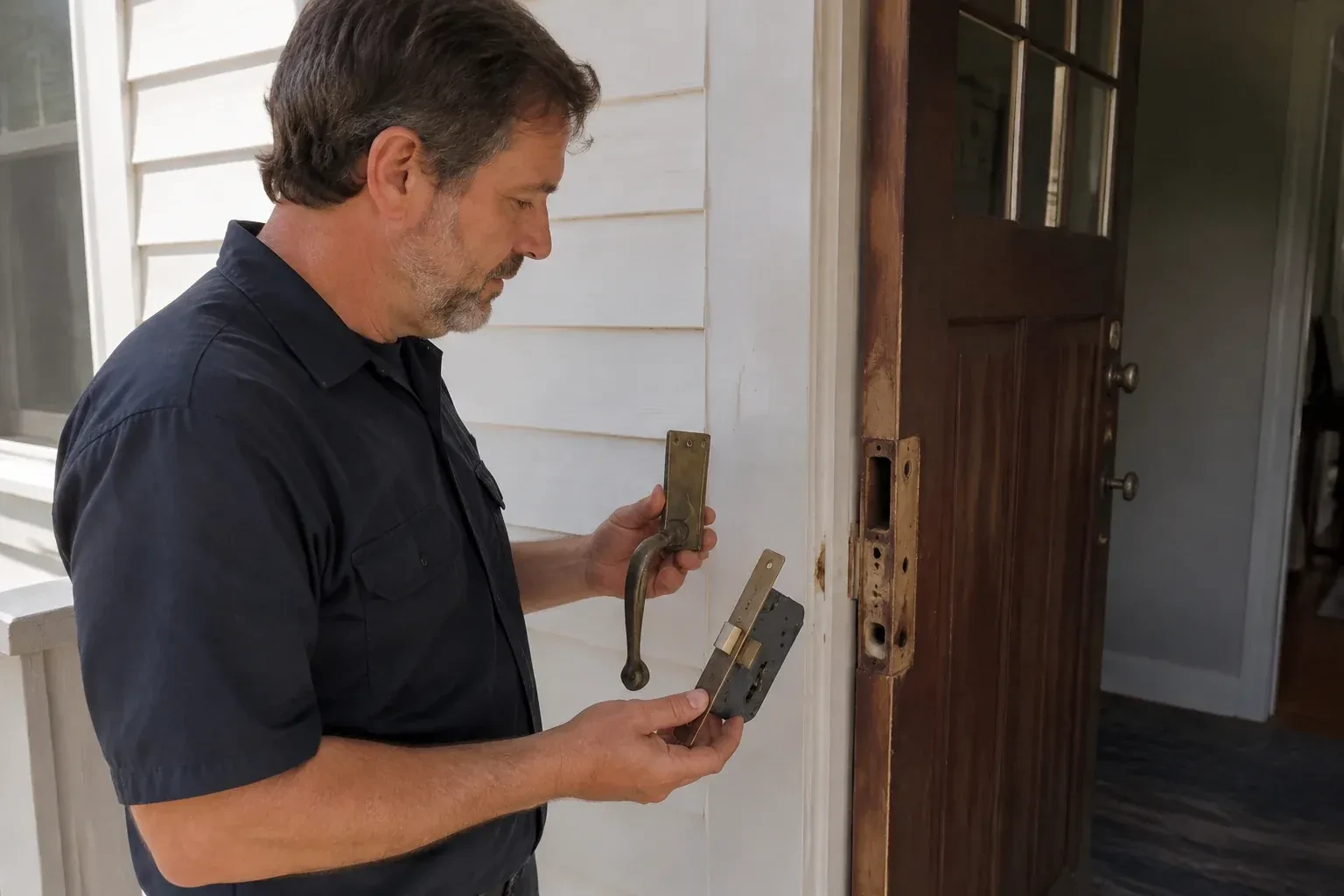
Most old mortise locks fail for boring reasons. A coil spring that has been compressed a hundred thousand times since the house was built finally breaks, or the grease inside the case dries into something like wax and the levers stick in it. Neither justifies cutting a new hole in a solid oak door. The service opens the case, cleans out the old lubricant, replaces the springs with the right size, matches any worn follower or lever and lubricates the mechanism lightly. The same case goes back into the same pocket, and the knob returns to level with the crisp snap it had decades ago.
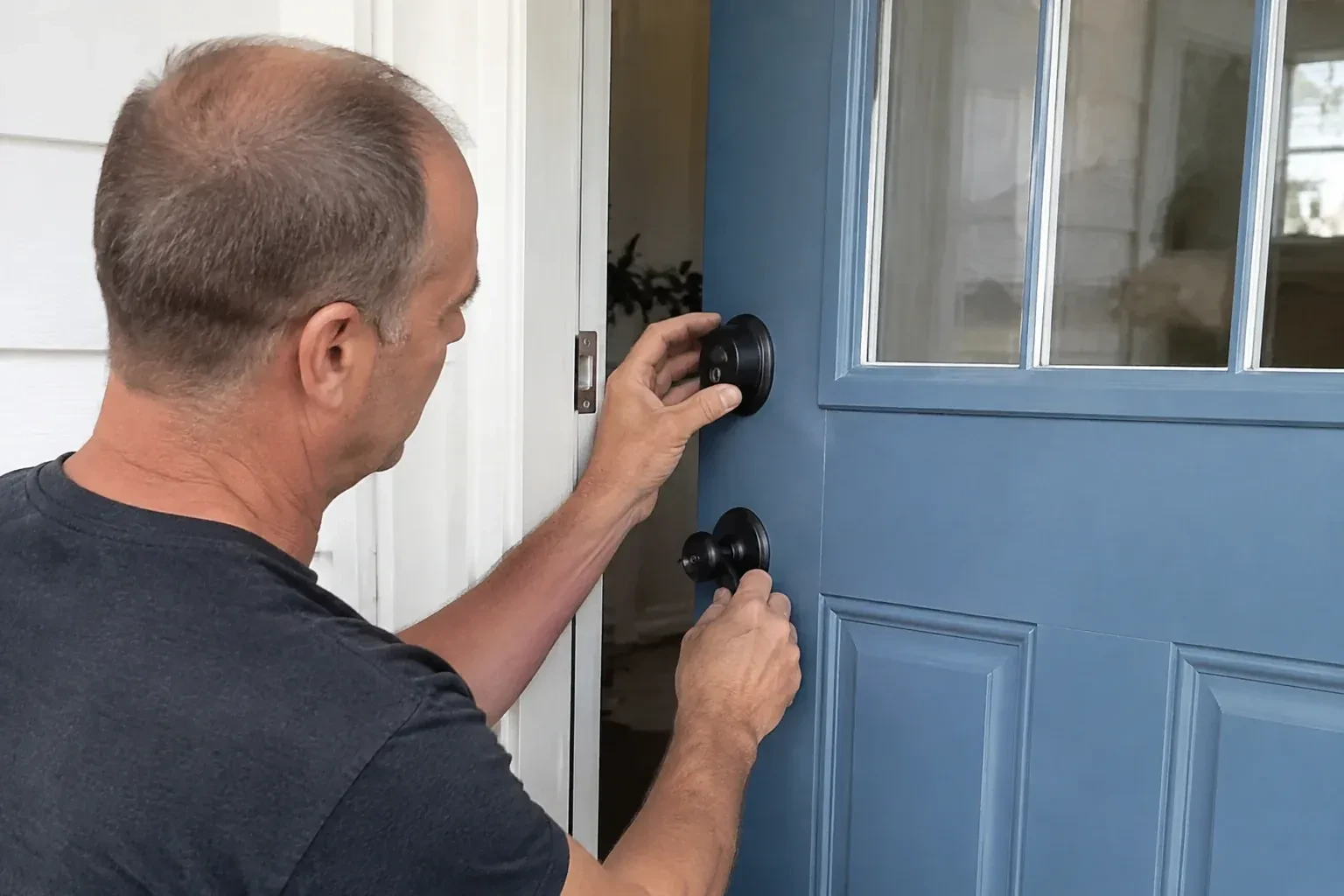
How the visit goesSomeone painted the door years ago without removing the hardware. The faceplate, the strike and the little thumb-turn are all under several coats, the deadbolt scrapes when it moves, and the knob is stiff enough to leave marks on your hand.
Vintage Mortise Lock Service
How the visit goes
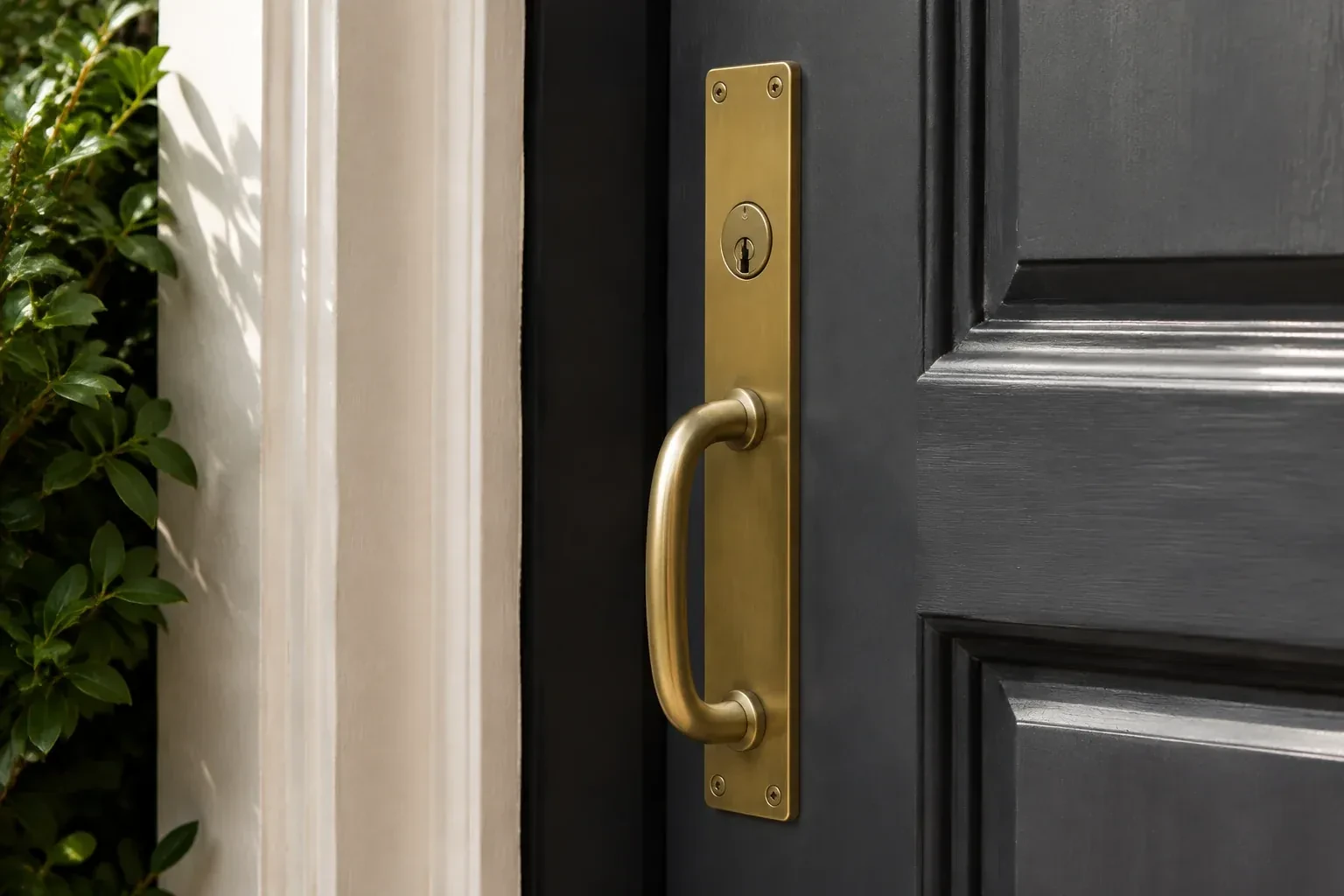
Bit key or cylinder
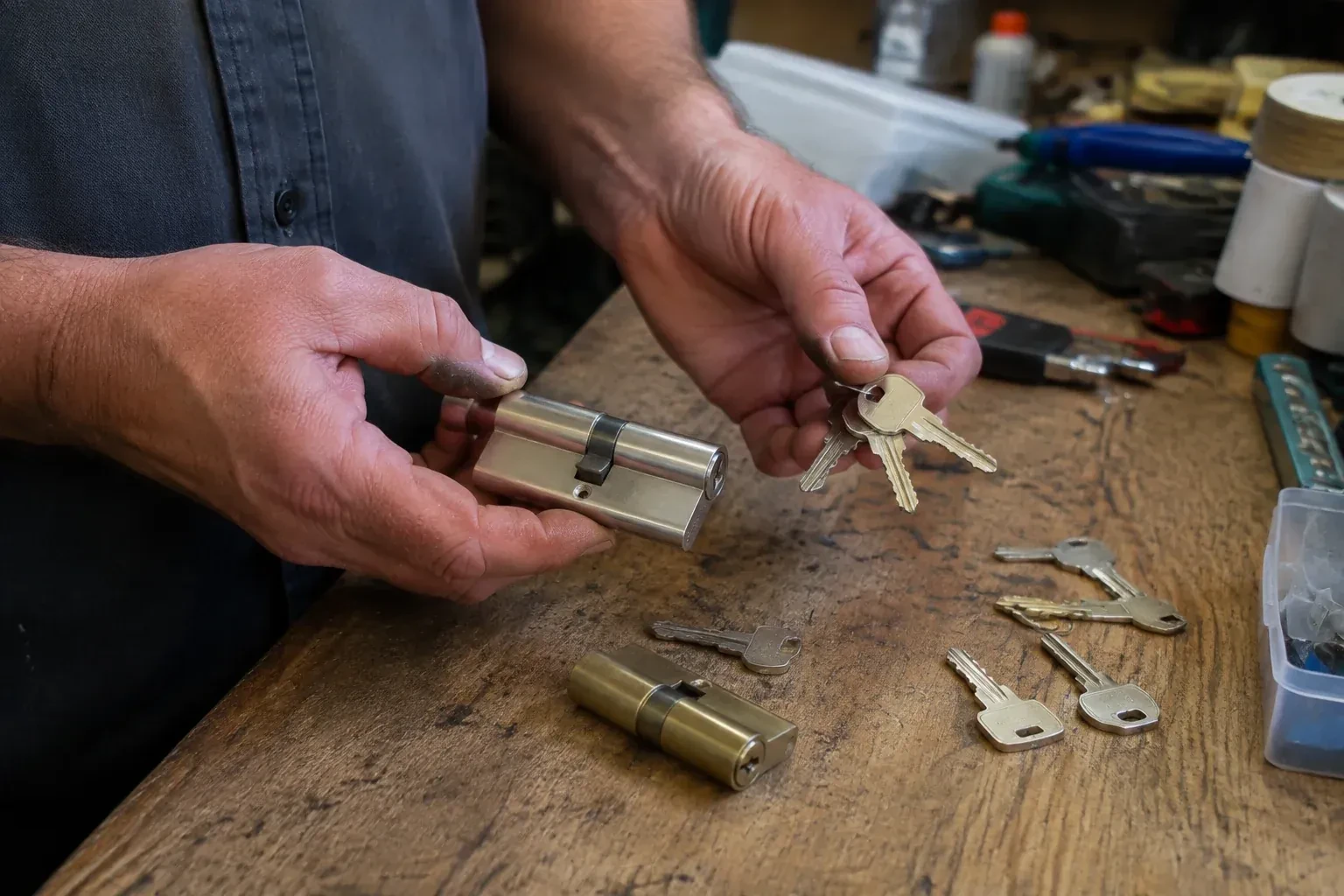
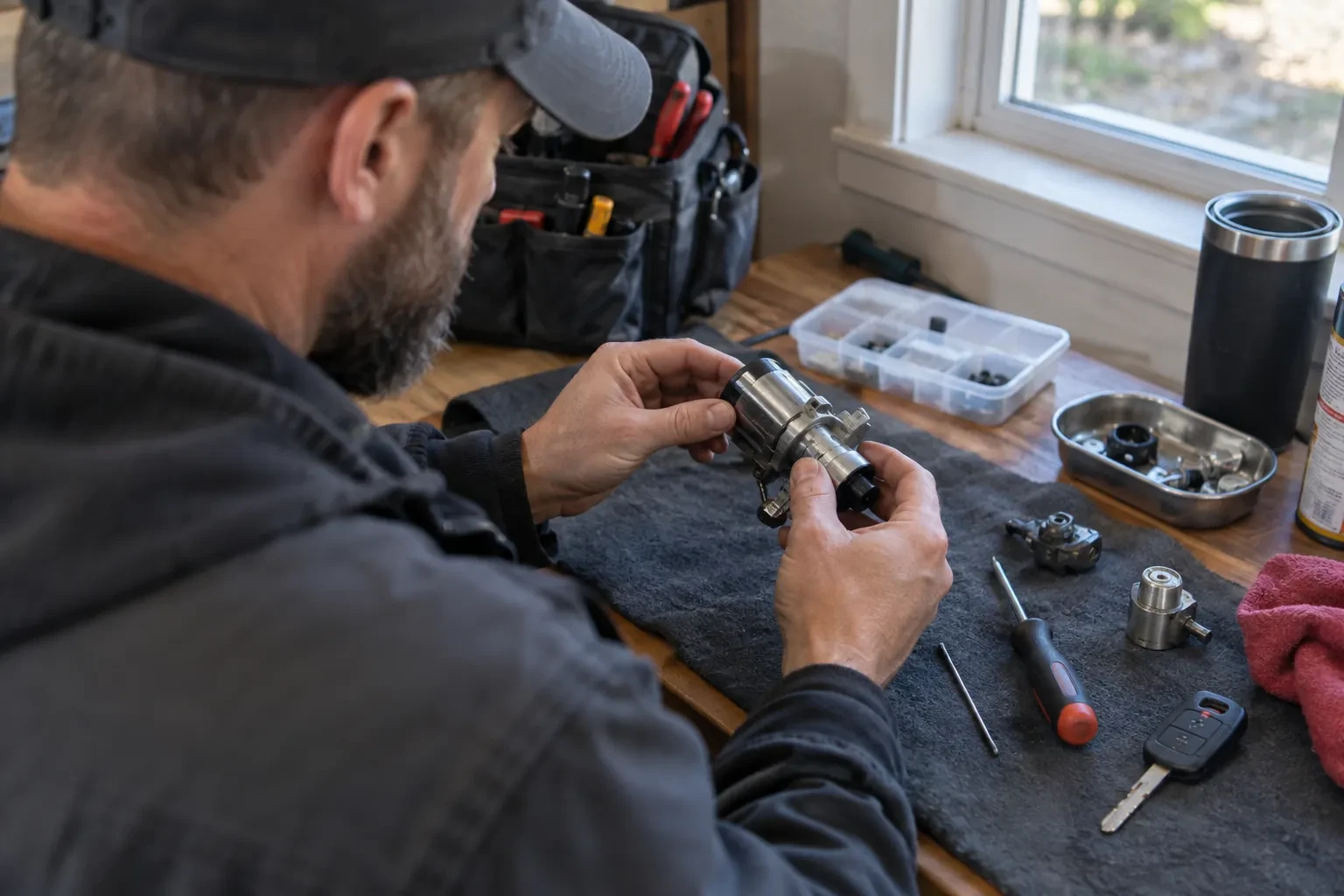
Older mortise locks come in two families, and the check sorts out which one is on the door. A keyhole shaped like a small keyhole silhouette takes a bit key, the skeleton key style, and the case works on wards and levers that the key's bit must match. A round face on the door with a slot for a flat key is a pin-tumbler cylinder threaded into the case. The distinction matters for everything that follows: how a lost key is replaced, whether the lock can be rekeyed, and what to do if the mechanism is worn out. It also settles whether a spare can be filed on the bench or cut on a key machine.
Reassembly and setting the trim
The case slides home and is screwed off, then the cylinder or keyhole escutcheon goes on, followed by the spindle, knobs and rosettes. The spindle is trimmed to length so the knobs sit against the door without pinching, and the set screws are tightened so there is no free play before the latch moves. The thumb-turn is aligned with the deadbolt tail so it throws with a light touch. Paint is cleared from the faceplate and strike edges where it was catching. Then the door is closed and the whole lock is worked from both faces with the key, the knobs and the turn, several times, listening for the latch to seat.
A clear way out
If the entry door's deadbolt was keyed from both sides, the service leaves the inside operable without a key: a thumb-turn fitted to the bolt tail, or a knob function that releases the latch from inside. This is simply good sense for a door people use to leave the home, so nobody is stuck hunting for a key inside their own house. You are shown how the inside release works and asked to try it, and everyone in the household should know it too, especially anyone who grew up with the old habit of leaving the key in the door on the inside.
Vintage Mortise Lock Service
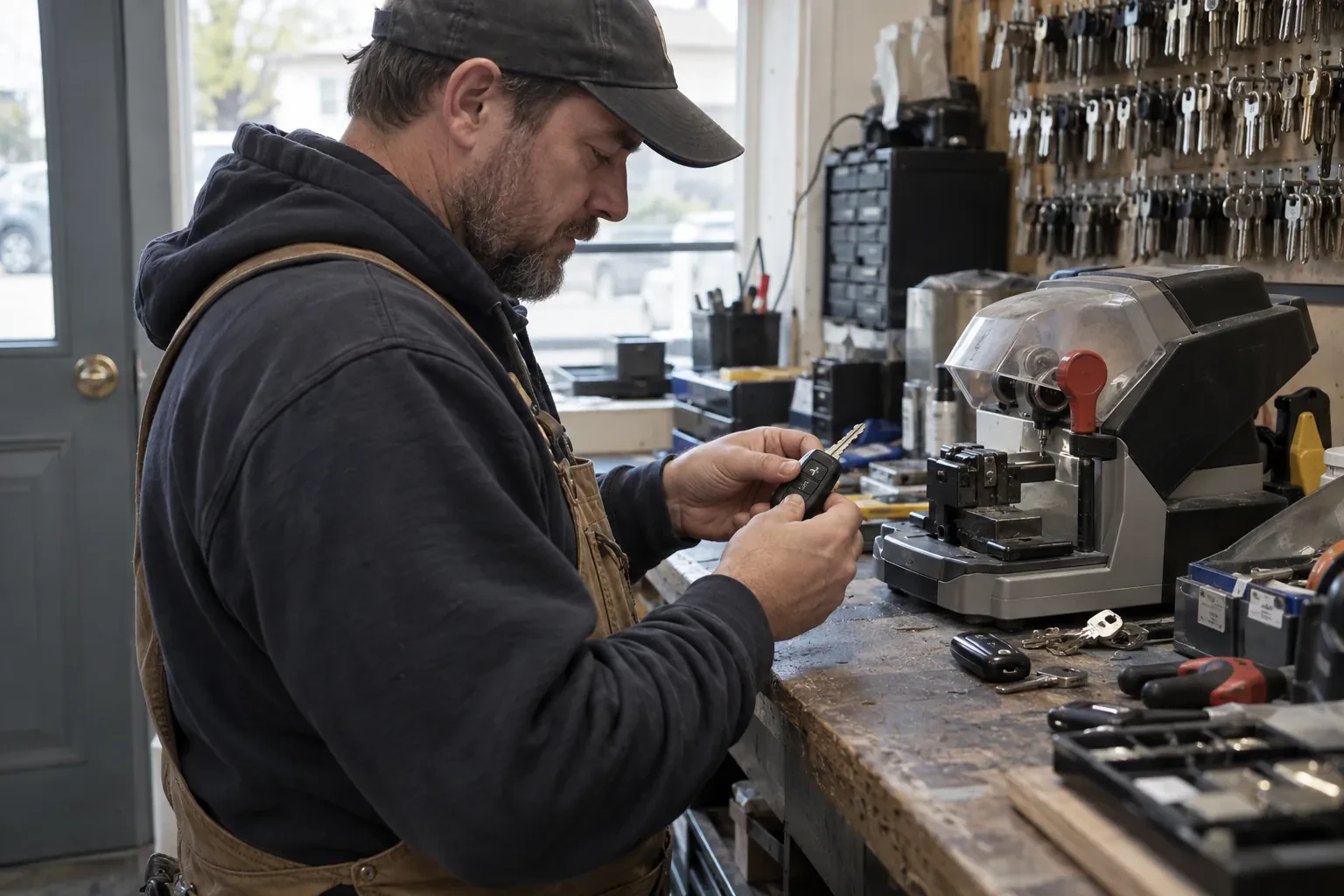
In the van
Bit key blanks
Dry graphite or PTFE lubricant
Warding files
Reproduction mortise case
Mortise cylinder and cam
Vintage Mortise Lock Service
What affects the quote
Replacement cylinder
When a pin-tumbler cylinder is past rekeying, a new mortise cylinder of the right thread and cam is fitted. A standard cylinder and a high-security one are different hardware and are quoted as such.
Bit key or cylinder lock
A bit-key case has keys filed by hand on the bench, while a cylinder lock is rekeyed or fitted with a new cylinder on a key machine. The two take different time and materials, and the quote follows.
Travel and access
Distance to the property and how easy it is to work at the door, on a busy entry or a third-floor walk-up, are part of any call-out and are stated when the visit is booked.
What to have ready
- Is the property designated as a heritage building?
- Is the trouble worse with the door closed than with it open?
- Do you own the home or rent it, and who should receive the keys?
Vintage Mortise Lock Service: questions
QuestionsCan you make a key for a lock that has none?
Yes. A bit key is cut to the lock rather than copied from another key: the locksmith chooses a blank of the right size and files the bit until it clears the wards and lifts the levers inside your case, testing as they go. A pin-tumbler cylinder on a later lock is decoded or rekeyed and keys cut to it. Bring any loose keys that came with the house, since one may be close enough to serve as a starting pattern.
How should I look after the lock once it is serviced?
A drop of the right lock oil into the latch and bolt once a year is plenty. If the lock has a pin-tumbler cylinder, use whatever lubricant that cylinder's maker specifies, since some take a dry graphite or PTFE product and others a specified liquid one. Try the latch and deadbolt each spring and fall; if the bolt starts to scrape, the strike wants a small adjustment before anything is strained. Keep bit keys out of a pocket where they bend.
Can the work be done with the lock left in the door?
Rarely, and it is not the better route. Almost everything that fails is inside the case, and the case only opens once it is out of the pocket, which takes a few minutes and leaves no mark. Working through the keyhole with an unapproved or over-applied spray tends to wash out what little lubricant should stay and gums the levers later. Removing the case, cleaning it properly and refitting it is the repair that lasts.